
Blue Peaks Roofing
Categories
Uncategorized

How Long Do Asphalt Shingles Last?

Short answer: asphalt shingles typically last about 15 to 25 years, but in Colorado’s sun, hail and freeze-thaw swings many wear out sooner. Architectural and Class 4 impact-resistant shingles tend to last longer than basic three-tab, and quality installation plus good attic ventilation add years to any roof.

Typical lifespan by shingle type

Not all asphalt shingles are built the same, and the type sets the baseline:

  • Three-tab shingles: the most basic option, usually lasting about 15 to 20 years.
  • Architectural (dimensional) shingles: thicker and more durable, often 20 to 30 years.
  • Class 4 impact-resistant shingles: built to resist hail, and often the longest-lasting choice in Colorado.

Those are national ranges. In Colorado, most roofs land toward the shorter end because of the climate.

Why Colorado is hard on shingles

The Front Range puts roofs through a lot. Strong sun at altitude breaks down shingles faster, daily freeze-thaw swings expand and contract the material, and frequent hail knocks granules loose and can fracture the mat. Together these shorten the practical lifespan compared with milder climates. See our guide on how long a roof lasts in Colorado for the full picture.

What makes shingles last longer

  • Quality installation: correct nailing, flashing and underlayment prevent early failure.
  • Attic ventilation: good airflow reduces heat and moisture that age shingles from below.
  • Impact resistance: Class 4 products such as the Atlas and TAMKO shingles we install resist hail better.
  • Maintenance: prompt repairs after storms keep small issues from spreading.

Signs your shingles are near the end

Watch for widespread curling or cracking, bald spots where granules have worn away, granules collecting in gutters, and leaks or stains inside the home. When these show up across the roof rather than in one spot, replacement is usually near.

Impact-resistant options worth considering

Because hail is the single biggest threat to Colorado shingles, Class 4 impact-resistant products are often the smartest long-term choice. Many use a rubberized asphalt that flexes on impact instead of cracking, and some insurers offer a premium discount for them. If you are comparing materials more broadly, see metal versus shingle roofs in Colorado.

Notes for HOA boards and property managers

  • Consistency: using the same shingle product across buildings keeps the community matched as roofs are replaced.
  • Reserves: plan budgets around Colorado’s shorter real-world lifespan, not national averages.
  • Upgrades: Class 4 shingles can reduce future storm claims across a community.

FAQ

How long do asphalt shingles last in Colorado?

Most last about 15 to 25 years here, often toward the shorter end because of sun, hail and freeze-thaw cycles.

Do architectural shingles last longer than three-tab?

Yes. Architectural shingles are thicker and more durable, typically outlasting basic three-tab shingles by several years.

Are impact-resistant shingles worth it?

In hail country, often yes. They resist cracking from hail and may qualify for an insurance discount, and they tend to last longer.

What shortens shingle lifespan the most?

Hail, intense sun and poor attic ventilation are the biggest factors in Colorado, along with low-quality installation.

Wondering about your roof’s age? Learn about our residential roofing services, or see how our roof replacement process works.

What working with us looks like: We inspect your roof for free, typically within 24 to 48 hours, and walk you through the photos of what we find. If you go ahead, your dedicated project manager sends a prep email before your build, keeps you updated every day, and we finish with a magnetic nail sweep and a final walkthrough with you. Residential roofs carry our 5-year workmanship warranty. Call (303) 808-0687 or schedule a free inspection.
Categories
Uncategorized

How to Choose a Roofing Contractor in Denver

Short answer: choose a Denver roofing contractor who is licensed and insured, local and established, clear in writing, and backed by strong reviews and a workmanship warranty. In hail country, favor a contractor who knows impact-resistant products and the local insurance process over a storm chaser passing through town.

Confirm licensing and insurance

Start with the basics. A reputable contractor carries general liability insurance and workers compensation, and works with properly licensed crews. Ask for proof, and confirm the insurance is current. This protects you if something goes wrong during the job.

Look for a local track record

Local matters in Colorado. A contractor based in the Denver metro knows the building codes, the permit process and how Front Range weather affects roofs. An established local company is also here to honor its warranty years from now, which a traveling crew cannot promise. Blue Peaks Roofing has served the Denver metro since 2019.

Get everything in writing

A trustworthy contractor puts the details on paper before work begins:

  • The scope of work and materials, including brand and product line.
  • The total price and payment schedule.
  • The timeline and who your point of contact will be.
  • The workmanship warranty and manufacturer warranty.

Be cautious of a quote scribbled on a business card or a price that only holds if you sign today.

Check reviews and references

Read reviews across Google and the Better Business Bureau, and look for a pattern of good communication and clean follow-through, not just a high star count. Ask for recent local references and photos of completed work.

Watch out for storm chasers

After a big hail storm, out-of-town crews often knock on doors across the metro. Some do fine work, but many collect a deposit, rush the job and disappear before any warranty issue surfaces. Signs to watch for include high-pressure sales, a large upfront deposit, no local address, and promises to waive or cover your insurance deductible, which can be improper.

Questions worth asking

  • Are you licensed, insured and based here in the Denver metro?
  • What impact-resistant shingle options do you install?
  • What does your workmanship warranty cover, and for how long?
  • Who manages my project and keeps me updated?

For context on materials, see our guide on metal versus shingle roofs in Colorado.

Notes for HOA boards and property managers

  • Insurance and bonding: confirm coverage levels that fit a multi-building project.
  • References at scale: ask for other HOA or commercial projects of similar size.
  • Single point of contact: a dedicated project manager keeps a phased job organized.

FAQ

How do I avoid a roofing scam after a storm?

Hire a licensed, insured, local contractor, get everything in writing, and be wary of high-pressure sales, large upfront deposits and offers to cover your deductible.

Should my roofer be local?

Yes. A local, established contractor knows Colorado codes and weather and will be here to honor the warranty, unlike a traveling storm-chasing crew.

What should a roofing quote include?

The scope of work, materials with brand and product line, total price, payment schedule, timeline, point of contact, and both the workmanship and manufacturer warranties.

Does a workmanship warranty matter?

Yes. It covers installation issues that a manufacturer’s material warranty does not. Blue Peaks residential roofs carry a 5-year workmanship warranty.

Ready to talk with a local team? Learn about our residential roofing services, or see how our roof replacement process works.

What working with us looks like: We inspect your roof for free, typically within 24 to 48 hours, and walk you through the photos of what we find. If you go ahead, your dedicated project manager sends a prep email before your build, keeps you updated every day, and we finish with a magnetic nail sweep and a final walkthrough with you. Residential roofs carry our 5-year workmanship warranty. Call (303) 808-0687 or schedule a free inspection.
Categories
Uncategorized

What Should You Do After a Hail Storm?

Short answer: after a Colorado hail storm, stay safe first, then document any damage you can see from the ground, check gutters, screens and downspouts for dents, and schedule a professional roof inspection before filing an insurance claim. Catching hail damage early protects your home and keeps your claim on solid footing.

Stay safe first

Before looking at the roof, make sure the area is safe. Watch for downed power lines, broken glass and standing water, and wait until the storm has fully passed. Do not climb onto the roof yourself, since hail leaves surfaces slick and damage is not always visible from on top.

Document what you can see

Good records help later, both for repairs and for insurance. From the ground, take dated photos of:

  • Dents or chips on gutters, downspouts and metal flashing.
  • Torn window screens and damaged siding.
  • Dented vents, skylights or AC units.
  • Shingle granules collecting at the bottom of downspouts.

Look for the easy-to-spot signs

Hail damage on a roof can be subtle, but a few clues are visible from the ground. Bruised or pockmarked shingles, bare spots where granules were knocked loose, and a sudden pile of granules in the gutters all point to a roof that took a hit. For a closer look at what to watch for, see how to tell if your roof has hail damage.

Schedule a professional inspection

A professional roof inspection is the reliable way to know how much damage occurred. We inspect your roof for free, typically within 24 to 48 hours, and walk you through photos of what we find. An inspection also gives you documentation you can use if you decide to file a claim.

Filing an insurance claim

If the damage is significant, your homeowners policy may cover repair or replacement. Having dated photos and a professional inspection report makes the process smoother. For how coverage usually works in Colorado, see does homeowners insurance cover roof replacement.

This article is general information, not insurance advice. Coverage depends on your policy, your insurer and the details of the storm. Confirm specifics with your insurance provider.

Notes for HOA boards and property managers

  • Act together: after a widespread storm, coordinate one inspection across all buildings for consistent records.
  • Document early: dated photos per building support community-wide claims.
  • Plan phasing: if several roofs need work, expect the project to run in stages.

FAQ

How soon after a hail storm should I get my roof inspected?

As soon as it is safe, ideally within a few days. Early inspection documents the damage and keeps your options open for repairs or a claim.

Can I inspect the roof myself?

Check from the ground for visible signs, but leave the rooftop inspection to a professional. Roofs are slick and dangerous after hail, and damage is easy to miss.

Will hail damage always lead to a new roof?

No. Light hail may cause minor damage, while heavy hail on an aged roof often justifies replacement. An inspection determines the extent.

Should I file an insurance claim right away?

Get a professional inspection first. The report and photos help you decide whether a claim makes sense and support it if you file.

Hit by a storm? Learn about our residential roofing services, or see how our roof replacement process works.

What working with us looks like: We inspect your roof for free, typically within 24 to 48 hours, and walk you through the photos of what we find. If you go ahead, your dedicated project manager sends a prep email before your build, keeps you updated every day, and we finish with a magnetic nail sweep and a final walkthrough with you. Residential roofs carry our 5-year workmanship warranty. Call (303) 808-0687 or schedule a free inspection.
Categories
Uncategorized

Signs You Need a New Roof

Short answer: the clearest signs you need a new roof are shingles that are cracked, curling or missing, granules collecting in your gutters, daylight or water stains in the attic, and a roof that is past about 20 years old. In Colorado, hail and intense sun age roofs faster, so an older roof after a big storm is worth a professional look.

Start with the age of the roof

Age is the first thing to check. Most asphalt shingle roofs in Colorado last about 15 to 25 years, and many wear out toward the shorter end because of sun, hail and freeze-thaw swings. If your roof is past 20 years, it is reasonable to plan for replacement even before obvious damage shows. For more on this, see how long a roof lasts in Colorado.

Check the condition of the shingles

From the ground or a safe vantage point, look for:

  • Cracked, curling or buckling shingles across the roof, not just one spot.
  • Missing shingles or bare patches after wind or hail.
  • Bald areas where the protective granules have worn away.
  • Granules in the gutters, which look like coarse black sand.

Look for signs inside the home

Some of the clearest warnings show up indoors:

  • Water stains or discoloration on ceilings and upper walls.
  • Daylight visible through the roof boards in the attic.
  • Damp insulation, a musty smell or signs of mold.
  • Sagging areas in the roof line.

Daylight or active leaks in the attic mean the roof needs attention soon.

Factor in storm and hail damage

Colorado sees frequent hail, and a single strong storm can shorten a roof’s life. Hail knocks granules loose and can fracture the shingle mat, which leads to leaks over time. If your roof is already aged and takes a hard hit, replacement is often the better long-term choice. Impact-resistant Class 4 shingles, such as the Atlas and TAMKO products we install, hold up better to future storms.

Repair or replace?

A few missing shingles or a single flashing leak on a younger roof can often be repaired. Replacement makes more sense when the roof is near the end of its life, the damage is widespread, or you are facing repeated repairs. A professional inspection is the fastest way to know which path fits your home.

Notes for HOA boards and property managers

  • Consistency: plan replacements so buildings in a community stay visually matched.
  • Reserves: aging roofs across several buildings are easier to budget when inspected on a schedule.
  • Documentation: dated inspection photos help with planning and any future insurance claims.

FAQ

How do I know if I need a new roof or just a repair?

Isolated damage on a younger roof is usually repairable. Widespread wear, leaks in several spots, or a roof past about 20 years typically points to replacement. An inspection settles it.

What are the first signs of a failing roof?

Granules in the gutters, cracked or curling shingles, and water stains on upper ceilings are common early signs.

Does hail mean I need a new roof?

Not always. Light hail may cause minor damage, but heavy hail on an aged roof often justifies replacement. A professional inspection confirms the extent.

How long do roofs last in Colorado?

Most asphalt shingle roofs last about 15 to 25 years here, often toward the shorter end because of sun and hail.

Not sure where your roof stands? Learn about our residential roofing services, or see how our roof replacement process works.

What working with us looks like: We inspect your roof for free, typically within 24 to 48 hours, and walk you through the photos of what we find. If you go ahead, your dedicated project manager sends a prep email before your build, keeps you updated every day, and we finish with a magnetic nail sweep and a final walkthrough with you. Residential roofs carry our 5-year workmanship warranty. Call (303) 808-0687 or schedule a free inspection.
Categories
Uncategorized

How Long Does It Take to Replace a Roof?

Short answer: most residential roof replacements in the Denver metro take one to two days once the crew is on site. A straightforward asphalt shingle roof is often finished in a single day, while larger homes, steep pitches, metal panels or added repairs can push the job to several days. Weather and material delivery can also move the schedule.

What the timeline usually looks like

For a typical Front Range home, a shingle roof replacement runs on a short, predictable schedule:

  • Tear-off: removing the old roof usually takes a few hours to most of a day.
  • Inspection and prep: the crew checks the decking, replaces damaged wood and lays new underlayment.
  • Installation: new shingles, flashing and vents go on, often the same day.
  • Cleanup: we finish with a magnetic nail sweep and a final walkthrough with you.

Most single-family shingle roofs are done in one to two days from start to finish.

What can make a roof take longer

  • Roof size and pitch: larger or steeper roofs take more time to work safely.
  • Material: standing seam metal takes longer to install than asphalt shingles.
  • Hidden damage: rotted decking found during tear-off adds repair time.
  • Weather: rain, snow or high wind can pause work for safety.
  • Complex features: multiple valleys, dormers, skylights and chimneys add detail work.

Asphalt shingles compared with metal

Asphalt shingles install quickly, which is one reason they are the practical standard in Colorado. A standing seam metal roof uses large panels with hidden fasteners and more precise detailing, so it usually takes longer to complete. If you are weighing the two, see our guide on metal versus shingle roofs in Colorado.

What happens before the crew arrives

Good preparation keeps the job on schedule. After you approve the work, your dedicated project manager sends a prep email before your build and coordinates material delivery. On install day, we protect landscaping and outdoor items, stage the new material and keep you updated as the work moves along.

Notes for HOA boards and property managers

  • Scheduling: multi-building projects are phased, so plan for several days or weeks across a community.
  • Access: clear parking and driveway access speeds up tear-off and delivery.
  • Resident notice: let owners know about noise and debris on their building’s day.

FAQ

How long does it take to replace an asphalt shingle roof?

Most single-family shingle roofs are replaced in one to two days, and many are done in a single day when the weather holds.

Does a metal roof take longer to install?

Yes. Standing seam metal uses large panels and more detailing, so it usually takes longer than a shingle roof of the same size.

Can rain delay my roof replacement?

Yes. For safety and a sound installation, crews pause during rain, snow or high wind and resume when conditions clear.

Will I need to leave my home during the work?

No. You can stay home during a roof replacement, though you will hear noise and some vibration while the crew works.

Ready to plan your project? See how our roof replacement process works, or learn more about our residential roofing services.

What working with us looks like: We inspect your roof for free, typically within 24 to 48 hours, and walk you through the photos of what we find. If you go ahead, your dedicated project manager sends a prep email before your build, keeps you updated every day, and we finish with a magnetic nail sweep and a final walkthrough with you. Residential roofs carry our 5-year workmanship warranty. Call (303) 808-0687 or schedule a free inspection.
Categories
Commercial Owners Property Managers

Commercial Roof Replacement for Schools and Public Buildings: Planning Around the Summer Window

A commercial roof replacement on a school or public building starts with one question: when does the building have to be back in use? For a school, that date is the first day of classes. For a fire station, the answer is that it never stops being in use. Set that date first, then plan materials, phasing, trade coordination and documentation backward from it. The roof is built to the calendar as much as it is built to the spec. I’m Andrew Ubben, owner of Blue Peaks Roofing. This year our crews replaced the roof on a PK-12 school campus in one summer and re-roofed four fire stations and a training facility while every one of them stayed in service. Here is what we learned about planning a public roof around a building’s calendar, and what facilities managers, districts and boards should ask before the 2027 budget meeting.

Why the summer window drives school roof replacement

For a school, summer is the work window. Between the last day of school and the first day of the next year, everything has to fit: tear-off, new roof systems, rooftop mechanical work, gutters, inspections and closeout. That changes how the project gets planned. A school roof replacement can’t slide two weeks into September because a material order came in late or a trade wasn’t lined up. That’s why the planning happens months before the work does:
  • Lock the dates early. Know the last day of school, the first day back, and any summer programs that use the building.
  • Order materials with the calendar in mind. Metal panels, membrane, insulation and trim need to be on site when the crew is ready, not after.
  • Line up every trade that touches the roof. Mechanical, electrical and gutter work has to be sequenced around the roofing, not added on at the end.
  • Plan staging and site controls. Where material gets offloaded, where the crane sets up, how the work area is fenced and how debris is handled on a campus.
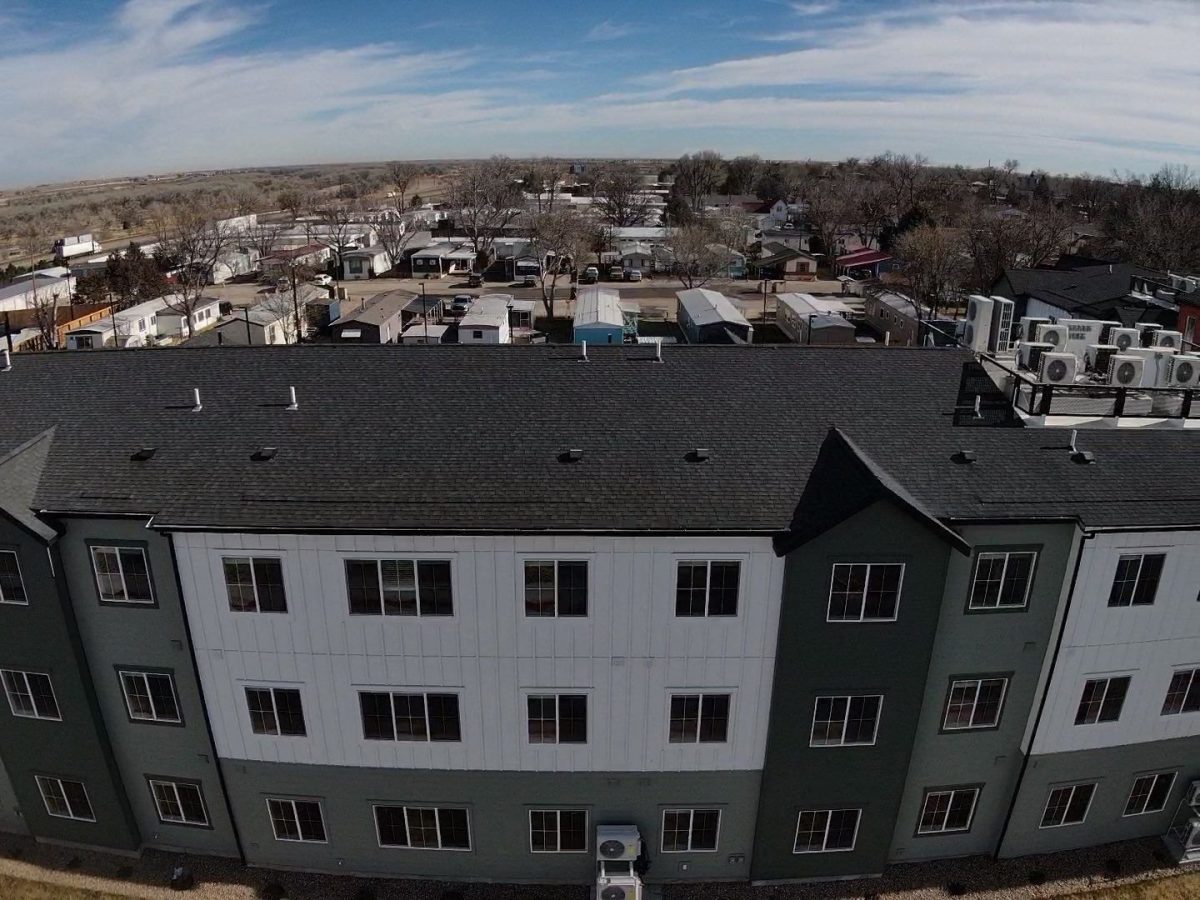
On the Akron School District R-1 campus, our crews started in late May and finished in mid-August 2026. That was close to 988 squares of new roof across two systems, and staff and students came back to a finished roof for the 2026-27 school year. You can see the full project on our Akron school campus re-roof page.

When two roof systems meet: plan the transition before tear-off

Many school and public buildings have more than one roof system. A pitched section may be metal or shingles, and a low-slope section may be a membrane such as TPO. Each system handles water differently. Metal sheds water fast. A membrane on a low-slope roof is built to keep standing water out. The place where the two meet is where problems show up if nobody planned for it. On Akron, that meant 828 squares of Sheffield Metal 22-gauge standing seam tied into a separate 159.59-square TPO system with cover board and insulation. The transitions between the two systems were detailed and flashed as part of the roofing scope. Questions worth asking any roofer bidding a building with mixed systems:
  • Where exactly do the roof systems meet, and how will each transition be detailed?
  • Who is responsible for the rooftop equipment, curbs and screens that sit on or near those transitions?
  • What gets removed and reset, such as snow retention, gutters or rooftop HVAC equipment, and which trade does it?
On Akron, the rooftop HVAC equipment was detached and reset by a mechanical contractor so the new panels could be seamed underneath, and new snow guards were installed. Those items belong in the scope from day one. If you are weighing membrane options for a low-slope section, our post on TPO vs EPDM for Colorado buildings walks through the differences.

Phasing a public building roof replacement so the building stays open

Not every public building gets a summer off. Fire stations, for example, have to stay ready to respond every hour of every day. For those buildings, the plan isn’t about a window. It’s about phasing. For the South Adams County Fire Protection District, Blue Peaks replaced roofs on Fire Stations 25, 26, 27 and 28 and the district’s Indoor Training and Wellness Facility, known as The Pound. That was about 715 squares across standing seam metal, PBR metal and impact-resistant shingles, built in two phases from June 2025 to July 2026. Every facility stayed in service. What makes phasing work on an occupied public building:
  • Decide the order of buildings with the owner. Which ones are in the worst shape, and which ones can tolerate work at what times?
  • Protect operations at every site. On a fire station, scheduling, access and debris control have to protect apparatus readiness. Bays and drive lanes stay clear.
  • Plan the largest roof on its own. The Pound was the largest roof in the program, about 356 squares of new 26-gauge PBR metal with new insulation.
  • Match the system to each building. One district doesn’t mean one roof system. Each station got the materials and crew that fit its roof.
Phasing also spreads the work across budget years, which can help a board fund the project. Read more on the South Adams County fire stations re-roof page.

Document every day of the job

A school district or public agency answers to a board, and often to the public. Owners shouldn’t have to take the roofer’s word for what happened up there. They should be able to see it. On Akron, our crews documented the work from tear-off to closeout with more than 7,000 CompanyCam photos, so the district had a clear record of every phase. Good documentation gives facilities staff something to show the board, makes punch-list items easy to find and close, and leaves a record for warranty registration and future maintenance. Ask any contractor bidding your project:
  • How will we see the work as it happens?
  • What do we get at closeout: photos, inspection results, warranty registrations?
  • Who is our point of contact during the job?

Three questions to ask before your 2027 commercial roof replacement

If your school, district, or agency has a roof on the 2027 list, bring these three questions to your roofer before the budget meeting:
  1. When does the building have to be back in use? That date sets the schedule, the material orders and the crew plan.
  2. Where do the roof systems meet? Transitions and rooftop equipment should be detailed and scoped before tear-off.
  3. How will we see the work every day? Ask for photo documentation and a clear closeout package.
Start early. The summer window for a school roof replacement is short, and the planning for it belongs in the fall and winter before. Meeting with a roofer now gives you time to inspect the roofs, write a scope your board can review and get a price on the calendar before the budget is set.

Talk to Blue Peaks about your public or commercial roof

Blue Peaks Roofing is based in Littleton and works on commercial and public buildings across Colorado, from school campuses on the eastern plains to fire stations in the metro area. We’ll assess the roofs, photograph what we find and give you a written proposal your board can review. See our commercial roofing services and more commercial roofing projects, or call us at (303) 808-0687 to talk through your building’s calendar.
Categories
HOA Planning HOAs/Property Managers

HOA Roof Replacement Planning for 2027: What to Ask Before the Budget Meeting

If your HOA is planning a roof replacement in 2027, the questions you ask before the budget meeting matter as much as the bids that come later. The board should know what the reserve study assumes about the roof, whether a current condition report still supports those assumptions, and whether the work belongs in next year’s budget or can wait. Get those answers first, and the line item is much easier to explain to residents.

What your HOA reserve study says about the roof

A reserve study is a planning document. It lists the association’s major components, an assumed remaining useful life for each one, and a recommended funding path so the work can be paid for when it comes due. For the roof, the useful part is not only the dollar figure on the page. It is the set of assumptions behind that figure.

Before the budget meeting, pull the roof pages and ask:

  • When was the study completed, and has anyone updated the roof line since then?
  • What remaining useful life does it assign to each building? If every building is treated the same, is that actually true on the roofs?
  • What roof system and what replacement scope does the study assume?
  • Have leaks, repairs, or other changes since the study date altered the picture?

A study that is a few years old can still be a good starting point, but it is not a substitute for looking at the roofs. If the study says a roof has several years left and more than one building is already leaking, the budget conversation needs to catch up. If the roofs are in better shape than the study assumed, you may have more time than the spreadsheet suggests.

A current inspection, with photos broken out by building, is how you test those assumptions. Care of the roofs also changes the timeline. Our post on how maintenance stretches roof life explains how regular inspections and small repairs can give the board a clearer picture of what can wait.

When condo and townhome roof replacement belongs in the 2027 budget

Condo roof replacement, and townhome roof work the association is responsible for, belongs in the 2027 budget when the condition of the roof says it is time, not only when the calendar does.

Ask:

  • Are we seeing repeated leaks, widespread shingle wear, or failed flashing, and is that on one building or many?
  • Is the association responsible for these roofs, or do individual owners cover some sections? Get that clear before you put a number in the budget.
  • If some buildings are clearly worse than others, should 2027 fund the ones that cannot wait, with the rest scheduled later?

A roof can last longer than the date in the study, or it can come due sooner. The budget meeting is a hard place to sort that out for the first time. A dated condition report, tied to each building, lets the board decide whether 2027 is a full project year, a first-phase year, or a year to keep funding the reserve and keep watching the roofs.

Questions to ask an HOA roofing contractor before you get bids

Once you know the roofs need attention, the next step is not simply “get three bids.” It is getting comparable bids from an HOA roofing contractor who will inspect the buildings and write a scope the board can actually compare.

Questions worth asking before anyone prices the work:

  • Will you inspect every building and photograph what you find, including the problems you cannot see from the ground?
  • Will we get a written scope and price before any work starts, and can every bidder price the same scope?
  • How do you work around occupied buildings: parking, access, resident notices, and where materials get staged?
  • What is included, and what is not? Underlayment, flashing, ventilation, and any decking repairs should be spelled out, not left as a later surprise.
  • What workmanship warranty do you provide, and what manufacturer warranty comes with the system you are proposing?

Bids that are not based on the same scope are not comparable. One contractor may be replacing flashing and underlayment. Another may be leaving those in place. The lower number is not always the better value. Sometimes it is just a thinner scope.

If you also need help with the calendar, board approvals, and how to talk with residents, our post on planning an HOA reroof covers timeline, approvals, and communication.

Phasing a multi-building roof replacement

A multi-family roof replacement across more than one building rarely happens in a single week, and it does not always belong in a single budget year. Phasing is the decision about which buildings go first, which can wait, and how the work fits around the people who live there.

Ask:

  • Do the roofs actually need to be done at the same time, or is the wear uneven from one building to the next?
  • Can the association fund the full scope in 2027, or is a first phase the more realistic path?
  • How will parking, access, and daily life work while a building is in progress?

Phasing can make funding and disruption more manageable. It can also mean later buildings cost more, colors may not match as closely, and the board will be tracking more than one warranty start date. Our post on phased versus full roof replacement for HOAs covers that choice in more detail. For communities with several buildings, multi-building and commercial roofing takes the same kind of planning: inspect each structure, then decide what happens in which year.

What to bring to the board meeting

Bring a short packet, not a pile of opinions. At a minimum:

  • The roof pages from the current HOA reserve study, including the date of the study
  • A current roof condition report with dated photos, broken out by building
  • A list of leaks and repairs since the study was completed
  • A clear recommendation: fund a 2027 replacement, fund a first phase, or keep watching and leave the work for a later budget
  • Written scopes if you have already requested bids, so the board is comparing the same work
  • The open questions that still need an answer before a vote

The goal is a decision the board can explain: here is what the study assumed, here is what the roofs look like now, and here is what we are asking to fund in 2027.

Blue Peaks was founded in 2019 and is based in Littleton, and we hold Atlas PRO+ Silver and TAMKO Pro Platinum credentials. Our inspections come with photos and a written scope before any work begins. We handle urgent roof problems during business hours.

Planning an HOA roof replacement and want a clear picture before the 2027 budget meeting? Call us at (303) 808-0687 or read more about roofing for HOAs. We’ll document the roofs, show you the photos, and give you a straight answer the board can take into the meeting.

📞 Call (303) 808-0687