Blue Peaks Roofing
Categories
Hail Damage

What Does a Hail Damage Roof Inspection Check?

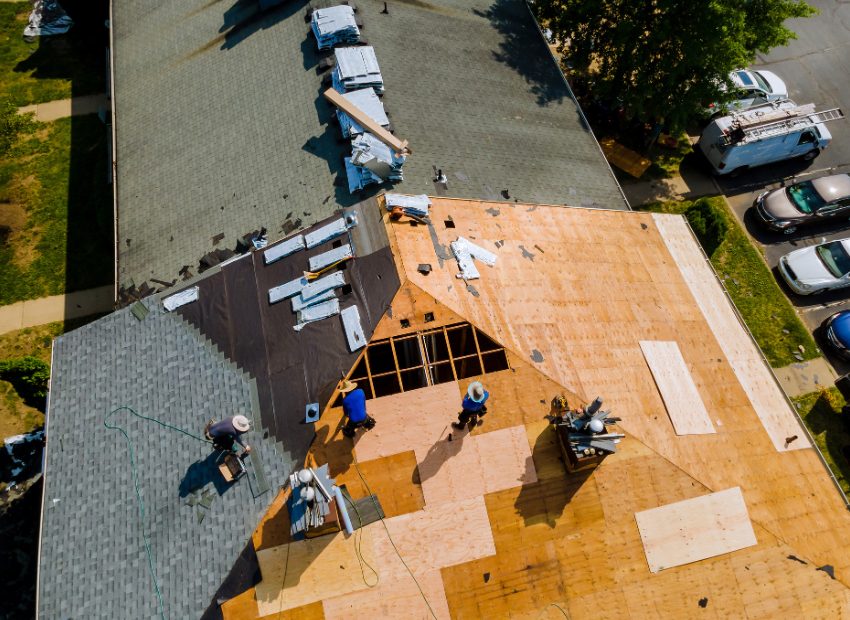
A proper hail damage roof inspection checks more than shingles. On a Front Range home, we start on the ground, walking every side of the house and looking at siding, paint, windows, gutters, and downspouts, because the whole house tells the storm story. Then we go up and check the roof surface, vents, flashing, and anything mounted on the roof. We photograph what we find so you can see it for yourself. That is what a hail damage roof inspection is supposed to check: the house, then the roof, documented clearly enough that you can decide what to do next.

If you had hail this year and never had anyone look, you are not alone. Storm season on the Front Range moves fast. By fall, a lot of homeowners finally get around to asking the right question. This post answers that question in plain language, then helps you decide when an inspection is worth it, what the photos mean, and which door-knocker promises to treat as red flags.

For how we run inspections at Blue Peaks, see our hail damage inspection page. This article is the homeowner guide behind that search question.

Why the ground comes first

Hail does not only hit the roof. It hits soft metal, vinyl, screens, and trim on the way down. Those surfaces often show damage more clearly than asphalt from the driveway. That is why a careful inspection does not start with a ladder.

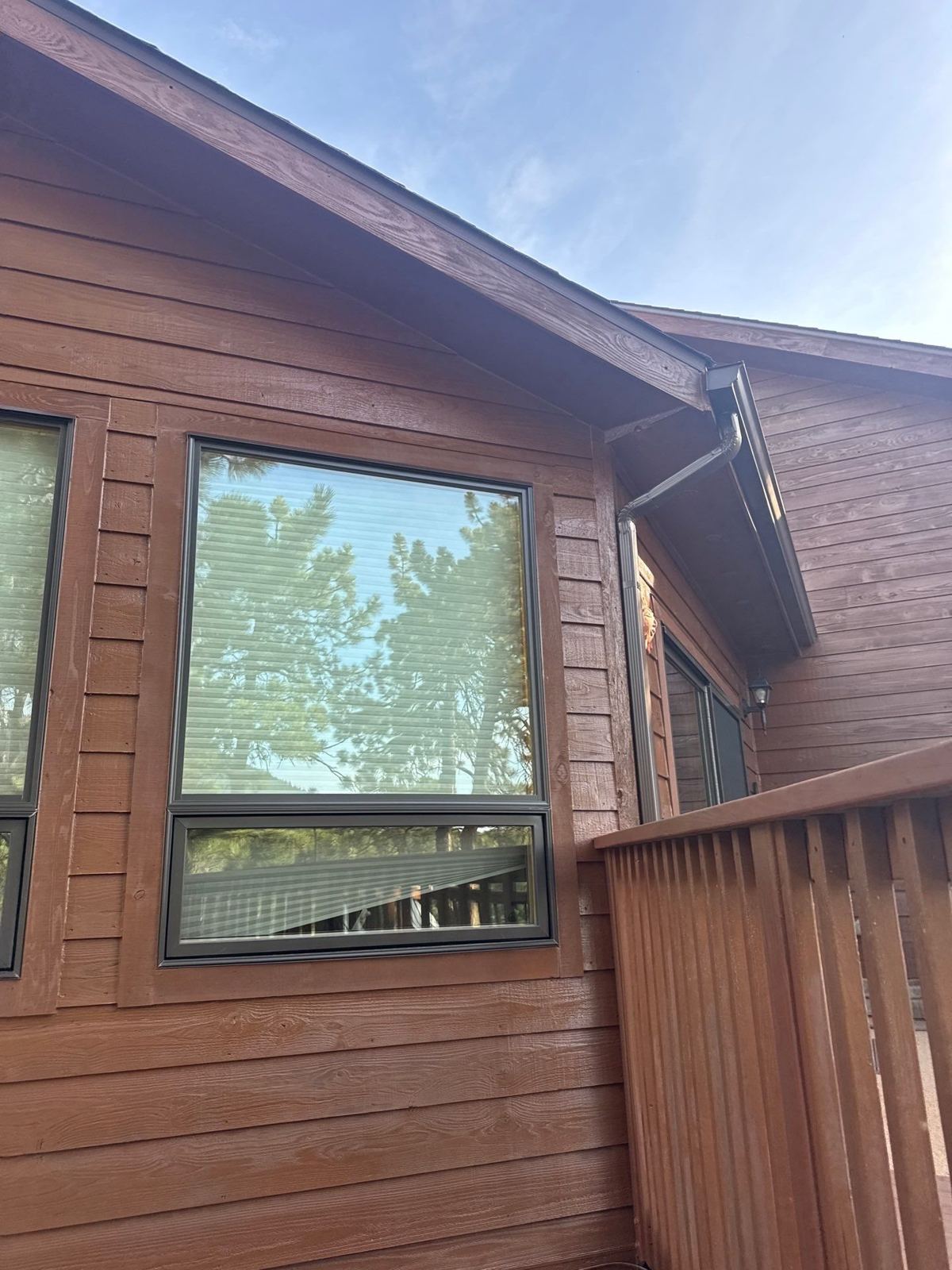
We walk every side of the house. Hail often comes in at an angle, so one elevation can take more hits than another. Skipping a side means skipping half the story. On that walk we look at:

  • Siding and paint for cracks, chips, or dents
  • Windows and screens for broken glass or torn mesh
  • Gutters and downspouts for dents and granule buildup
  • Soft metals around the house that dent easily and show where hail hit

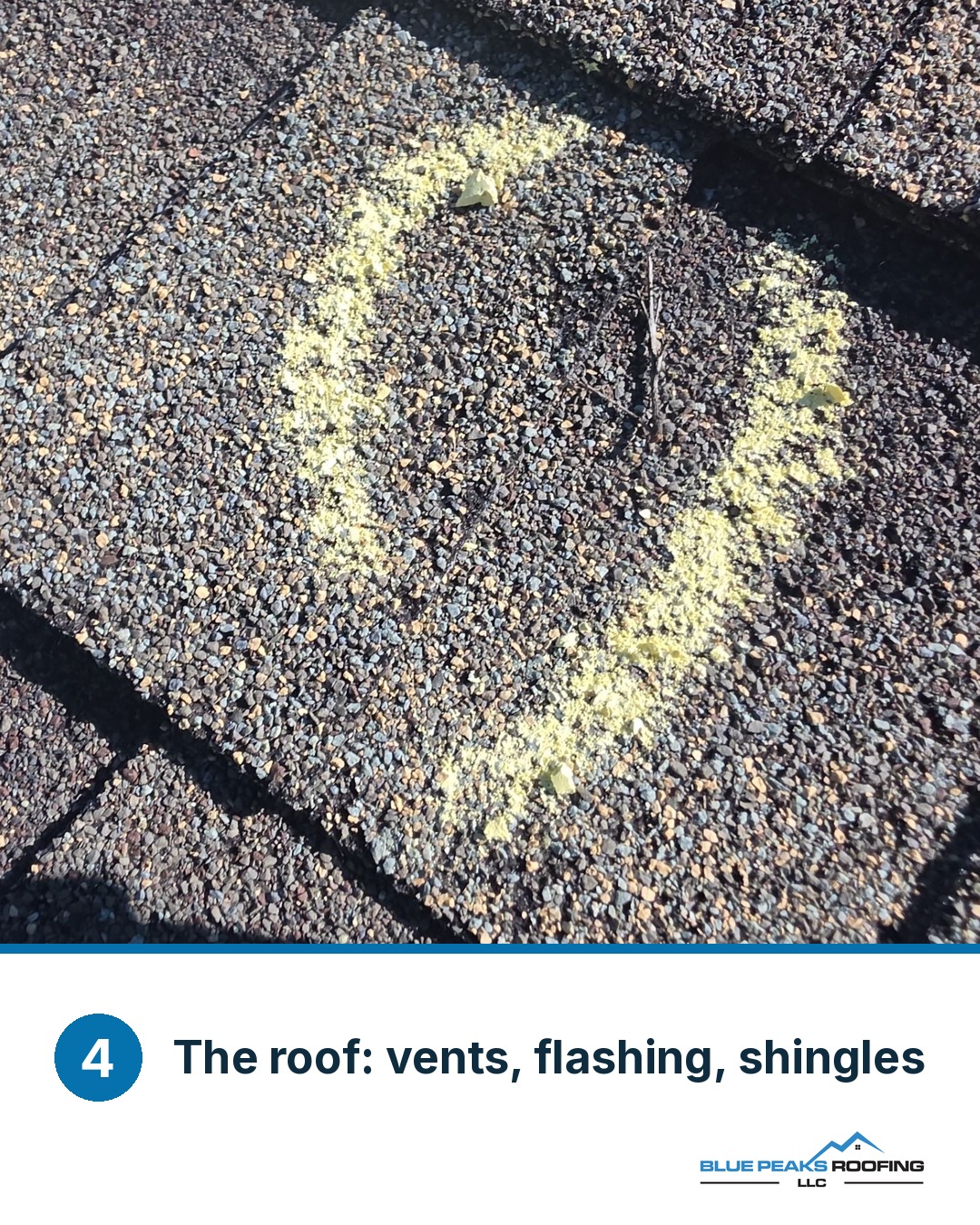
Only after that ground read do we go on the roof. Up there we check shingles (or tile or metal), vents, flashing, pipe boots, ridge and roof edges, skylights, and anything mounted on the roof. The goal is not a quick glance at the easy spots. The goal is to build a documented story of what the storm did to this house.

That order matters for you as a homeowner. If someone only climbs up, snaps three photos of the ridge, and hands you a card, they did not really inspect. They shopped for a claim.

What the photos are for

We document what we find so you can see what we saw. Close-ups show the hit. Wider shots show where it sits on the home. When we come down, we walk you through those photos in plain language: what it is, where it is, and whether it matters.

Photos are not a promise that insurance will pay. They are a record. If you later decide to file a claim with your insurer, your own documentation helps you stay grounded in what is actually on the roof instead of guessing from the driveway. If we do not find storm damage, we tell you that too. Free inspections come with no obligation either way. If the roof is fine, we say so.

We are roofers, not adjusters. We cannot guarantee anything about what your insurance company will decide. That line is not fine print for us. It is how we talk on every hail inspection, because homeowners deserve honesty before anyone starts talking about scopes and contracts.

When you should get an inspection

You do not need a visible crater in a shingle to schedule a look. Hail damage is often hard to see from the ground. Good reasons to book a free inspection include:

  • You know a hailstorm hit your neighborhood and nobody has been on the roof since
  • You see dents in gutters, downspouts, or roof vents
  • Granules are collecting in gutters or at the bottom of downspouts
  • Window screens, siding, or soft outdoor metal show new dings after a storm
  • A buyer, realtor, or HOA asked for a current roof condition report after weather

Timing is a homeowner decision. Many people prefer to know whether there is damage before they call their insurance company. Others call the carrier first. Either path is fine. What we will not do is file a claim for you. We never file a claim on your behalf. If you decide to file, you file with your insurer.

If you are heading into a claim and want the Colorado process in order, read our guide on how to file a roof insurance claim in Colorado. It covers policy basics, filing, scope review, and recoverable depreciation carefully: only on replacement-cost (RCV) policies, after the work is done, and within your policy deadline. This post will not deep-dive that. The claim guide is the right place for it.

Red flags from door-knockers who promise a free roof

After a Front Range hailstorm, trucks show up fast. Some crews are solid. Some are not. Use these as educational red flags, not as legal advice:

Anyone who promises your insurance will pay for a new roof. A roofer cannot decide your claim. Your insurance company does. If someone guarantees approval, walk away.

Anyone who offers to cover, waive, or rebate your deductible on a home. In Colorado, a residential roofing contractor cannot pay, waive, or rebate an insurance deductible (C.R.S. 6-22-105(1)). That promise is a red flag, not a favor.

Anyone who wants to meet your adjuster or talk to your insurer before you have hired them. Under Colorado law, a roofer can meet your adjuster on site or discuss the repair scope with your insurer only after you have signed a contract with them (C.R.S. 6-22-105(3)). Until then, we can inspect, document, and give you our honest opinion of what we found, nothing more.

Anyone who skips the ground walk and only sells from the ridge. A real inspection builds the story from the house outward. A sales pitch starts with a number and works backward.

Pressure is another tell. You should have time to read your policy, compare options, and decide whether filing makes sense for your deductible and coverage type. Restoration with a Purpose, for us, means the process and the straight answer matter as much as the finished roof.

What Blue Peaks checks (and what we tell you)

On a Blue Peaks hail inspection we look at the roof surface, flashing and vents, gutters and downspouts, and siding and windows: the same areas our service page lists, walked in that ground-first order. You get photos, a plain explanation, and a recommendation: repair, replacement, or nothing at all, and why. If replacement makes sense, ask us about Class 4 impact-resistant shingles.

If you hire us under a signed contract and you have filed a claim, we can meet your adjuster on site and go over the repair scope with your insurance company. We do not negotiate your claim, and we do not file it for you.

Blue Peaks Roofing was founded in 2019 in Littleton. We serve residential, commercial, and multi-family customers across Colorado. The inspection itself stays simple: honest look, clear photos, no obligation.

Book a free hail inspection

If hail hit your area this year and you still have not had a professional look, start with the inspection, not with a promise from someone on your porch.

Call (303) 808-0687 to schedule a free hail damage inspection, or book through our hail damage inspection page. We will walk the house, check the roof, photograph what we find, and tell you straight. If you later need the claim steps, keep our guide on how to file a roof insurance claim in Colorado handy.

Free inspection. No obligation. If the roof is fine, we will say so.
Categories
Homeowners

Arvada Class 4 Roofing Requirement Explained

By Andrew Ubben, Owner, Blue Peaks Roofing  |  Last updated October 2026

If you are re-roofing a home in Arvada with asphalt shingles, one City rule matters more than most homeowners expect: the shingles must be Class 4 impact resistant.

I’m Andrew Ubben, owner of Blue Peaks Roofing. We work Arvada jobs out of our Littleton office the same way we work the rest of the Front Range: check who governs the property first, then build to that code and the manufacturer’s instructions. Arvada has its own amendments, so “close enough to Denver” doesn’t cut it.

What the City says

The City of Arvada’s Roofing and Reroofing Customer Guide (2026) lists this under Impact Resistance in its residential requirements:

Class 4 impact-resistant roofing materials are required in Arvada under adopted City of Arvada Amendments Sec. 18-191.

That is a city amendment, not a sales pitch. The amendment itself, Sec. 18-191, was added by Ordinance No. 4921 (adopted March 24, 2026) and reads: “Asphalt shingles shall be Class 4 impact resistant, tested in accordance with UL 2218.” If you are pulling a residential reroof permit in Arvada for an asphalt shingle roof, plan on Class 4 shingles. For metal, tile or other roof coverings, confirm the impact requirement with Arvada Building Safety.

The guide covers both residential and commercial reroofing. Residential work follows Chapter 9 of the 2024 International Residential Code (IRC) plus City amendments. Commercial work follows Chapter 15 of the 2024 International Building Code (IBC) plus amendments. The Class 4 line appears in the residential section. The commercial section of the guide does not list it, so if you own a commercial building, confirm the impact requirement for your project with Arvada Building Safety.

What changed on July 1, 2026, and what didn’t

Arvada updated its building codes on July 1, 2026. In general, permits submitted before that date could use the 2018 codes, and permits submitted after it follow the 2024 codes. The City’s summary of the update focuses on wildfire, energy and home sprinkler changes.

The City’s guide lists Class 4 as a current requirement. Sec. 18-191 is part of the code package the City adopted on March 24, 2026 and applies to permits submitted after July 1, 2026. If your permit timing is close to a code change, check with Arvada Building Safety.

Class 4 is not the same as the wildfire rules

Arvada also adopted its first Wildfire Resiliency Code. If a property is in Wildfire Resiliency Class 1 or 2, a reroof permit needs a plan review showing how the roof assembly provides flame and ember protection. The guide lists three ways to do that: firestopping the space between the roof covering and the deck with noncombustible material, one layer of ASTM D3909 cap sheet over the deck, or a listed Class A roof assembly. Roofing materials must have a Class A fire rating in wildfire zones.

That is a separate layer from impact resistance:

Rule What it covers Where it applies
Class 4 impact resistance (Sec. 18-191) How the roof covering handles hail and other impacts Asphalt shingle roofs on homes (City residential code), with limited exceptions
Wildfire Resiliency Code and Class A fire rating Flame and ember exposure Properties in mapped wildfire risk areas

Don’t let a salesperson blur the two. A Class 4 shingle is about impact testing. A Class A roof assembly is about fire classification. Some homes need both.

What Class 4 means in plain English

Class 4 is the top rating in UL 2218, the common impact test for roofing. To earn it, the product is struck by a 2-inch steel ball dropped from 20 feet and must not crack through. It is a lab rating. It does not mean a roof can’t be damaged by hail, and nothing we install is immune to a bad storm.

Atlas Pinnacle Impact shingle roof in Pewter with hips and valleys
Atlas Pinnacle Impact shingle roof, Pewter

On Arvada reroofs we lead with Atlas impact-resistant shingles, and we also install Class 4 lines from TAMKO and GAF. We are an Atlas PRO+ Silver Level, TAMKO Pro Platinum and GAF Master Elite contractor. Whatever the product, the City’s guide is clear: install per the 2024 code, City amendments, approved plans and the manufacturer’s instructions. That includes Arvada’s wind requirements (136 Vult east of Highway 93, 150 Vult west of it), ice barrier and high-wind fastening. See our Class 4 impact-resistant shingles page for how the products compare.

Reroof vs. small repair

Arvada requires a reroofing permit when you replace a roof. The City’s reroofing page says you do not need a permit if you are replacing up to 25% of the roofing material, not to exceed 100 square feet (one roofing square), with a maximum of 100 square feet per year. Under Sec. 18-191, repairs of 100 square feet or less to an existing shingle roof that isn’t Class 4 may use the same or similar shingles. Larger work needs Class 4 unless the building official approves a matching alternative. When in doubt, we call Building Safety before we tear off.

What we do on every Arvada job

  1. Confirm the address is in the City of Arvada, not unincorporated Jefferson County with an Arvada mailing address. Jurisdiction follows the property, not the post office. Our city vs. county permit guide explains how to check.
  2. Check the City’s wildfire map before we lock in materials.
  3. On asphalt shingle roofs, Class 4 is the City’s baseline, not an upgrade.
  4. Schedule the inspections the City wants. The 2026 guide says mid-roof inspections will be required on all properties, scheduled once about 25% of the final roof covering is installed.

If you are comparing bids

Ask every contractor three questions:

  1. Is this product Class 4, and will you put that in the contract?
  2. Did you check whether this address is in a wildfire risk area?
  3. Who is pulling the Arvada permit and meeting the inspector?

If a bid is vague on any of those, it isn’t cheaper. It’s unfinished.

For more, see our Arvada roofing page and our roof replacement page.

Questions for the City

Arvada Building Safety: buildingpermits@arvada.org, 720-898-7620, Monday through Friday, 8 a.m. to 5 p.m. (per the City’s guide).

What working with us looks like: We inspect your roof for free, typically within 24 to 48 hours, and walk you through the photos of what we find. If you go ahead, your dedicated project manager sends a prep email before your build, keeps you updated every day, and we finish with a magnetic nail sweep and a final walkthrough with you. Residential roofs carry our 5-year workmanship warranty. Call (303) 808-0687 or schedule a free inspection.

Ready for an Arvada roof inspection? Call (303) 808-0687, book a hail damage inspection, or use our contact page. Blue Peaks Roofing, 8000 S Lincoln St Ste 201, Littleton, CO 80122.

Sources: City of Arvada, Roofing and Reroofing Customer Guide (2026); City of Arvada, 2026 Building Code updates.

Categories
Homeowners Maintenance & Repairs Roof Replacement

What Your Roof Warranty Covers: Manufacturer vs. Workmanship

When Blue Peaks Roofing replaces a roof in Colorado, your roof warranty is really two different warranties. One comes from the company that made the shingles. The other comes from us, the contractor who installed them. They cover different things, and knowing which is which saves a lot of confusion if a problem shows up later.

Two warranties, two different jobs

  • The manufacturer’s material warranty covers the product: the shingles and other components the manufacturer makes.
  • Our workmanship warranty covers the installation: how the roof was put on.

Two documents, from two different companies, covering two different things. Here is how each one works.

The manufacturer warranty: product defects

A manufacturer warranty covers defects in the product itself, such as shingles that crack, curl or shed granules early because of a manufacturing problem. The terms are the manufacturer’s, not ours, and they vary by product line. Some manufacturer warranties are prorated, which means the coverage decreases over time, and some require the warranty to be registered after installation.

On residential roofs, we most often install Atlas, followed by TAMKO. As a GAF Master Elite contractor, we also install GAF on residential roofs. Before you sign, we walk you through the warranty for the specific shingle in your contract, and you get the warranty documents when the job is done. You can compare options on our residential roofing and impact-resistant shingles pages.

The workmanship warranty: how the roof was installed

Our workmanship warranty covers the installation: flashing, fastening, underlayment, ventilation details and the seals around pipes, vents and other penetrations. If a leak traces back to how something was installed, this is the warranty that applies.

On residential roofs, the Blue Peaks workmanship warranty is 5 years, and your contract spells out the terms. On commercial roofs, the warranty terms are written into the contract for that project.

What roof warranties usually don’t cover

  • Storm damage. Hail, high winds and other severe weather are generally excluded from both manufacturer and workmanship warranties. Hail is common along the Front Range, so it helps to know this up front: a roof warranty covers product defects and installation, not what a storm does to the roof.
  • Damage from other trades or foot traffic. Damage caused by satellite, solar, HVAC or other crews working on the roof is not an installation problem.
  • Changes made without the installer. New penetrations, dish mounts or solar racking added without the installer’s involvement can affect coverage for that area.
  • Neglect. Problems caused by clogged gutters, debris left on the roof or damage that was never addressed are typically excluded.

Every warranty document has its own list of exclusions, so read the actual documents for your roof.

When a storm exposes an installation problem

Sometimes heavy rain or wind exposes a problem that was already there, such as flashing that was never sealed correctly. The storm didn’t create that problem; it revealed it. That is still a workmanship issue. If you’re not sure what caused a leak, an inspection with photos shows what is actually going on.

How to keep your coverage in place

  • Keep the paperwork. Store your contract, warranty documents, final invoice and job photos where you can find them.
  • Ask about registration. If your manufacturer warranty requires registration, ask for proof that it was done.
  • Report leaks promptly. Call us as soon as you notice a leak. We handle emergency repairs during normal business hours.
  • Check before changing the roof. Talk to your installer before adding solar, a dish or any new penetration.
  • Look after the roof. Have it inspected after a big storm, and follow our seasonal roof maintenance checklist. Ask about our roof maintenance programs.

HOA boards can find more detail in Understanding Roofing Warranties for HOA Boards.

Questions about your roof warranty?

If you’re not sure what your warranty covers, or you want to know what’s happening on your roof, schedule a free roof inspection. We’ll document what we find with photos and explain it in plain language. You can see how a project runs on our process page.

What working with us looks like: We inspect your roof for free, typically within 24 to 48 hours, and walk you through the photos of what we find. If you go ahead, your dedicated project manager sends a prep email before your build, keeps you updated every day, and we finish with a magnetic nail sweep and a final walkthrough with you. Residential roofs carry our 5-year workmanship warranty. Call (303) 808-0687 or schedule a free inspection.

Blue Peaks Roofing
8000 S Lincoln St Ste 201, Littleton, CO 80122
(303) 808-0687 | Contact us

Categories
Homeowners

Colorado Roof Codes Differ by Address: Here’s How to Check Yours

By Andrew Ubben, Owner, Blue Peaks Roofing  |  Last updated September 29, 2026

Your roofing permit comes from whoever governs the property, not the city printed on your mail. A Littleton or “Denver 802xx” address can sit inside an incorporated city like Arvada, Lakewood, or Littleton itself, or in unincorporated Jefferson, Arapahoe, or Douglas County. Each one adopts its own building code edition and local amendments, and those decide your ice barrier, whether a shingle overlay is allowed, what impact rating your shingles need, and when the inspector shows up.

I’m Andrew Ubben, owner of Blue Peaks Roofing. I get the “we’re in Littleton… or maybe JeffCo?” call a few times a month, and it’s a fair question. The City of Littleton alone spans three counties. So before we order a single bundle, we answer one question: who is the building department for this exact address?

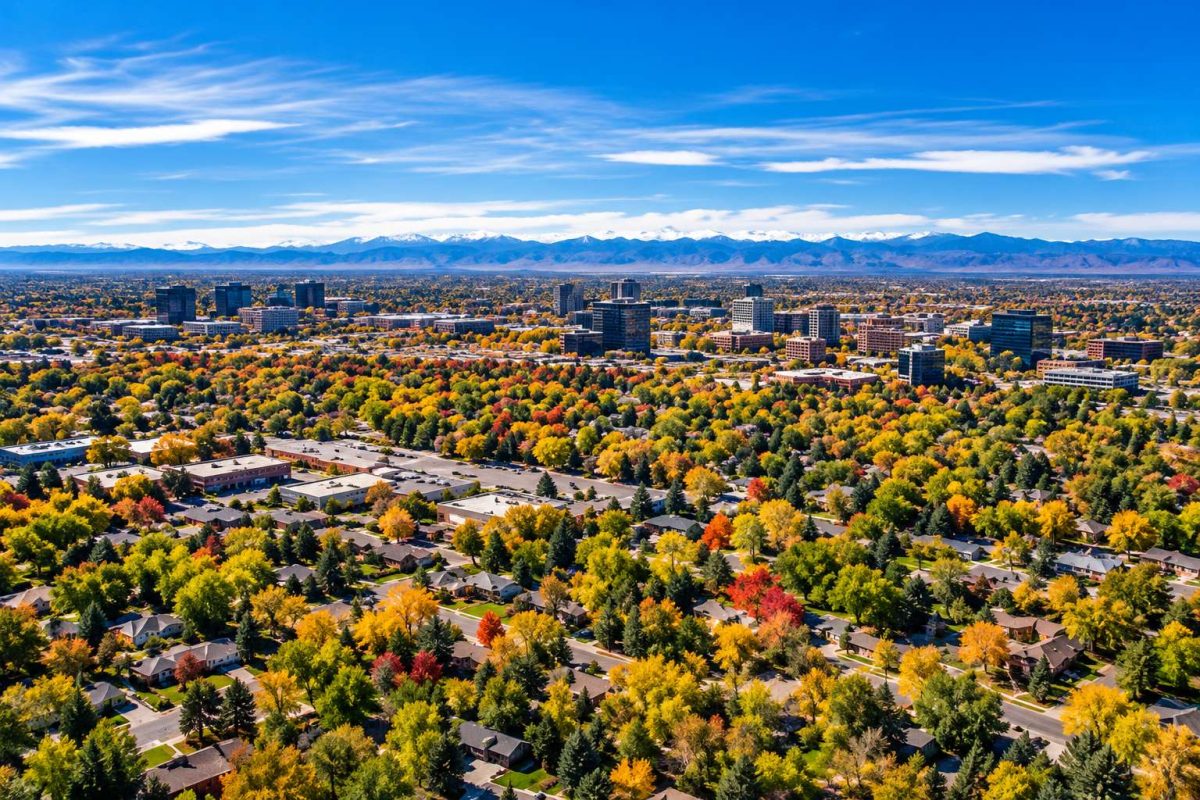
Aerial view of a Colorado Front Range neighborhood with the Rocky Mountains in the background
Neighbors on the same street can fall under different building departments.

Jurisdiction follows the property line, not the mailing address

A Front Range mailing address can belong to either of two kinds of government:

  • An incorporated city or town (Denver, Arvada, Lakewood, Littleton, Aurora, Centennial, Castle Rock, and others), or
  • Unincorporated county (Jefferson, Arapahoe, Douglas, Adams, and so on)

The city name on your packages is a postal label. The municipal boundary is what decides your permit. Guess wrong, and you pull the wrong permit, stock the wrong materials, and fail the first inspection.

What changes from one jurisdiction to the next

Colorado doesn’t run one statewide residential roofing code. Each city and county adopts an edition of the International Residential Code (IRC) and then amends it. Here are three jurisdictions we work in, side by side:

Jurisdiction Current code & key roofing rules What it means for your job Official source
City of Arvada 2024 codes for permits submitted on or after July 1, 2026. Ice and water shield now required. City amendment Sec. 18-191 requires Class 4 impact-resistant asphalt shingles, with limited exceptions. Wildfire Resiliency Code can apply in mapped wildfire risk areas. Mid-roof inspection required on all properties at 25% of cover. Class 4 shingles + ice barrier; check the wildfire map; mid-roof inspection at 25% of cover, then final Code update · Design criteria · Re-roofing
City & County of Denver 2025 Denver Building and Fire Code, based on the 2024 IRC with Denver amendments. Denver’s design criteria table (Table R301.2) lists ice barrier underlayment as not required. Own permit portal and inspection process. Use Denver’s process, not JeffCo’s. An eave ice barrier isn’t a code mandate here, though the shingle manufacturer’s instructions may still call for one. Denver building codes
Unincorporated Jefferson County 2024 Jefferson County Building Code (July 1, 2026 roofing notice). Ice barrier per R905.1.2. Drip edge at eaves and gables. No overlays; complete tear-off required. Mid-roof inspection at 10–25% complete. Class A roof assemblies in the WUI Overlay District. Full tear-off, ice barrier, and a mid-roof inspection early in the job, which affects crew scheduling 2024 roofing notice (PDF) · Re-roofing

These are examples, not a complete Front Range matrix, and rules change with each code cycle. Always confirm with the building department for your address and permit date. We’re a roofing contractor, not a code official.

Same house, three different inspection schedules

Here’s where the difference gets real. On a standard asphalt reroof:

  • Unincorporated Jefferson County requires a mid-roof inspection when the roof is 10–25% complete. Miss that window and the job stops.
  • Arvada‘s 2026 guide says mid-roof inspections will be required on all properties, once about 25% of the final roof covering is installed.
  • Denver runs its own inspection process through its own permit portal.

Same shingle brand. Different paperwork. Different pass/fail checklist.

How we check an address before we write a contract

  1. Confirm the parcel and municipal boundary using the county GIS or the city’s address lookup, not a map app’s “near.”
  2. Open that building department’s re-roofing page and its current adopted-code notice.
  3. Read the local amendments for ice barrier, drip edge, overlays, mid-roof inspections, Class 4 impact rules, and wildfire rules.
  4. Read the manufacturer’s installation instructions for the product we’re installing. Code and manufacturer both apply, and the stricter practical requirement usually wins on our jobs.
  5. Only then write the scope, the permit path, and the material list into the contract.

If a contractor skips steps 1–3, they’re estimating from habit. Habit is how people get red-tagged. You can see how this fits into the rest of a job on our process page.

City vs. unincorporated county: why you’ll feel the difference

In a city, you deal with that city’s building safety division, its online permit portal, and its inspectors. Fees, inspection windows, and document checklists are city-specific.

In unincorporated county, you deal with the county building department. Rules can be tighter or simply different. Jefferson County’s July 2026 notice, for example, bans asphalt overlays outright. That also changes the roof repair vs. replacement math, because a second layer over the old roof isn’t an option there.

Code edition years matter

“We’re on the IRC” isn’t enough. Ask:

  • Which edition year did this jurisdiction adopt: 2018, 2021, or 2024?
  • When did that edition take effect for new permit applications?
  • Are there local amendments to Chapter 9, the roof assemblies chapter?

Arvada is a clean example. Permits submitted before July 1, 2026, could generally stay on the prior 2018 codes; permits submitted after that date follow the 2024 package. Separately, Arvada’s residential code amendment Sec. 18-191 requires Class 4 impact-resistant asphalt shingles. Our Arvada Class 4 roofing requirement post explains what that means for a reroof permit. That affects your material choice too. If you’re weighing metal vs. shingle roofing, start with what your jurisdiction requires.

What we won’t do

  • We won’t promise outcomes we don’t control. We document conditions and build to code and the manufacturer’s instructions.
  • We won’t treat neighboring cities as interchangeable because they’re “all Denver metro.”

What you can do this week

If you’re planning a roof replacement:

  1. Look up your address on your county assessor or GIS map and note whether it’s in a city or unincorporated county.
  2. Call or email that building department and ask which code edition applies to a reroof permit submitted this month.
  3. Bring that answer to every contractor you interview, and see who already knew it.

If you want us to run that check with you, we will. That’s part of Restoration with a Purpose: clarity before tear-off, not after a failed inspection.

Not sure which jurisdiction your property is in? Call 303-808-0687 or reach us through our contact page.

FAQ

How do I know if I’m in a city or unincorporated county?

Use your county assessor or GIS map, or ask the county building department. Don’t rely on the city name in your mailing address.

Do all Colorado cities use the same roofing code?

No. Each city and county adopts its own IRC edition and adds local amendments. Always check the jurisdiction for your parcel.

Does Denver require an ice barrier at the eaves?

Not by code. Denver’s design criteria (Table R301.2) list ice barrier underlayment as not required. The shingle manufacturer’s instructions may still call for it, so confirm both for your permit date with Denver Community Planning and Development.

Does Arvada require Class 4 impact-resistant shingles?

Yes, for asphalt shingle roofs on homes. Arvada’s residential code amendment Sec. 18-191 requires Class 4 impact-resistant asphalt shingles, tested to UL 2218. There are two exceptions: the building official may approve the closest match when no Class 4 shingle matches the existing color or style, and repairs or additions of 100 square feet or less may use the same or similar shingles. Confirm with Arvada Building Safety for your project.

Does Jefferson County allow asphalt shingle overlays?

Not in unincorporated Jefferson County. Its July 1, 2026 roofing notice allows only one layer of asphalt shingles and requires a complete tear-off. Confirm current rules with JeffCo Building Safety for your permit date.

Who pulls the permit, me or the contractor?

On our jobs, Blue Peaks pulls the reroof permit unless the contract says otherwise. Ask every bidder who owns the permit and the inspections.

What working with us looks like: We inspect your roof for free, typically within 24 to 48 hours, and walk you through the photos of what we find. If you go ahead, your dedicated project manager sends a prep email before your build, keeps you updated every day, and we finish with a magnetic nail sweep and a final walkthrough with you. Residential roofs carry our 5-year workmanship warranty. Call (303) 808-0687 or schedule a free inspection.

Categories
Roofing Settlement Agreement

What Is a Roofing Settlement Agreement, and How Does It Work in Colorado?

Picture this: You’re selling your house. You’ve accepted an offer. The inspection went well, mostly. Then the inspector gets to the roof and flags it. The buyer’s lender won’t touch the loan without a new one. Your closing date is close, and you don’t have the cash for a new roof sitting in a drawer. The buyer doesn’t want to wait. Your real estate agent is stress-eating granola bars in their car.

At this point, most people think they have three options: drop the price, come out of pocket before closing, or watch the whole deal collapse. They’re wrong. There’s a fourth option, and it solves the problem without any of those outcomes.

So What Is a Settlement Agreement?

A Settlement Agreement is a legal arrangement where Blue Peaks Roofing replaces your roof before closing, with zero money upfront from you. Instead of paying us directly, you authorize payment through the Title company at closing. It comes out of your sale proceeds just like any other closing cost line item.

Zero out of pocket. Roof replaced before closing. Payment through Title.

The deal closes. The buyer gets a new roof with our workmanship warranty and the manufacturer’s warranty. You walk away clean. Everyone stops stress-eating.

This is not a loan. No interest. No credit check. No monthly payments. It’s a contractual agreement tied to the closing of the property, and it’s set up so your title company can handle it as a line item at closing.

Who Actually Calls Us About This?

Honestly, everyone involved in the transaction at some point:

  • Sellers who don’t want to cut their price or write a check before they’ve even moved out
  • Buyers who want a new roof as a condition of the deal and need it done on an actual timeline
  • Real estate agents on both sides who need a real solution before the deal dies and everyone loses their commission
  • Estate sales and divorce proceedings where nobody wants to manage a roofing project in the middle of an already complicated situation, and honestly, fair enough
  • Investors and landlords who need a building in lender-approvable condition before they can close

If you’re a real estate agent and a roof gets flagged, call us before you suggest a price cut. A replacement paid at closing may be the better option for your seller.

How It Works, Step by Step

1

Free Inspection

We inspect the roof and document what’s needed. No cost, no commitment. You get a straight read on condition and a complete scope. No vague estimates, no mystery numbers.

2

Written Scope and Proposal

We put together a detailed written scope and a firm price. This becomes the foundation of the Settlement Agreement: a clean, professional document your Title company, agent, and attorney can all work with without confusion or back-and-forth.

3

Agreement Signed

You sign the Settlement Agreement authorizing Blue Peaks to be paid from your closing proceeds. Your agent and Title company get copies. Everyone is aligned before we order a single shingle.

4

Roof Replaced

We schedule and complete the installation. We give you the schedule in writing before you sign, so you know whether it fits your closing date. We keep your agent in the loop throughout so nobody’s sitting around wondering what’s happening.

5

Closing

The Title company pays Blue Peaks from your proceeds at closing. It shows up on your closing disclosure as a line item, right next to the agent commission, transfer taxes, and the rest of it. You collect your net and the whole thing is over. Simple as that.

A note for real estate agents:We know a flagged roof makes your job harder. We work on your timeline, we communicate directly with your Title company, and we plan the work around your closing date. If a listing has a roof problem, call us before you have the price reduction conversation with your client.

Common Questions

Does the buyer get a warranty on the new roof?

Yes. Residential roofs come with our 5-year workmanship warranty, with the terms spelled out in the contract, plus the manufacturer’s material warranty, which varies by product. The warranty documents go to the buyer at closing.

What if the deal falls through after you’ve already started work?

We address this in the agreement before we start a single thing. If the property doesn’t close, the seller takes ownership of the payment obligation, the same as any contractor arrangement. We’re completely upfront about this before anyone signs anything.

How fast can you actually move?

It depends on the schedule and materials. Call us as soon as the roof is flagged, and we’ll tell you in writing whether we can finish before your closing date.

Do you work with all Title companies?

We work with your title company to add the payment as a line item on the closing disclosure.

Is this financing? Am I taking on debt?

No. No loan. No lender. No interest. No credit check. No monthly payments. It’s a contractual obligation tied to the closing of the property. Payment flows through Title. That’s the whole thing.

Bottom Line

A flagged roof doesn’t have to kill a deal or force your hand on price. A replacement paid at closing can keep a deal on track.

If you’re staring at an inspection report with a roof problem and a closing date that isn’t moving, give us a call before you make a concession you didn’t have to make. The inspection is free, and you get a clear written proposal.

Free inspection. Clear written proposal.

(303) 808-0687

Blue Peaks Roofing · Littleton, CO · bluepeaksroofing.com · Mon–Sat 8AM–5PM

If the problem is limited to one area, our roof repair team can usually fix it without a full replacement.

About Blue Peaks RoofingBlue Peaks Roofing serves the Denver metro and Front Range. BBB A+ rated, accredited since 2022. We handle residential and commercial roofing, including real estate transactions, across the Front Range. Littleton, CO.

What working with us looks like: We inspect your roof for free, typically within 24 to 48 hours, and walk you through the photos of what we find. If you go ahead, your dedicated project manager sends a prep email before your build, keeps you updated every day, and we finish with a magnetic nail sweep and a final walkthrough with you. Residential roofs carry our 5-year workmanship warranty. Call (303) 808-0687 or schedule a free inspection.

Categories
Insurance & Claims Maintenance & Repairs Project Planning Roof Repair Roof Replacement Warranty & Insurance

How to File a Roof Insurance Claim in Colorado: Step by Step

Let’s set the scene. A hailstorm just rolled through your neighborhood. Your car has new dimples. Your neighbor is already on the phone with some guy in a pickup truck who appeared out of nowhere handing out business cards like candy. And you’re standing in your driveway wondering what you’re actually supposed to do.

Here’s the thing: your insurance company has navigated this exact process thousands of times. You probably haven’t done it once. That gap in experience is exactly where money disappears — and it’s completely avoidable.

We inspect hail-damaged roofs across the Front Range. Here’s exactly how to handle it without leaving money on the table or making expensive mistakes.

First — Pull Out Your Policy and Find These Three Things

Nobody reads their insurance policy. We know. It reads like it was written by someone who hates you. But before you call your carrier, you need to know three things or you’re walking into a conversation completely blind:

  1. Your wind and hail deductible. In Colorado, this is almost always a separate deductible from your standard one — and it’s percentage-based. On a $500,000 home with a 2% hail deductible, you owe $10,000 before insurance pays a single dollar. Find this number before the adjuster visits.
  2. RCV or ACV coverage. Replacement Cost Value pays what it costs to build the roof today. Actual Cash Value pays that minus depreciation — meaning they factor in your roof’s age and pay less. The difference is often several thousand dollars. Most people have no idea which one they have until the check arrives.
  3. Your filing deadline. Colorado policies typically require you to file within 1–2 years of the storm date. The clock started the minute the hail hit.

Still confused by your policy? Call SCC Insurance at (303) 587-9582. Free policy review. They’ll translate the fine print into English for you — no strings attached.

Now Here’s the Process, Step by Step

Step 1

Get a Professional Inspection Before You Call Your Insurance Company

This is the step people skip. It’s also the most important one. Before an adjuster puts eyes on your roof, you need to know what’s actually there. At Blue Peaks, inspections are always free and we document everything with photos. Going into the process informed, instead of just waiting to hear what the insurance company says, puts you in a better position.

Step 2

File Your Claim

Call your insurance company or file online. Get a claim number immediately and write it down — you’ll reference it constantly over the next several weeks. Be factual: give them the approximate storm date, describe the damage you’ve observed, and request a full inspection. Don’t speculate, don’t exaggerate. Just tell them what you know.

Step 3

Be Ready for the Insurance Inspection

Your insurer will schedule an inspection of the roof. Be available, keep your claim number and policy details handy, and have your own inspection photos and the storm date ready for reference.

Step 4

Review the Scope of Loss Line by Line — Before You Sign Anything

The adjuster produces a Scope of Loss — a line-by-line breakdown of what they’re approving. Commonly missing items: drip edge, ice and water shield, starter strip, pipe boot replacements, ridge ventilation, and overhead and profit. If you think items are missing, you can ask your insurer to review the scope.

Step 5

Ask Your Insurer to Review an Incomplete Scope

If items are missing, you can ask your insurer to review them. Your inspection photos and measurements can help you show what is on the roof.

Step 6

Receive Your ACV Check and Get Started

Once the scope is agreed upon, your insurance company issues the first check — the Actual Cash Value payment. This is the depreciated value of the roof. Work begins, this payment covers the start of the project, and the clock starts on your completion certificate.

Step 7

Collect Your Recoverable Depreciation After the Roof Is Done

After completion, you submit a certificate of completion and your insurance company releases the recoverable depreciation — the difference between what they paid and what the roof actually costs new. This is your second check. Most of our clients are genuinely surprised by how smooth this last step is once the work is done right.

⚠ Mistakes That Cost Colorado Homeowners Thousands Every Year
  • Signing a contract before you know what your deductible actually is
  • Accepting the first scope without reviewing every line item — first scopes are almost never complete
  • Going with the cheapest bid (low bids almost always mean missing scope items — you’ll feel the gap when the final check arrives)
  • Waiting too long after a storm and letting the filing window close
  • Signing contracts with door-to-door contractors who showed up the day after a storm and will be gone by winter — this one deserves its own article
The Blue Peaks difference — and it’s a real one:We inspect, document and give you a full photo report of what we find. Your deductible is always your responsibility under Colorado law.

What Does It Actually Cost Me?

Your deductible is your responsibility under Colorado law. We work within the approved insurance scope and we never ask homeowners to pay above their approved coverage for covered work. If you have an ACV policy and depreciation isn’t recoverable, we’ll explain exactly what that means before you commit to a single thing. No surprises, ever.

Ready to Get Started?

The insurance company has done this thousands of times. You probably haven’t. That experience gap is where money goes — and it’s completely avoidable when you have the right people in your corner.

If there’s been a storm in your area and nobody’s been on your roof, call us. Free inspection. Honest assessment. No obligation either way. We’ll tell you straight whether there’s a claim worth making.

Free inspection with a full photo report.

(303) 808-0687

Blue Peaks Roofing · Littleton, CO · bluepeaksroofing.com · Mon–Sat 8AM–5PM

Not sure what you are looking at? Schedule a free hail damage roof inspection.

Wondering how a claim affects coverage? Read whether hail damage voids your roof warranty.

About Blue Peaks RoofingBlue Peaks Roofing serves the Denver metro and Front Range. BBB Accredited. Google reviews. Littleton, CO.

Categories
Homeowners Windows & Siding

When to Replace Windows During a Reroof: A Homeowner’s Guide

Why Roof and Window Replacement Should Be Coordinated

Most homeowners view roof replacement and window replacement as separate, isolated projects. They hire a roofer one year and a window company the next. This fragmented approach often leads to higher costs, missed opportunities for efficiency, and, most critically, vulnerable points in your home’s water defense.

The Building Envelope: How Roofs and Windows Work Together

Your home isn’t a collection of parts; it’s a system. The “building envelope” is the barrier that separates the conditioned interior from the harsh exterior. Roofs and windows are key parts of this envelope. Where they meet, at dormers, skylights and upper-story walls, leaks are common.

Flashing Integration & Water Management

The critical intersection is flashing. Flashing is the metal material used to direct water away from joints.

  • Dormers: Windows located in dormers often have step flashing that integrates directly behind the siding and under the shingles. Replacing the roof allows us to replace this flashing. If you replace windows later, the window installer might disturb this seal.
  • Skylights: These are essentially “windows on the roof.” They must be curbed and flashed into the roofing system correctly. A roof replacement is a good time to replace aging skylights.

Sequencing Benefits: Roof First or Windows First?

If you can’t do them simultaneously, the general rule is Roof First. Why? Roofing is a messy, heavy-construction process. Debris falls. Dust settles. Doing the roof first prevents damage to brand-new windows. However, doing them together allows the flashing to be integrated seamlessly in one operation.

Labor Efficiencies & Cost Savings

Combining projects creates economies of scale:

  • One Setup: Dumpsters, scaffolding, and safety gear are set up once.
  • Reduced Trip Charges: Crews are already on site.
  • Bulk Material Orders: Potential savings on delivery fees.
  • Siding Labor: Often, siding near windows needs to be manipulated to install flashing. Doing this once saves labor hours.

Colorado Weather Considerations

In Colorado, our freeze-thaw cycles are brutal on sealants. Caulk shrinks and cracks. By replacing windows and roofs together, we install fresh, high-grade sealants and proper head flashing (drip caps) that protect the window frame from melting snow dripping off the roof eave.

When NOT to Replace Windows During a Reroof

There are exceptions. If your budget is tight and the roof is leaking, prioritize the roof. A leaking roof destroys structure; drafty windows just cost energy. Don’t delay a critical roof repair to save up for windows.

Planning Your Exterior Upgrade Timeline

If you are planning a major exterior overhaul, consult with a contractor who understands the full envelope. At Blue Peaks, we manage both trades, ensuring the roofer and the window installer communicate about flashing details before a single nail is pulled.

Planning more than one project? Here is how we coordinate windows, siding and your roof as one plan.

When a roof is past saving, here is how our roof replacement process works.

What working with us looks like: We inspect your roof for free, typically within 24 to 48 hours, and walk you through the photos of what we find. If you go ahead, your dedicated project manager sends a prep email before your build, keeps you updated every day, and we finish with a magnetic nail sweep and a final walkthrough with you. Residential roofs carry our 5-year workmanship warranty. Call (303) 808-0687 or schedule a free inspection.

Categories
Maintenance & Repairs repair vs a full roof replacement Roof Repair Roof Replacement Roofing Challenges

Roof Repair vs. Replacement: How to Make the Right Decision

Start with an inspection

You can’t judge a roof’s condition from the driveway. Hail bruising, worn granules, lifted shingles and soft decking are hard to see from the ground, and walking a roof yourself is risky. A professional inspection with photos is the right place to start any repair or replacement decision.

Signs a repair is enough

  • Damage is limited to one area of the roof.
  • A few shingles are missing or damaged, and the rest of the roof is in good shape.
  • A leak traces back to flashing around a chimney, wall or vent.
  • A cracked or worn pipe boot is letting water in.

In these cases, our roof repair team can usually fix the problem without a full replacement.

Signs it’s time to replace

  • Widespread granule loss or hail bruising across the roof.
  • Leaks in several places.
  • Soft, spongy or sagging decking.
  • Shingles curling, cracking or lifting across the roof, not just in one spot.

Age is a factor, but condition decides

An older roof is more likely to need replacement, but age alone doesn’t make the call. A well-installed older roof can be in better shape than a newer one that took a beating in a storm. The inspection tells you what condition the roof is actually in.

Local code matters

Some Colorado jurisdictions don’t allow a second layer of shingles over the old roof, which changes the math on a repair or partial overlay. Learn more in Colorado Roof Codes Differ by Address: Here’s How to Check Yours.

Compare written estimates

When it’s a close call, ask for written estimates for both a repair and a replacement so you can compare them side by side. Think about how long you plan to stay in the home: a repair may make sense if you are selling soon, while a replacement may make more sense if you plan to stay.

Get a clear answer

Schedule a free inspection. We typically inspect within 24 to 48 hours, walk you through the photos of what we find and tell you honestly whether you need a repair, a replacement or nothing at all. See how our roof repair and roof replacement services work, or contact us to book.

What working with us looks like: We inspect your roof for free, typically within 24 to 48 hours, and walk you through the photos of what we find. If you go ahead, your dedicated project manager sends a prep email before your build, keeps you updated every day, and we finish with a magnetic nail sweep and a final walkthrough with you. Residential roofs carry our 5-year workmanship warranty. Call (303) 808-0687 or schedule a free inspection.

Categories
Maintenance & Repairs Metal Roofing Project Planning Roofing Challenges Windows & Siding

Roofing Materials for Denver’s Weather: How to Choose

What Denver roofs face

Roofs along the Front Range deal with hail, strong high-altitude sun, heavy wet snow, wind and constant freeze-thaw swings. Every material handles those conditions a little differently, so the right choice depends on your home, your budget and your priorities.

Class 4 impact-resistant shingles

Class 4 impact-resistant shingles are designed to resist hail damage better than standard shingles while keeping the look and cost of an asphalt roof. We often start with Atlas, where Blue Peaks is an Atlas PRO+ Silver Level contractor, and we also install TAMKO as a TAMKO Pro Platinum contractor. On residential roofs, we are also a GAF Master Elite contractor.

Manufacturer warranties vary by product, so we walk you through the coverage for the specific shingle you choose. Learn more on our impact-resistant shingles page.

Some cities add their own rules. Arvada, for example, requires Class 4 impact-resistant asphalt shingles on homes, with limited exceptions. See our Arvada Class 4 roofing requirement post.

Stone-coated steel

Stone-coated steel combines a steel panel with a stone granule finish, so it can have the look of shingles or tile while giving you the strength of metal. We install stone-coated steel from Westlake Royal. See our stone-coated steel roofing page.

Standing seam metal

Standing seam metal uses long panels with concealed fasteners. It sheds snow well, carries a Class A fire rating and has a clean, modern look. Hail can dent metal, so ask about heavier gauge panels or textured finishes if that is a concern. See our standing seam metal roofing page.

Concrete tile

Concrete tile suits Mediterranean and Southwest-style homes and handles strong sun well. It is heavy, so the roof structure needs to be checked before a switch to tile. See our concrete tile roofing page.

Installation matters as much as the material

Underlayment, ice barrier and ventilation requirements follow your local building code and the manufacturer’s installation instructions, and those rules vary by address. Learn how to check yours in Colorado Roof Codes Differ by Address: Here’s How to Check Yours.

How to choose

  • Budget: impact-resistant shingles generally cost the least up front; metal and tile cost more.
  • Home style: some materials suit certain architecture better than others.
  • HOA rules: many communities limit the materials and colors you can use.
  • How long you’ll stay: your plans for the home affect how much it makes sense to invest.

Not sure which material fits your home? Schedule a free inspection and we’ll walk you through the options. See how our roof replacement process works, or contact us.

What working with us looks like: We inspect your roof for free, typically within 24 to 48 hours, and walk you through the photos of what we find. If you go ahead, your dedicated project manager sends a prep email before your build, keeps you updated every day, and we finish with a magnetic nail sweep and a final walkthrough with you. Residential roofs carry our 5-year workmanship warranty. Call (303) 808-0687 or schedule a free inspection.

Categories
Real Estate Realtors

The Uncertainty Factor: How Roof Certification Closes Real Estate Deals

Uncertainty Kills Deals. Documentation Closes Them.

How roof certifications convert risk into confidence and protect your transaction timeline and price.

The Uncertainty Factor: Why Roofing Ambiguity Kills Real Estate Deals

Why Buyers Distrust Vague Roof Language

Phrases like “good condition,” “5–7 years left,” or “appears serviceable” are subjective and create buyer anxiety. Buyers know roofs are expensive and critical systems. Vague language signals unknown risk. Buyers often interpret ambiguity as leverage for negotiation. For example, if an inspector notes “end of service life approaching,” a buyer might request a $20k concession, even if the roof is functional.

How Inspectors Hedge to Avoid Liability

Professional home inspectors intentionally use cautious language to avoid liability. They avoid definitive statements to protect themselves legally. This creates ambiguity that benefits buyers in negotiations, leaving sellers with uncertainty and a reduced negotiating position. Statements like “Roof appears to be in fair condition but may need attention within 5-10 years” offer no real clarity.

How Ambiguity Becomes Buyer Leverage

Vague roof assessments give buyers ammunition for price reductions. Appraisers flag uncertain roofs as risk factors, and lenders may require repair estimates or concessions. Buyers use this uncertainty to demand credits, repairs, or price reductions. Negotiations stall, and timelines drag on as parties argue over the true condition of the roof.

Why Roofing Uncertainty Disproportionately Affects Transactions

Roofs are one of the largest, most expensive systems in a home. Failure is catastrophic, leading to water damage, structural issues, and mold. Buyers and lenders are highly risk-averse about roofs. Uncertainty about roof condition creates appraisal issues and underwriting delays. Repair concessions can be substantial, ranging from $5k to $30k+.

Certification vs Opinion: The Critical Distinction

What an Opinion-Based Roof Assessment Is

An opinion-based assessment is a subjective evaluation by an inspector based on visual observation only. It lacks formal documentation or a warranty and uses hedged language to avoid liability. It is not transferable to buyers and creates ambiguity and buyer leverage. Example: “Roof appears to have 5-7 years of remaining life.”

What a Formal Roof Certification Is

A formal roof certification is a physical, documented inspection with photo evidence of condition and repair verification (if needed). It includes a defined warranty term (e.g., 5-year certification), clear, definitive findings, and professional documentation. It is a transferable assurance to buyers that reduces negotiation leverage.

Why Certification Converts Uncertainty into Confidence

Certification is a risk-reduction instrument. It transforms subjective opinion into documented fact, providing buyers with certainty instead of fear. This removes ambiguity from negotiations, stabilizes transaction timelines, protects the listing price, and transfers risk from the seller to a documented system. Buyers gain confidence in the roof’s condition.

The Certification Advantage in Real Estate

A certified roof is a documented asset. Buyers see certainty, not risk. Appraisers accept certification as evidence, and lenders approve without roof contingencies. Negotiations focus on price, not roof condition, leading to faster closing timelines and reduced deal friction.

What This Means for Realtors: Actionable Guidance

Why Waiting for the Buyer’s Inspector Is a Mistake

A buyer’s inspector will hedge language for liability protection, giving the buyer negotiation leverage. This delays the transaction timeline, creates appraisal and underwriting issues, and reduces the seller’s negotiating position. Buyers can demand concessions based on uncertainty. The better approach is to pre-inspect and certify before listing.

How Pre-Inspection Removes Leverage Before Negotiations Begin

The seller controls the narrative with a pre-inspection. Certification provides documented evidence, so buyers see certainty, not risk. This removes the buyer’s ability to use the roof as leverage, stabilizes appraisal and underwriting, leads to a faster closing timeline, and protects the listing price.

When to Certify vs Repair vs Replace

  • Roof in good condition: Certify (5-year certification).
  • Roof with minor issues: Repair and certify.
  • Roof near end of life: Replace (new roof warranty).
  • Borderline roof: Resolve before listing (don’t let the buyer control the narrative).

Clear recommendation: “If the roof is borderline, resolve it before listing.”

How Certifications Protect Listing Price and Timeline

A certified roof has documented asset value. Buyers can’t use roof condition as negotiation leverage. Appraisers accept certification as evidence, and lenders approve without roof contingencies. This results in a faster closing timeline, reduced deal friction, and protection of the seller’s negotiating position.

The Realtor’s Role in Roof Certification

Educate sellers on certification benefits. Recommend pre-inspection for borderline roofs. Coordinate with Blue Peaks for fast turnaround. Use certification in listing presentations. Provide certification to buyers and lenders to reduce transaction friction and protect deal timelines and price.

Blue Peaks Roofing Process: How We Convert Uncertainty into Certainty

Pre-Inspection with Digital Documentation

We conduct a comprehensive physical inspection with photo documentation of the condition. Our digital report provides clear findings with no ambiguous language and a definitive assessment. We offer fast turnaround aligned with real estate timelines.

Honest Assessment: Certify, Repair, or Replace

We provide a clear recommendation based on condition, with no pressure to sell unnecessary work. If the roof is good, we certify it. If it needs work, we repair and certify. If it is failing, we replace it with a new roof warranty. We are transparent about what’s needed and why.

Clear Explanation of Findings

Our written report includes photo evidence, an explanation of condition and remaining life, specific repair recommendations (if needed), and clearly defined warranty terms. No hedged language or ambiguity—buyers and lenders understand exactly what they’re getting.

Fast Turnaround Aligned with Real Estate Timelines

We understand real estate moves quickly. Inspection and certification are completed within 24-48 hours. The report is ready for your listing presentation. We coordinate with agents, sellers, and buyers to ensure no delays to the transaction timeline.

Coordination with Agents, Sellers, and Buyers

We work directly with real estate professionals, provide documentation for listings, answer buyer questions directly, support the appraisal and underwriting process, facilitate smooth transactions, and reduce deal friction.

Core Philosophy: If It Isn’t Documented, It Didn’t Happen

Documentation is everything. Photos, measurements, and findings are all recorded in a clear, professional report. This is transferable to buyers and lenders, reducing uncertainty and risk while building confidence in the transaction.

Real Estate Psychology: Why Certainty Closes Deals

Buyers Fear the Unknown

Roofs are expensive, critical systems. Roof failure is catastrophic, so buyers are risk-averse. Uncertainty creates anxiety and hesitation. Ambiguous roof language triggers buyer caution. Certification removes fear and builds confidence.

How Certainty Reduces Negotiation Friction

A certified roof is a documented fact. Buyers can’t use the roof as leverage, so negotiations focus on price, not condition. This leads to faster decision-making, reduced deal friction, and a smoother closing timeline.

The Psychology of Documentation

Documentation equals credibility. A professional report equals authority. Photos equal evidence. Clear findings equal confidence. Buyers trust documented facts more than opinions. Certification converts skepticism into confidence.

The Cost of Uncertainty vs The Value of Certification

What Uncertainty Costs

  • Buyer leverage in negotiations
  • Price reductions ($5k-$30k+)
  • Appraisal delays
  • Underwriting contingencies
  • Timeline delays
  • Deal friction and stress

What Certification Provides

  • Documented asset value
  • Buyer confidence
  • Faster appraisal and underwriting
  • Reduced negotiation leverage for buyers
  • Faster closing timeline
  • Reduced deal friction
  • Peace of mind

The ROI of Pre-Inspection Certification

Cost: $300-$500 for certification. Benefit: Protect $5k-$30k+ in potential concessions, faster closing timeline, reduced deal friction, and documented asset value. It’s a clear financial advantage.

Common Questions About Roof Certification

What exactly is included in a roof certification?

A physical inspection of the entire roof system, photo documentation, assessment of condition and remaining life, identification of any repairs needed, a clear, written report, and a defined warranty term transferable to buyers.

How long does a roof certification take?

Inspection takes 1-2 hours. The report is ready in 24-48 hours. Fast turnaround is aligned with real estate timelines and can be expedited if needed.

Is a roof certification transferable to the buyer?

Yes, certification is transferable. It provides the buyer with documented assurance, reduces the need for additional inspection, and supports appraisal and underwriting.

What if the inspection finds problems?

Blue Peaks provides an honest assessment. We recommend repair or replacement and provide repair estimates. We can complete repairs and re-certify, and we are transparent about what’s needed.

How does certification help with appraisal and underwriting?

Appraisers accept certification as evidence. Lenders approve without roof contingencies. It reduces underwriting delays and supports a faster closing timeline.

Can I certify a roof that’s been repaired?

Yes, repairs can be certified. It provides the buyer with assurance about repair quality, supports transaction clarity, and transfers risk from the seller to a documented system.

Agents can learn more about our roof inspections and repairs for realtors.