Blue Peaks Roofing
Commercial Roofing · Colorado Front Range

Commercial Modified Bitumen Roofing in Colorado

Modified bitumen is a multi-ply, asphalt-based roof system built up in layers. It is tough, handles foot traffic well and is a common choice for smaller commercial roofs, mixed-use buildings and re-cover projects across the Front Range.

Blue Peaks Roofing inspects the roof first, documents what is going on, and then explains whether modified bitumen is the right fit or whether another system would serve the building better.

Schedule a Free Inspection
Call (303) 808-0687
• Free consultations and inspections• Certified with GenFlex and Elevate• BBB A+ rated, accredited since 2022
On this page:
What it is
Where it fits
Pros and cons
Colorado weather
Our process
Maintenance
Compare systems
FAQs
How we work

Our commercial roofing process

Every project starts with the roof and the building, not a product pitch. For mod bit, we also choose the install method (torch, cold-applied or self-adhered) based on the building, its occupants and site conditions.

  1. Free consultation and inspection. We walk the roof, look at the interior where there are leaks and talk through how the building is used and how long you plan to own it.
  2. Core cuts and moisture checks. Where needed, we take core cuts to see the layers under the surface and check whether the insulation is wet. This decides whether a repair, re-cover or full tear-off makes sense.
  3. Written proposal. You get a written proposal that lists the system, insulation, cover board, attachment, flashing and drainage work, so you can compare bids on equal terms.
  4. Permit and scheduling. We pull the reroof permit unless the contract says otherwise, and plan the work around tenants, deliveries, loading areas and rooftop equipment. Your dedicated project manager keeps you updated every day of the work.
  5. Tear-off or re-cover per code. We remove the existing roof or prepare it for a re-cover, following local code and the manufacturer's requirements, and replace wet materials.
  6. Installation. The new system is installed to the approved specification, with attention to seams, flashings, edges and drainage.
  7. Final walk. We clean up, run a magnetic nail sweep and walk the finished roof with you to review the details.
Peace of mind

You’re taken care of

A dedicated project manager

Every project has a dedicated project manager who is your point of contact and coordinates with your facility or property manager.

Daily updates

Your project manager keeps you updated every day of the work, and we keep daily photo logs of the roof.

Cleanup and a magnetic nail sweep

At completion we clean up and run a magnetic nail sweep around the building.

A final walkthrough

We walk the finished roof with you before we call it done.

Workmanship warranty in writing

Your workmanship warranty terms are written into your contract, and we register the manufacturer warranty.

Roofing is a system, not a commodity

What modified bitumen roofing is

Modified bitumen, often called mod bit, is asphalt blended with rubber or plastic modifiers and reinforced with fiberglass or polyester. The modifiers make the asphalt more flexible and durable than old-style built-up roofing.

A mod bit roof is usually installed in two or more plies: a base sheet and a cap sheet. Because there are multiple layers, a single cut or puncture in the top layer does not always mean a leak.

The cap sheet is often surfaced with granules, which protect the asphalt from the sun. Some cap sheets also come in reflective colors or can be coated. As with any commercial roof, insulation, cover board, flashings and drainage matter as much as the sheets themselves.

Blue Peaks approach: before recommending modified bitumen, we look at how the roof is used, the existing layers and the drainage. On some buildings a single-ply membrane is the better choice, and we will tell you that.

A typical modified bitumen assembly

1. Structural roof deck
Steel, concrete or wood depending on the building.
2. Insulation
Often polyiso, with tapered insulation where slope is needed.
3. Cover board
A firm layer that supports the plies and helps with impact.
4. Base sheet
The first ply, adhered or fastened depending on the system.
5. Cap sheet
The weathering layer, often granule surfaced.
6. Flashings and drainage
Walls, curbs, pipes, edges, drains and scuppers, often built up in multiple plies.

Installation photos

Modified bitumen details up close

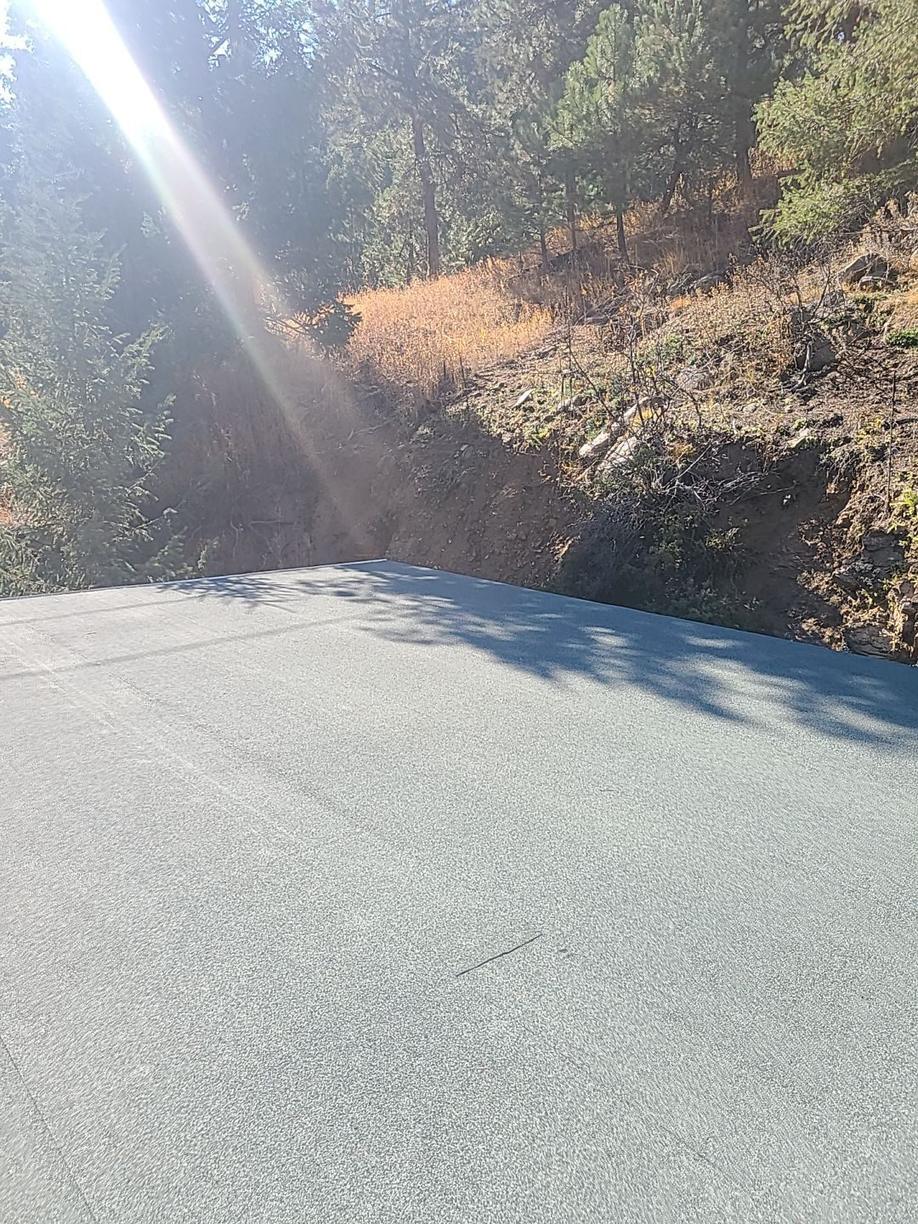
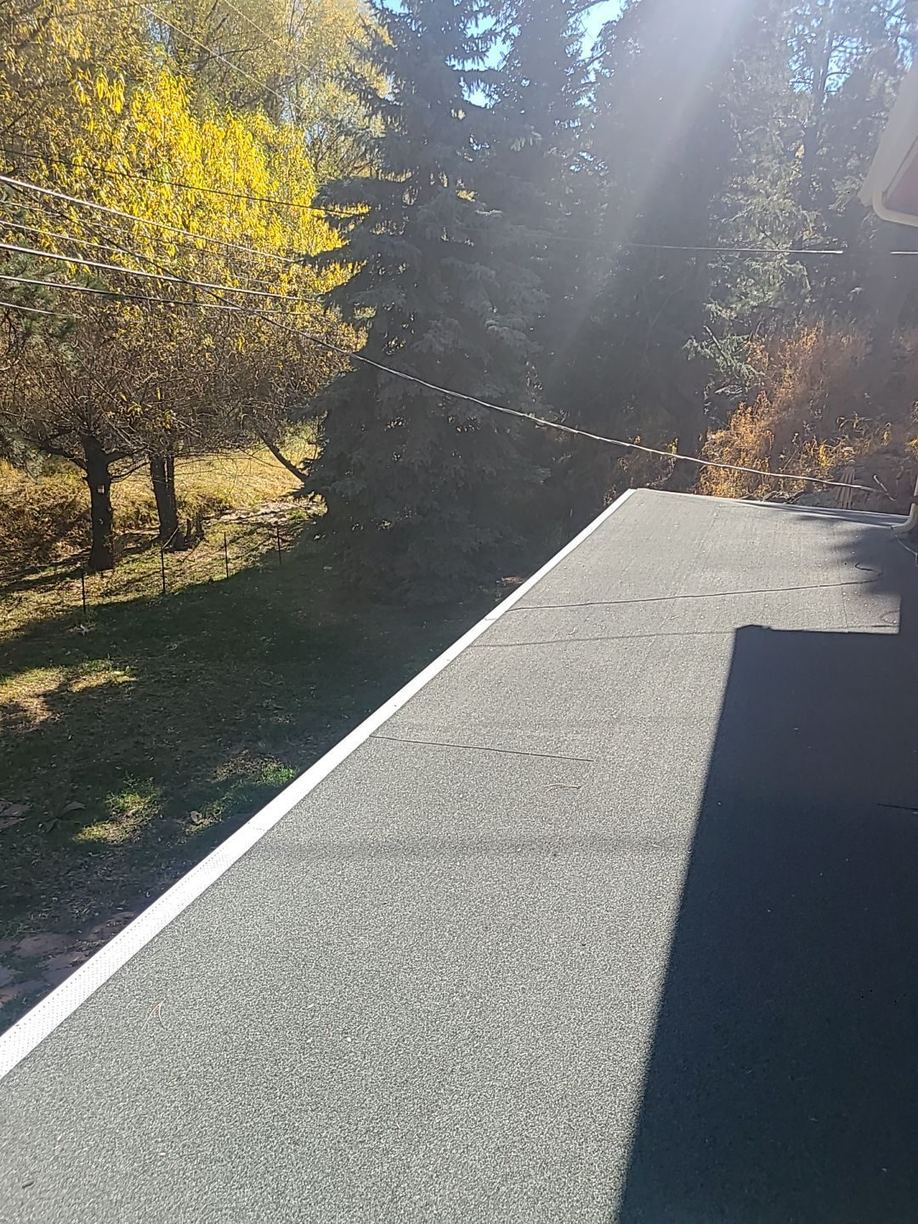
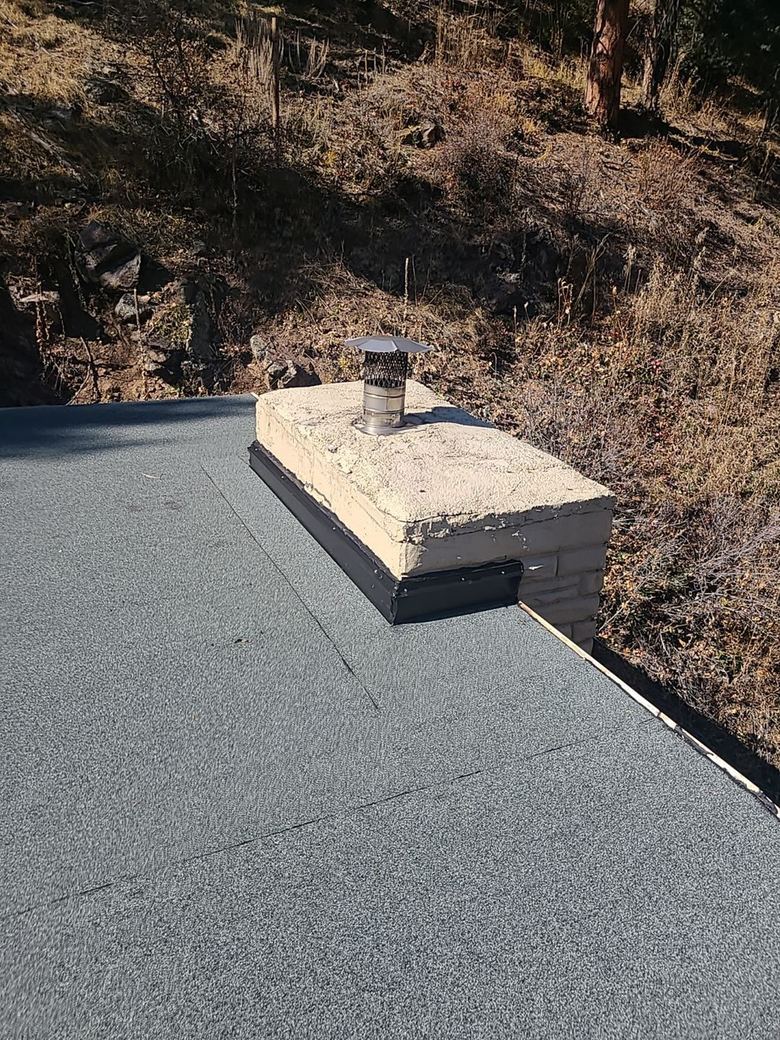
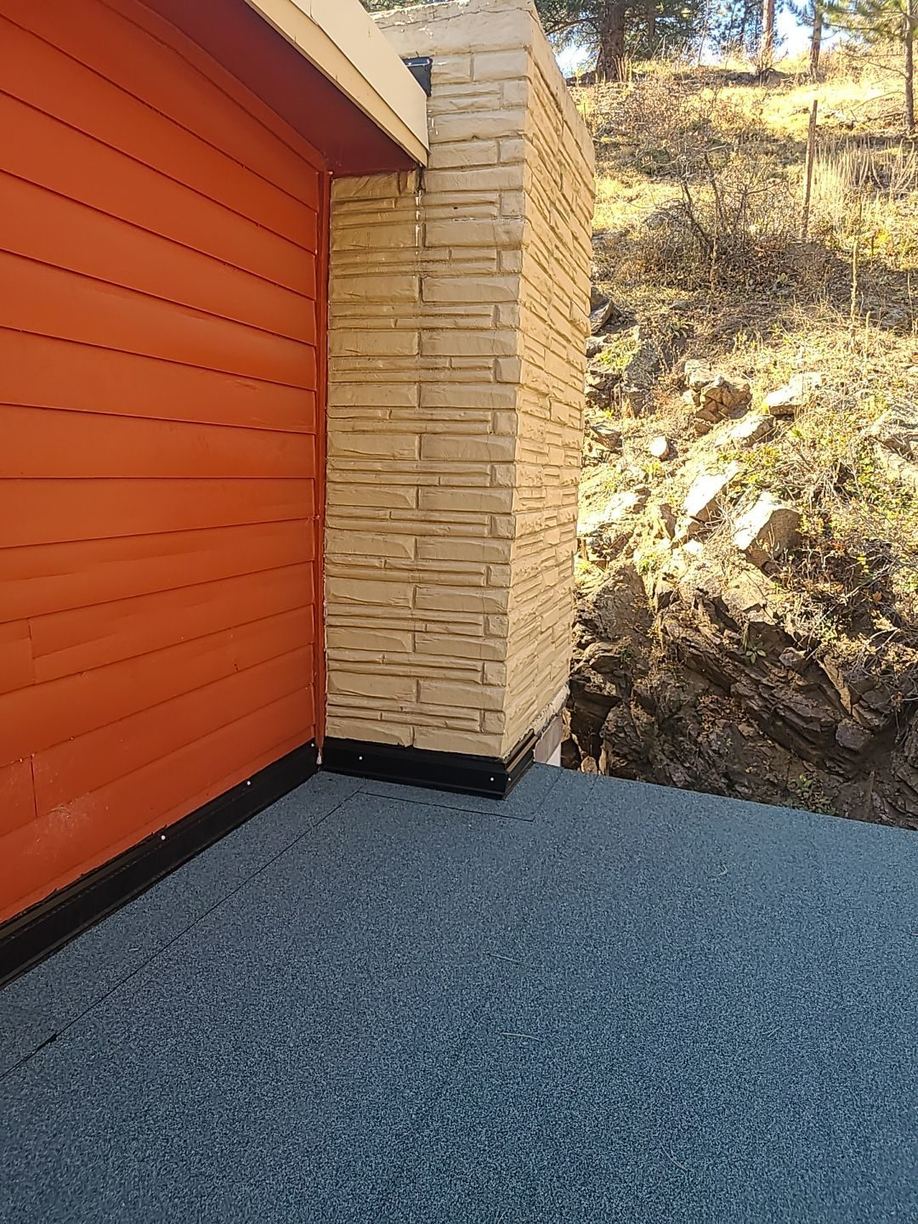
Photos from Blue Peaks modified bitumen work: the finished cap sheet with its lap seams, the roof edge at the gravel stop, flashing around a chimney, and the termination where the roof meets a wall.

Finished granulated modified bitumen cap sheet with lap seams on a low-slope roof
Modified bitumen roof edge finished with white gravel-stop metal
Modified bitumen roof flashed to a masonry chimney with metal counter-flashing
Modified bitumen cap sheet terminated at a siding wall with metal flashing
Where modified bitumen makes sense

Buildings where mod bit is a good fit

Mod bit is not the cheapest or the most reflective option, but it brings real strengths to the right building.

Roofs with foot traffic

Multiple plies and a granule surface stand up well to service traffic, which helps on roofs with frequent HVAC visits.

Smaller commercial and mixed-use roofs

Retail strips, offices, apartment buildings and buildings with many small roof sections are common mod bit projects.

Re-cover over existing roofs

Where code and the existing roof allow it, mod bit can often be installed over an existing built-up or mod bit roof after the surface is prepared and wet areas are removed.

Complex flashing details

Multi-ply flashings at walls, curbs and edges can be built up for extra protection at the details where most leaks start.

Buildings near neighbors or occupied spaces

Cold-applied and self-adhered systems avoid open flame, which can be the safer choice on certain buildings and near occupied spaces.

Owners who want redundancy

Two or more plies give a backup layer if the cap sheet is damaged.

Torch, cold-applied or self-adhered

Torch-applied

The back of each sheet is heated with a torch so the asphalt melts and bonds. It creates a strong bond but requires trained crews, fire safety procedures and attention to building conditions. It is not used everywhere.

Cold-applied

Sheets are set in a cold adhesive instead of heat. This avoids open flame and fumes from hot asphalt, though curing time depends on weather.

Self-adhered

Sheets have a factory-applied adhesive backing. No torch and no kettle. Surface preparation and installation temperature matter for a good bond.

An honest look

Modified bitumen pros and cons, plainly

Pros

  • Multi-ply protection with a backup layer
  • Tough granule surface that handles foot traffic
  • Torch, cold-applied and self-adhered options to suit the building
  • Often a good candidate for re-cover projects
  • Familiar system that most roofers can repair

Cons

  • Heavier than single-ply membranes
  • Standard granule surfaces are less reflective than white TPO or PVC unless coated
  • Torch-applied work carries fire risk and is not right for every building
  • Seams and laps can be a weak point if installed poorly
  • Granule loss and surface cracking show up as the roof ages
Designed for the building and the climate

How modified bitumen should be specified for Colorado weather

Front Range roofs see hail, intense sun at altitude, big temperature swings, snow and strong wind. The specification should answer each of those.

Hail and impact

Multiple plies and a cover board help. After a storm, look for granule loss, bruising and cracked cap sheets, especially on older roofs.

UV at altitude

Granules shield the asphalt from the sun. Once granules wear away, the asphalt ages faster. Reflective cap sheets or coatings can help on some buildings.

Freeze-thaw cycles

Water that gets into cracks or laps freezes and expands. Sound laps and good flashings keep that cycle from opening the roof up.

Snow load and drifting

Snow drifts against parapets and equipment. Flashing heights, drainage and structure should be checked, especially on older buildings with added layers.

Wind uplift

Edges and corners see the highest uplift. Attachment and edge metal follow the system design, local code and manufacturer requirements.

Drainage and ponding

Long-standing water speeds up aging of asphalt roofs. We look at drains, crickets and tapered insulation before recommending a fix.

Start with the condition, not the product

Does your modified bitumen roof need repair, re-cover or replacement?

The right answer depends on how wet the insulation is, how many layers are already on the roof, the condition of the cap sheet and your plans for the building.

Repair

Often right for split laps, blisters, failed flashings or isolated damage when the rest of the roof is sound.

Re-cover

May work when the existing roof is mostly dry and code allows another layer. Core cuts help confirm that.

Replace

More likely when the roof already has the maximum allowed layers, insulation is broadly wet or the system has failed across large areas.

Protect the investment

Maintenance that keeps the roof working

  • Walk the roof at least twice a year, typically spring and fall, and after major hail or wind storms.
  • Keep drains, scuppers and gutters clear so water does not pond.
  • Look for granule loss, blisters, cracks and open laps, especially near edges and equipment.
  • Check flashings at walls, curbs and pipes.
  • Re-coat or repair worn areas before the asphalt is exposed to the sun.
  • Keep HVAC and service traffic on walkway pads where possible.
Choose the system that fits the building

Modified bitumen vs. TPO, EPDM and PVC

Mod bit is a solid choice for foot traffic, re-covers and smaller roofs, but it is not the right system for every building.

TPO

Single-ply, heat-welded and reflective. Lighter than mod bit and common on larger low-slope roofs.

Read about TPO roofing

EPDM

Synthetic rubber with a long track record and good flexibility in cold weather.

Read about EPDM roofing

PVC

Heat-welded single-ply with strong grease and chemical resistance. Common on restaurants and process buildings.

Read about PVC roofing

Weighing a re-cover instead of a tear-off? Read about spray foam roofing and roof coatings.

See all Blue Peaks commercial roofing services

Why Blue Peaks Roofing

Consultant first. Contractor second.

We start with the building, the roof condition and the evidence, then recommend the system that fits.

Certified commercial systems

Blue Peaks is certified with GenFlex and Elevate commercial roofing systems.

Every major low-slope system

We offer TPO, EPDM, PVC and modified bitumen systems, so our recommendation is based on your building rather than the one product we sell.

BBB A+ rated and accredited

Blue Peaks Roofing holds an A+ rating with the BBB and has been accredited since 2022.

Documented findings

Photos, measurements and problem areas are documented so owners, managers and boards can see what we found.

Storm damage

After hail or wind, we inspect the roof and document the damage with photos and measurements, so you know exactly what happened and what it will take to fix.

Front Range service

We serve commercial owners across the Colorado Front Range. Emergency service is available during business hours.

Common questions

Commercial modified bitumen FAQs

Is modified bitumen a good roof for Colorado?

It can be. Its multi-ply build and granule surface handle foot traffic and weather well. Like any roof, it needs good drainage, sound flashings and regular inspections, especially after hail.

What is the difference between torch-applied, cold-applied and self-adhered?

They are different ways of bonding the sheets. Torch-applied uses heat, cold-applied uses an adhesive and self-adhered sheets have adhesive already on the back. We pick the method based on the building, safety and site conditions.

Can modified bitumen go over my existing roof?

Sometimes. It depends on how many layers are already there, whether the insulation is dry and local code. Core cuts help us answer this.

How do I know if my mod bit roof has hail damage?

Look for granule loss in spots, dark bruises, cracked cap sheet and damaged flashings or metal. A roof inspection with photos is the reliable way to know.

How is mod bit different from TPO?

Mod bit is multi-ply and asphalt based, heavier and tougher underfoot. TPO is a single heat-welded sheet, lighter and more reflective. The better choice depends on the building.

What warranty comes with a modified bitumen roof?

Manufacturer warranty options vary by system. We will explain the options that apply to your building in the written proposal.

Start with a clear assessment

Need an answer on your modified bitumen roof?

We will inspect the roof, document what we find and explain the practical options. Consultations and inspections are free. Call (303) 808-0687 or send us a note through our contact page.

Contact Blue Peaks
Call (303) 808-0687