
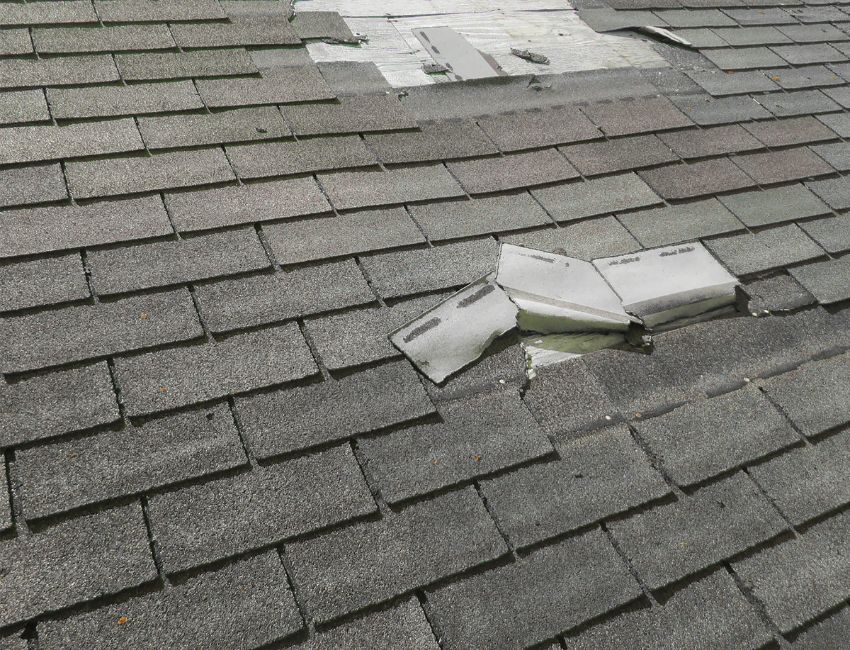
You can spot roof hail damage by looking for dark, bruised spots on shingles, bare patches where granules have washed into the gutters, dented metal vents and flashing, and cracked or shattered shingles. Much hail damage is not visible from the ground, so after a Colorado hail storm, have a professional inspect the roof.
How do you know if your roof has hail damage?
The clearest signs are round, dark bruises on shingles where the granules are knocked loose, granules piling up in gutters and downspouts, and dents on soft metal like vents, gutters, and flashing. You may also see cracked or missing shingles after a strong storm. Because roofs are hard to see and walk safely, a professional inspection confirms the damage.
What does hail damage look like on a roof?
On asphalt shingles, hail leaves dark, circular spots that feel soft or bruised, with the protective granules knocked away to expose the black mat underneath. Larger hail can crack or puncture shingles outright. On metal surfaces, hail leaves visible dents. The granule loss is the important part, because it is what exposes the shingle to the sun and shortens its life.
What does minor hail damage look like?
Minor hail damage can be easy to miss: scattered soft spots, light granule loss, and a few dented vents. It may not leak right away, which is exactly why it gets overlooked. But even minor damage removes granules and speeds up aging, so it still matters. An inspector can tell you whether the hits are cosmetic or need repair.
Does a roof with hail damage need to be replaced?
Not always. Light, scattered damage can sometimes be monitored or spot-repaired, while widespread bruising and granule loss usually calls for full replacement. How densely the hits cover the roof matters. A professional inspection tells you whether repair or replacement is the right call.
How soon after a storm should I get an inspection?
As soon as it is safe. Early photos give you the clearest record of what the storm did, and damage that doesn’t leak yet can cause leaks later.
Should you get a professional inspection after a storm?
Yes. A professional inspection tells you whether you have damage and what it means. We inspect the roof, document what we find with photos, and tell you honestly whether you need a repair, a replacement or nothing at all. Blue Peaks Roofing inspects roofs across the Denver metro after hail storms.
FAQ
Can you see hail damage from the ground?
Usually not clearly. Dented gutters may hint at it, but most shingle damage needs a close-up inspection to confirm.
How big does hail need to be to damage a roof?
Size alone doesn’t tell you. Smaller hail can still damage worn shingles, and larger hail causes more obvious harm. An inspection tells you what happened.
Will hail damage cause a leak right away?
Not always. Damage often removes granules and weakens shingles first, leading to leaks months later, which is why early inspection matters.
Is a roof inspection free after a hail storm?
Yes. Blue Peaks hail damage inspections are free, with no obligation.
Related services: Hail Damage Inspection | Roof Repair
More from the blog: How Long Does a Roof Last in Colorado? | Metal Roof vs. Shingle Roof in Colorado
If the problem is limited to one area, our roof repair team can usually fix it without a full replacement.
What working with us looks like: We inspect your roof for free, typically within 24 to 48 hours, and walk you through the photos of what we find. If you go ahead, your dedicated project manager sends a prep email before your build, keeps you updated every day, and we finish with a magnetic nail sweep and a final walkthrough with you. Residential roofs carry our 5-year workmanship warranty. Call (303) 808-0687 or schedule a free inspection.