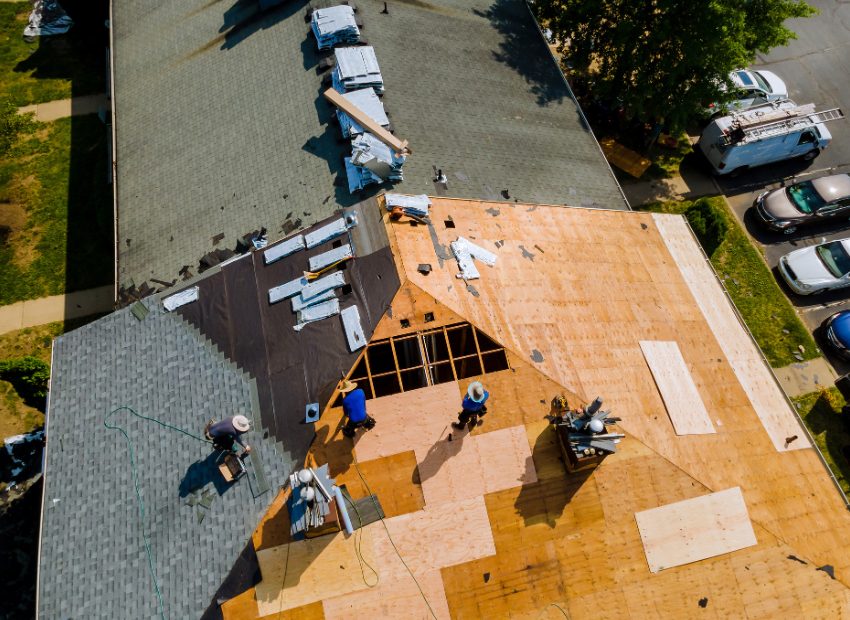
If you are re-roofing a home in Arvada with asphalt shingles, one City rule matters more than most homeowners expect: the shingles must be Class 4 impact resistant.
I’m Andrew Ubben, owner of Blue Peaks Roofing. We work Arvada jobs out of our Littleton office the same way we work the rest of the Front Range: check who governs the property first, then build to that code and the manufacturer’s instructions. Arvada has its own amendments, so “close enough to Denver” doesn’t cut it.
What the City says
The City of Arvada’s Roofing and Reroofing Customer Guide (2026) lists this under Impact Resistance in its residential requirements:
Class 4 impact-resistant roofing materials are required in Arvada under adopted City of Arvada Amendments Sec. 18-191.
That is a city amendment, not a sales pitch. The amendment itself, Sec. 18-191, was added by Ordinance No. 4921 (adopted March 24, 2026) and reads: “Asphalt shingles shall be Class 4 impact resistant, tested in accordance with UL 2218.” If you are pulling a residential reroof permit in Arvada for an asphalt shingle roof, plan on Class 4 shingles. For metal, tile or other roof coverings, confirm the impact requirement with Arvada Building Safety.
The guide covers both residential and commercial reroofing. Residential work follows Chapter 9 of the 2024 International Residential Code (IRC) plus City amendments. Commercial work follows Chapter 15 of the 2024 International Building Code (IBC) plus amendments. The Class 4 line appears in the residential section. The commercial section of the guide does not list it, so if you own a commercial building, confirm the impact requirement for your project with Arvada Building Safety.
What changed on July 1, 2026, and what didn’t
Arvada updated its building codes on July 1, 2026. In general, permits submitted before that date could use the 2018 codes, and permits submitted after it follow the 2024 codes. The City’s summary of the update focuses on wildfire, energy and home sprinkler changes.
The City’s guide lists Class 4 as a current requirement. Sec. 18-191 is part of the code package the City adopted on March 24, 2026 and applies to permits submitted after July 1, 2026. If your permit timing is close to a code change, check with Arvada Building Safety.
Class 4 is not the same as the wildfire rules
Arvada also adopted its first Wildfire Resiliency Code. If a property is in Wildfire Resiliency Class 1 or 2, a reroof permit needs a plan review showing how the roof assembly provides flame and ember protection. The guide lists three ways to do that: firestopping the space between the roof covering and the deck with noncombustible material, one layer of ASTM D3909 cap sheet over the deck, or a listed Class A roof assembly. Roofing materials must have a Class A fire rating in wildfire zones.
That is a separate layer from impact resistance:
| Rule | What it covers | Where it applies |
|---|---|---|
| Class 4 impact resistance (Sec. 18-191) | How the roof covering handles hail and other impacts | Asphalt shingle roofs on homes (City residential code), with limited exceptions |
| Wildfire Resiliency Code and Class A fire rating | Flame and ember exposure | Properties in mapped wildfire risk areas |
Don’t let a salesperson blur the two. A Class 4 shingle is about impact testing. A Class A roof assembly is about fire classification. Some homes need both.
What Class 4 means in plain English
Class 4 is the top rating in UL 2218, the common impact test for roofing. To earn it, the product is struck by a 2-inch steel ball dropped from 20 feet and must not crack through. It is a lab rating. It does not mean a roof can’t be damaged by hail, and nothing we install is immune to a bad storm.
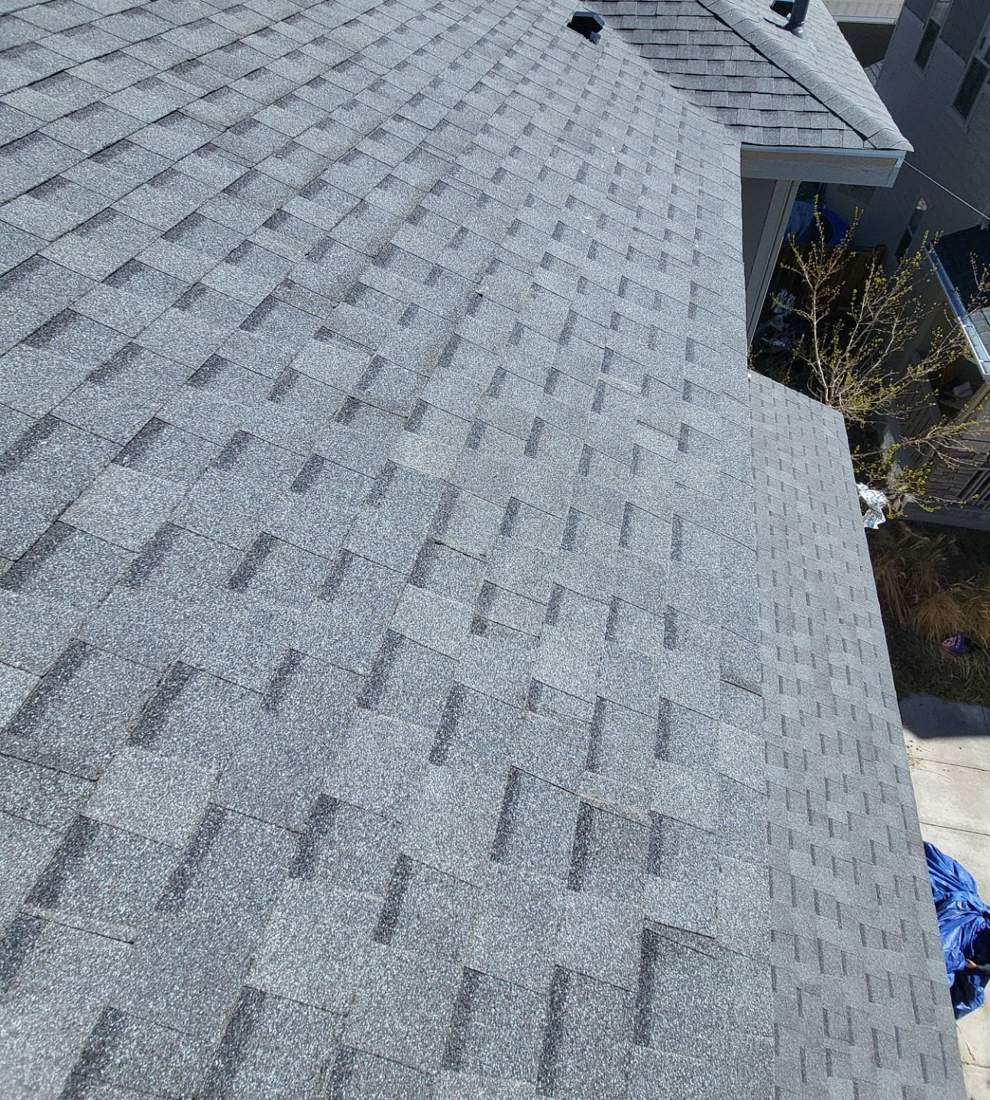
On Arvada reroofs we lead with Atlas impact-resistant shingles, and we also install Class 4 lines from TAMKO and GAF. We are an Atlas PRO+ Silver Level, TAMKO Pro Platinum and GAF Master Elite contractor. Whatever the product, the City’s guide is clear: install per the 2024 code, City amendments, approved plans and the manufacturer’s instructions. That includes Arvada’s wind requirements (136 Vult east of Highway 93, 150 Vult west of it), ice barrier and high-wind fastening. See our Class 4 impact-resistant shingles page for how the products compare.
Reroof vs. small repair
Arvada requires a reroofing permit when you replace a roof. The City’s reroofing page says you do not need a permit if you are replacing up to 25% of the roofing material, not to exceed 100 square feet (one roofing square), with a maximum of 100 square feet per year. Under Sec. 18-191, repairs of 100 square feet or less to an existing shingle roof that isn’t Class 4 may use the same or similar shingles. Larger work needs Class 4 unless the building official approves a matching alternative. When in doubt, we call Building Safety before we tear off.
What we do on every Arvada job
- Confirm the address is in the City of Arvada, not unincorporated Jefferson County with an Arvada mailing address. Jurisdiction follows the property, not the post office. Our city vs. county permit guide explains how to check.
- Check the City’s wildfire map before we lock in materials.
- On asphalt shingle roofs, Class 4 is the City’s baseline, not an upgrade.
- Schedule the inspections the City wants. The 2026 guide says mid-roof inspections will be required on all properties, scheduled once about 25% of the final roof covering is installed.
If you are comparing bids
Ask every contractor three questions:
- Is this product Class 4, and will you put that in the contract?
- Did you check whether this address is in a wildfire risk area?
- Who is pulling the Arvada permit and meeting the inspector?
If a bid is vague on any of those, it isn’t cheaper. It’s unfinished.
For more, see our Arvada roofing page and our roof replacement page.
Questions for the City
Arvada Building Safety: buildingpermits@arvada.org, 720-898-7620, Monday through Friday, 8 a.m. to 5 p.m. (per the City’s guide).
What working with us looks like: We inspect your roof for free, typically within 24 to 48 hours, and walk you through the photos of what we find. If you go ahead, your dedicated project manager sends a prep email before your build, keeps you updated every day, and we finish with a magnetic nail sweep and a final walkthrough with you. Residential roofs carry our 5-year workmanship warranty. Call (303) 808-0687 or schedule a free inspection.
Ready for an Arvada roof inspection? Call (303) 808-0687, book a hail damage inspection, or use our contact page. Blue Peaks Roofing, 8000 S Lincoln St Ste 201, Littleton, CO 80122.
Sources: City of Arvada, Roofing and Reroofing Customer Guide (2026); City of Arvada, 2026 Building Code updates.