Your roofing permit comes from whoever governs the property, not the city printed on your mail. A Littleton or “Denver 802xx” address can sit inside an incorporated city like Arvada, Lakewood, or Littleton itself, or in unincorporated Jefferson, Arapahoe, or Douglas County. Each one adopts its own building code edition and local amendments, and those decide your ice barrier, whether a shingle overlay is allowed, what impact rating your shingles need, and when the inspector shows up.
I’m Andrew Ubben, owner of Blue Peaks Roofing. I get the “we’re in Littleton… or maybe JeffCo?” call a few times a month, and it’s a fair question. The City of Littleton alone spans three counties. So before we order a single bundle, we answer one question: who is the building department for this exact address?
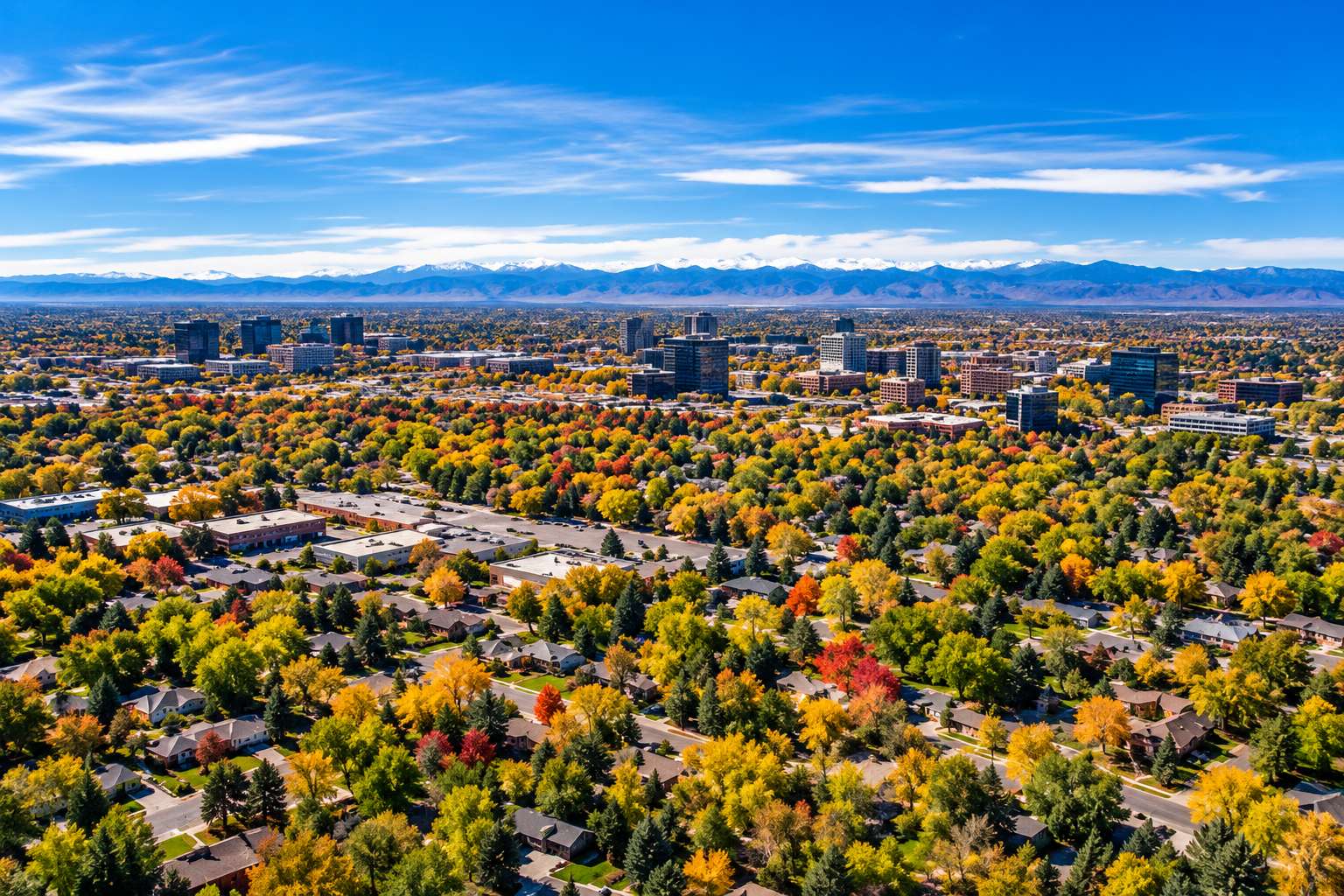
Jurisdiction follows the property line, not the mailing address
A Front Range mailing address can belong to either of two kinds of government:
- An incorporated city or town (Denver, Arvada, Lakewood, Littleton, Aurora, Centennial, Castle Rock, and others), or
- Unincorporated county (Jefferson, Arapahoe, Douglas, Adams, and so on)
The city name on your packages is a postal label. The municipal boundary is what decides your permit. Guess wrong, and you pull the wrong permit, stock the wrong materials, and fail the first inspection.
What changes from one jurisdiction to the next
Colorado doesn’t run one statewide residential roofing code. Each city and county adopts an edition of the International Residential Code (IRC) and then amends it. Here are three jurisdictions we work in, side by side:
| Jurisdiction | Current code & key roofing rules | What it means for your job | Official source |
|---|---|---|---|
| City of Arvada | 2024 codes for permits submitted on or after July 1, 2026. Ice and water shield now required. City amendment Sec. 18-191 requires Class 4 impact-resistant asphalt shingles, with limited exceptions. Wildfire Resiliency Code can apply in mapped wildfire risk areas. Mid-roof inspection required on all properties at 25% of cover. | Class 4 shingles + ice barrier; check the wildfire map; mid-roof inspection at 25% of cover, then final | Code update · Design criteria · Re-roofing |
| City & County of Denver | 2025 Denver Building and Fire Code, based on the 2024 IRC with Denver amendments. Denver’s design criteria table (Table R301.2) lists ice barrier underlayment as not required. Own permit portal and inspection process. | Use Denver’s process, not JeffCo’s. An eave ice barrier isn’t a code mandate here, though the shingle manufacturer’s instructions may still call for one. | Denver building codes |
| Unincorporated Jefferson County | 2024 Jefferson County Building Code (July 1, 2026 roofing notice). Ice barrier per R905.1.2. Drip edge at eaves and gables. No overlays; complete tear-off required. Mid-roof inspection at 10–25% complete. Class A roof assemblies in the WUI Overlay District. | Full tear-off, ice barrier, and a mid-roof inspection early in the job, which affects crew scheduling | 2024 roofing notice (PDF) · Re-roofing |
These are examples, not a complete Front Range matrix, and rules change with each code cycle. Always confirm with the building department for your address and permit date. We’re a roofing contractor, not a code official.
Same house, three different inspection schedules
Here’s where the difference gets real. On a standard asphalt reroof:
- Unincorporated Jefferson County requires a mid-roof inspection when the roof is 10–25% complete. Miss that window and the job stops.
- Arvada‘s 2026 guide says mid-roof inspections will be required on all properties, once about 25% of the final roof covering is installed.
- Denver runs its own inspection process through its own permit portal.
Same shingle brand. Different paperwork. Different pass/fail checklist.
How we check an address before we write a contract
- Confirm the parcel and municipal boundary using the county GIS or the city’s address lookup, not a map app’s “near.”
- Open that building department’s re-roofing page and its current adopted-code notice.
- Read the local amendments for ice barrier, drip edge, overlays, mid-roof inspections, Class 4 impact rules, and wildfire rules.
- Read the manufacturer’s installation instructions for the product we’re installing. Code and manufacturer both apply, and the stricter practical requirement usually wins on our jobs.
- Only then write the scope, the permit path, and the material list into the contract.
If a contractor skips steps 1–3, they’re estimating from habit. Habit is how people get red-tagged. You can see how this fits into the rest of a job on our process page.
City vs. unincorporated county: why you’ll feel the difference
In a city, you deal with that city’s building safety division, its online permit portal, and its inspectors. Fees, inspection windows, and document checklists are city-specific.
In unincorporated county, you deal with the county building department. Rules can be tighter or simply different. Jefferson County’s July 2026 notice, for example, bans asphalt overlays outright. That also changes the roof repair vs. replacement math, because a second layer over the old roof isn’t an option there.
Code edition years matter
“We’re on the IRC” isn’t enough. Ask:
- Which edition year did this jurisdiction adopt: 2018, 2021, or 2024?
- When did that edition take effect for new permit applications?
- Are there local amendments to Chapter 9, the roof assemblies chapter?
Arvada is a clean example. Permits submitted before July 1, 2026, could generally stay on the prior 2018 codes; permits submitted after that date follow the 2024 package. Separately, Arvada’s residential code amendment Sec. 18-191 requires Class 4 impact-resistant asphalt shingles. Our Arvada Class 4 roofing requirement post explains what that means for a reroof permit. That affects your material choice too. If you’re weighing metal vs. shingle roofing, start with what your jurisdiction requires.
What we won’t do
- We won’t promise outcomes we don’t control. We document conditions and build to code and the manufacturer’s instructions.
- We won’t treat neighboring cities as interchangeable because they’re “all Denver metro.”
What you can do this week
If you’re planning a roof replacement:
- Look up your address on your county assessor or GIS map and note whether it’s in a city or unincorporated county.
- Call or email that building department and ask which code edition applies to a reroof permit submitted this month.
- Bring that answer to every contractor you interview, and see who already knew it.
If you want us to run that check with you, we will. That’s part of Restoration with a Purpose: clarity before tear-off, not after a failed inspection.
Not sure which jurisdiction your property is in? Call 303-808-0687 or reach us through our contact page.
FAQ
How do I know if I’m in a city or unincorporated county?
Use your county assessor or GIS map, or ask the county building department. Don’t rely on the city name in your mailing address.
Do all Colorado cities use the same roofing code?
No. Each city and county adopts its own IRC edition and adds local amendments. Always check the jurisdiction for your parcel.
Does Denver require an ice barrier at the eaves?
Not by code. Denver’s design criteria (Table R301.2) list ice barrier underlayment as not required. The shingle manufacturer’s instructions may still call for it, so confirm both for your permit date with Denver Community Planning and Development.
Does Arvada require Class 4 impact-resistant shingles?
Yes, for asphalt shingle roofs on homes. Arvada’s residential code amendment Sec. 18-191 requires Class 4 impact-resistant asphalt shingles, tested to UL 2218. There are two exceptions: the building official may approve the closest match when no Class 4 shingle matches the existing color or style, and repairs or additions of 100 square feet or less may use the same or similar shingles. Confirm with Arvada Building Safety for your project.
Does Jefferson County allow asphalt shingle overlays?
Not in unincorporated Jefferson County. Its July 1, 2026 roofing notice allows only one layer of asphalt shingles and requires a complete tear-off. Confirm current rules with JeffCo Building Safety for your permit date.
Who pulls the permit, me or the contractor?
On our jobs, Blue Peaks pulls the reroof permit unless the contract says otherwise. Ask every bidder who owns the permit and the inspections.
What working with us looks like: We inspect your roof for free, typically within 24 to 48 hours, and walk you through the photos of what we find. If you go ahead, your dedicated project manager sends a prep email before your build, keeps you updated every day, and we finish with a magnetic nail sweep and a final walkthrough with you. Residential roofs carry our 5-year workmanship warranty. Call (303) 808-0687 or schedule a free inspection.