Blue Peaks Roofing
Categories
HOAs/Property Managers Homeowners

Siding Options for Colorado’s Climate: Durability, Maintenance & Performance

Colorado Climate Challenges for Siding

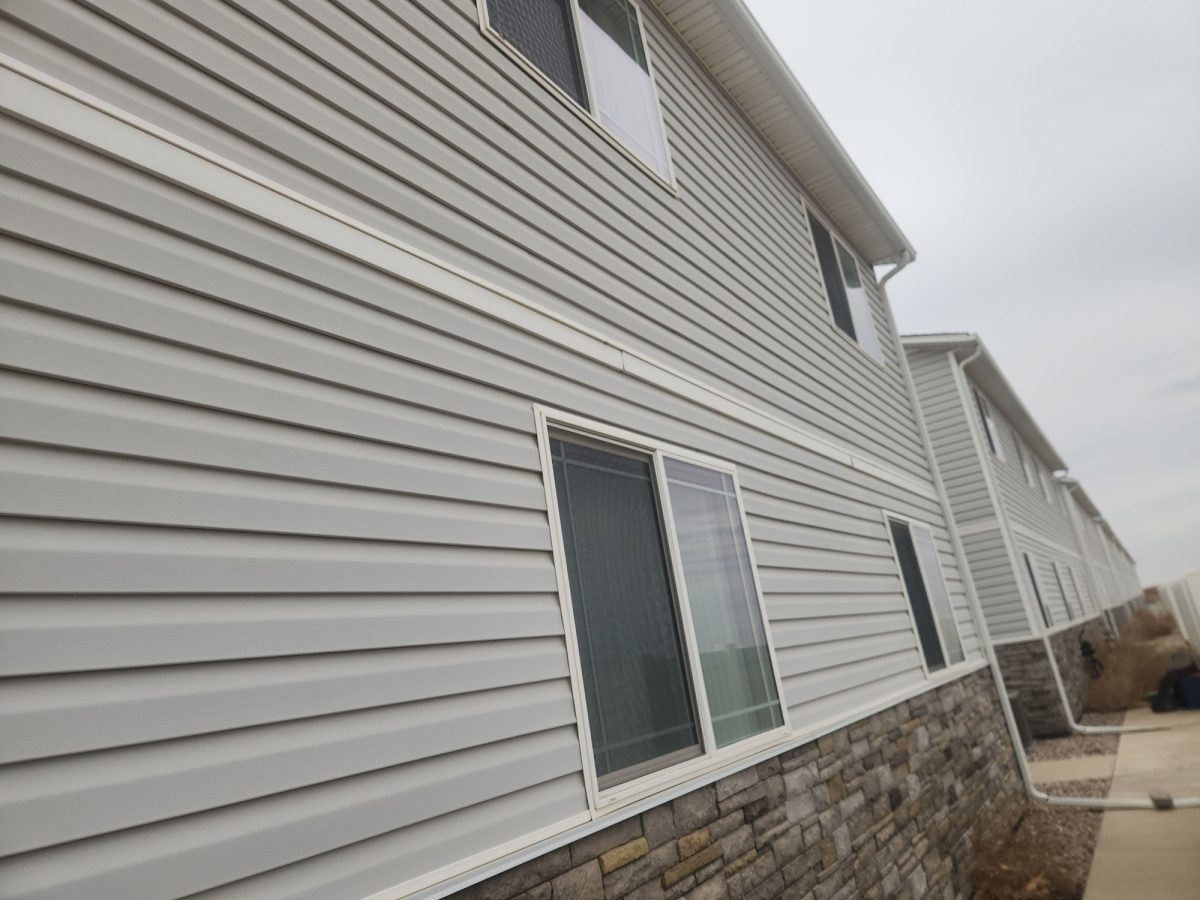
Siding in Colorado has a tough job. It must withstand searing UV rays at high altitude, freezing nights, heavy snow, and the sudden impact of hail. Some vinyl siding can turn brittle in the cold, and untreated wood siding dries out over time. So, what works?

Fiber Cement Siding (James Hardie)

Pros: Non-combustible, resists rot and pests, holds paint well.
Cons: Heavy, difficult to install, brittle upon impact (can crack from large hail).

Verdict: A strong choice where fire resistance matters, installed by experienced crews.

Engineered Wood Siding (LP SmartSide)

Pros: Good impact resistance, looks like real wood, treated against rot and termites.
Cons: Is combustible (though treated), requires painting edges carefully to prevent water swelling.

Verdict: A good all-around choice where hail is the main concern.

Vinyl Siding: Affordability & Limitations

Pros: Lower cost, no painting required.
Cons: Can crack from impacts in cold weather and can fade in strong sun.

Verdict: A budget-friendly option; we can help you compare grades.

Comparison Table

Feature Fiber Cement Engineered Wood Vinyl
Hail impact Can crack from large hail Handles impact well Can crack or hole
Fire Non-combustible Combustible (treated) Can deform near high heat
Cold weather Good Good Can turn brittle

Siding Recommendations by Elevation

  • Denver Metro (Hail Risk): Engineered wood (LP SmartSide) is a good fit where hail is the main concern.
  • Mountain / Foothills (Fire Risk): Fiber cement (James Hardie) is a common choice where wildfire risk is high; check your local code.

Planning exterior work beyond the roof? See our siding replacement services, or how we plan windows and siding with your roof.

When a roof is past saving, here is how our roof replacement process works.

What working with us looks like: We inspect your roof for free, typically within 24 to 48 hours, and walk you through the photos of what we find. If you go ahead, your dedicated project manager sends a prep email before your build, keeps you updated every day, and we finish with a magnetic nail sweep and a final walkthrough with you. Residential roofs carry our 5-year workmanship warranty. Call (303) 808-0687 or schedule a free inspection.
Categories
Homeowners Insurance & Claims

When Filing a Claim Makes Sense, and When It Doesn’t


The True Cost of Insurance Claims

Many homeowners view insurance claims as “free money” to fix their home. This is a dangerous misconception. Insurance is a financial product, and like any financial product, using it has costs. Filing a claim triggers a complex chain of events affecting your premiums, your claim history, and your future insurability.

At Blue Peaks, we advise clients to treat insurance as “catastrophic coverage,” not a maintenance plan. Knowing when to file—and more importantly, when not to file—can save you thousands of dollars in the long run.

How Insurance Claims Affect Your Coverage

  • Deductibles: This is your immediate out-of-pocket cost. If damage is $4,000 and your deductible is $5,000, you pay $4,000. Filing a claim gets you $0 but adds a “strike” to your record.
  • Premium Increases: While insurers theoretically cannot raise rates for a single weather event, your “Claim History” (CLUE Report) is a major factor in your risk score. Multiple claims can lead to rate hikes of 20-50% or non-renewal.
  • Coverage Denial Risk: If you file multiple small claims (e.g., $3,000 here, $2,000 there), insurers may view you as a high-risk property and refuse to insure you, or force you into a high-risk, high-cost pool.

The Math: Scenario Examples

Scenario A: Small Hail Damage ($3,000 repair)

  • Deductible: $2,500
  • Payout: $500
  • Result: You get a check for $500. However, your insurer records a claim. Over the next 3 years, your premiums rise by $300/year due to loss history.
  • Net Financial Impact: You receive $500 but pay $900 in extra premiums. You lost $400.

Scenario B: Major Hail Damage ($15,000 replacement)

  • Deductible: $2,500
  • Payout: $12,500
  • Result: You pay $2,500. The insurance covers the rest. Even if premiums rise, the $12,500 benefit vastly outweighs the cost.
  • Net Financial Impact: Major win. This is what insurance is for.

Hail Damage Thresholds and Decision Points

How do you know the dollar amount before filing? You get a professional inspection first. Never file a claim to “see if there is damage.” That inquiry alone can sometimes be recorded.

  • < $5,000 Damage: Usually better to pay out of pocket (retail repair) to protect your claim history.
  • > $10,000 Damage: Almost always makes sense to file a claim.
  • The “Grey Zone” ($5k-$10k): Depends on your deductible size and recent claim history. Requires a consultative discussion.

When NOT to File a Claim

  • When the damage estimate is less than or close to your deductible.
  • When the damage is “cosmetic only” and you have a cosmetic exclusion policy.
  • When you have already filed a claim in the last 3 years (risk of non-renewal).
  • When the damage is due to wear and tear (not covered) rather than a storm event.

When Filing Makes Sense

  • Catastrophic damage (missing shingles, large leaks, tree impact).
  • Total roof replacement is required.
  • Damage exceeds 3x your deductible amount.

Protecting Your Claim

If you decide to file, ensure you have documentation. A Blue Peaks inspection report with photos, dates, and storm data acts as your evidence package. It gives you dated photos and storm data to share with your insurer if questions come up.

Long-Term Strategy

Your goal is to maintain a “clean” insurance record so that when the “Big One” hits—the massive storm that destroys the roof, siding, and windows—you have full coverage and a cooperative insurer. Don’t waste your ammunition on small skirmishes.

“Clarity builds confidence. Confidence builds trust.”

Not sure what you are looking at? Schedule a free hail damage roof inspection.

If the problem is limited to one area, our roof repair team can usually fix it without a full replacement.

📞 Call (303) 808-0687