
Standing seam metal roofs use long metal panels joined at raised seams, with the fasteners hidden under the seams. They suit modern homes, mountain homes and anyone who wants a clean, simple roof line.
Every project starts with a free inspection and an honest comparison with the other roofs we install, so you can decide what fits your home and budget.
Every job has a dedicated project manager who is your point of contact and sends you a prep email before build day.
Your project manager keeps you updated every day of your build, and we keep daily photo logs of the work.
At completion we clean up and sweep the yard and driveway with a magnet.
We walk the finished job with you before we call it done.
Residential roofs carry our 5-year workmanship warranty, with the terms in your contract.
The panels are held down with clips or fastening flanges that sit under the raised seams, so there are no exposed screws through the face of the roof.
Panels are usually one continuous length from the eave to the ridge, which means fewer seams for water to cross on each slope.
We install snap-lock and mechanically seamed standing seam panels, typically 24 or 26 gauge, in a range of factory-finished colors. We help you choose based on the roof pitch, the look you want and the budget.
Metal sheds snow quickly. Snow guards or snow retention bars can hold snow in place over entries, walkways, decks and lower roofs, and we plan where they go.
Standing seam work on commercial buildings in Gunnison, Dillon and Commerce City, and a standing seam roof in Indian Hills.
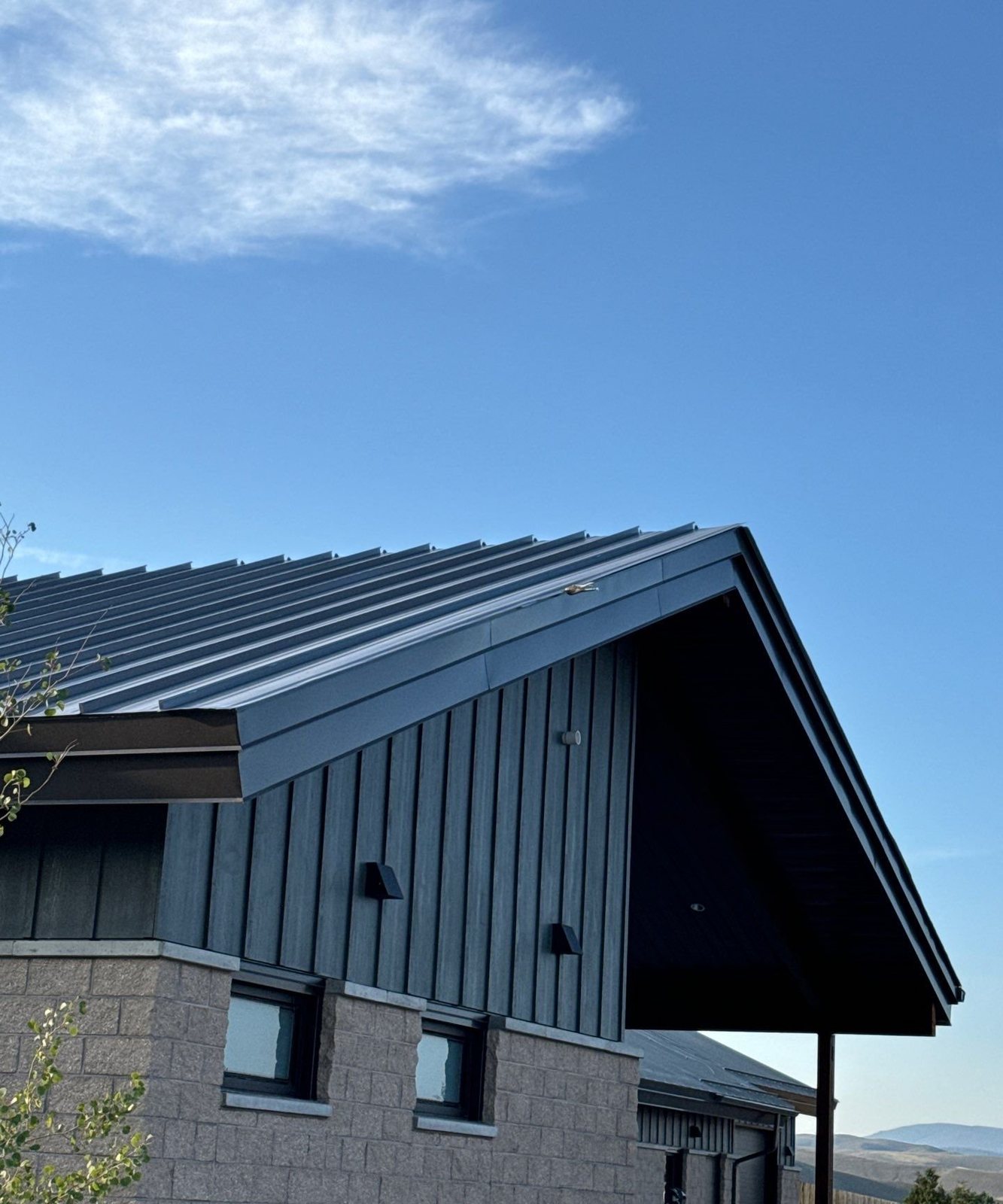
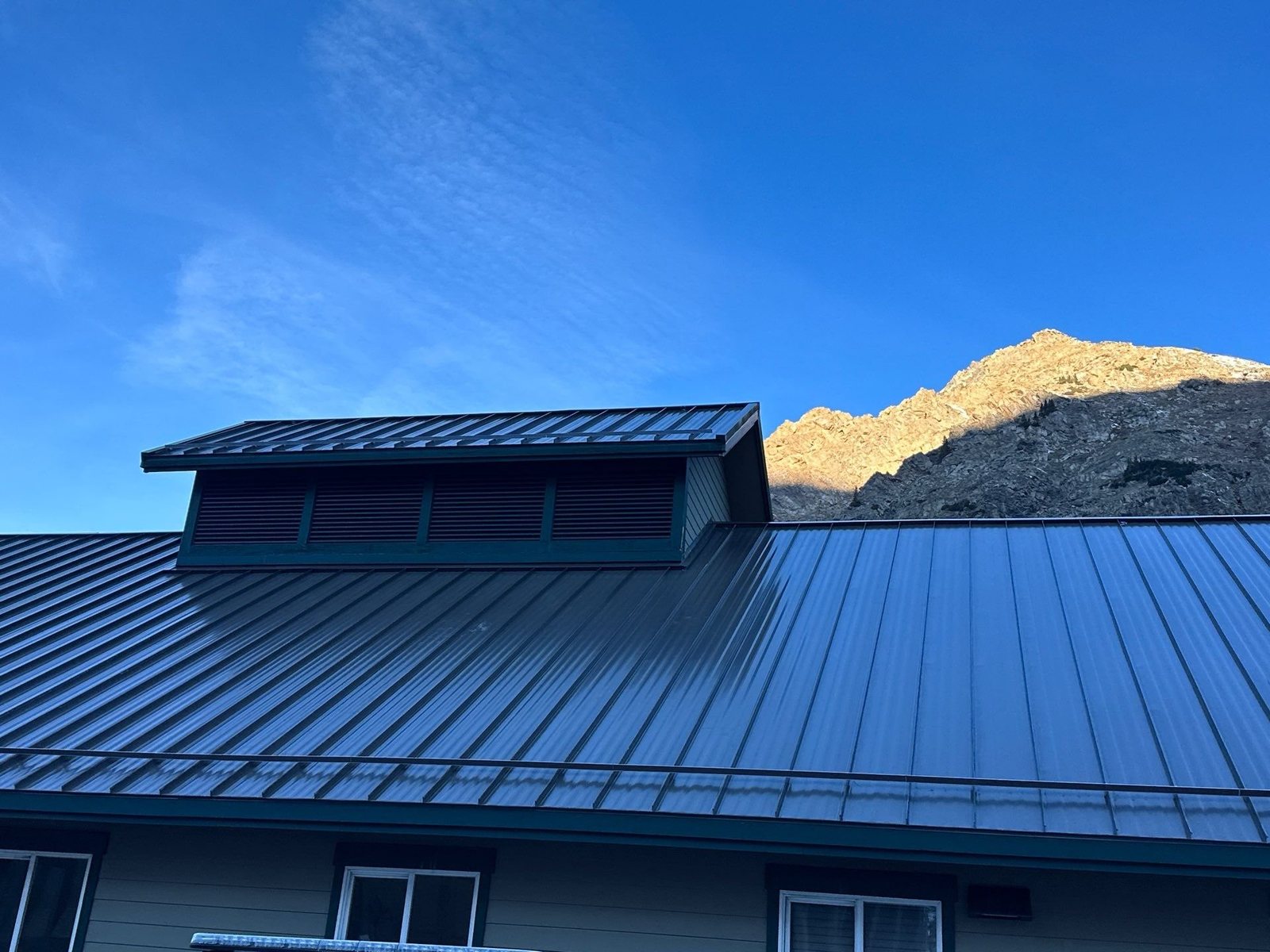
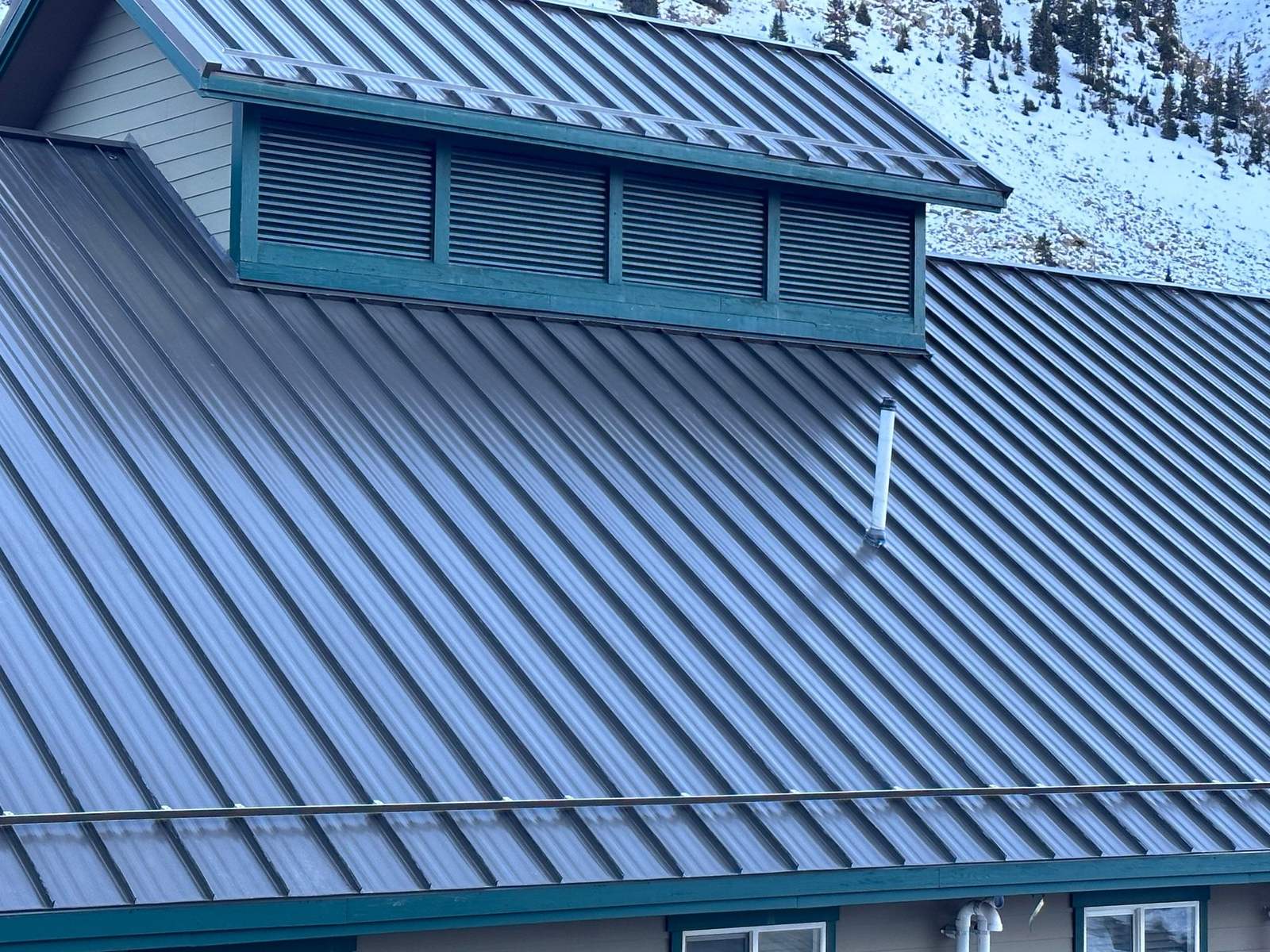
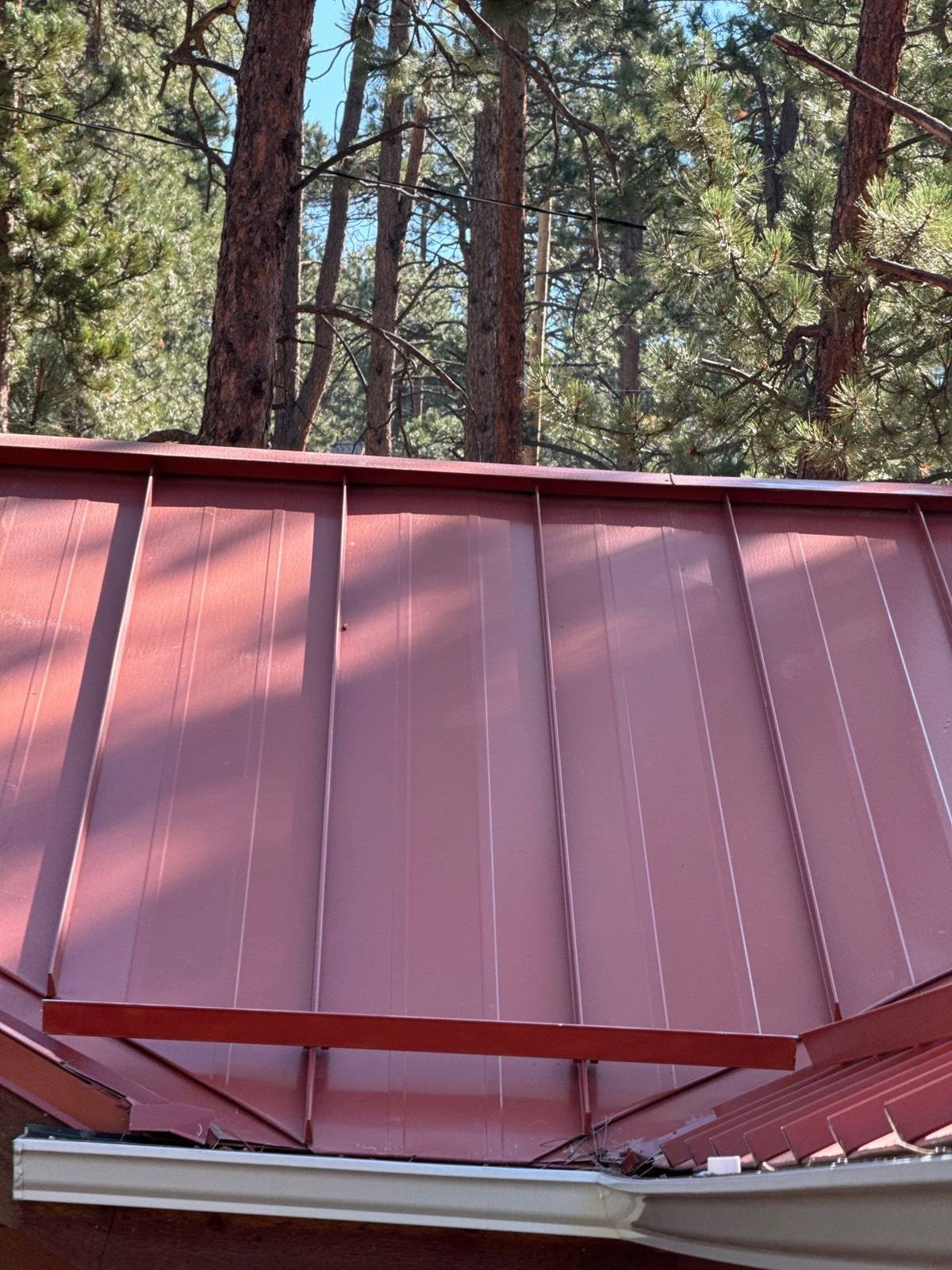
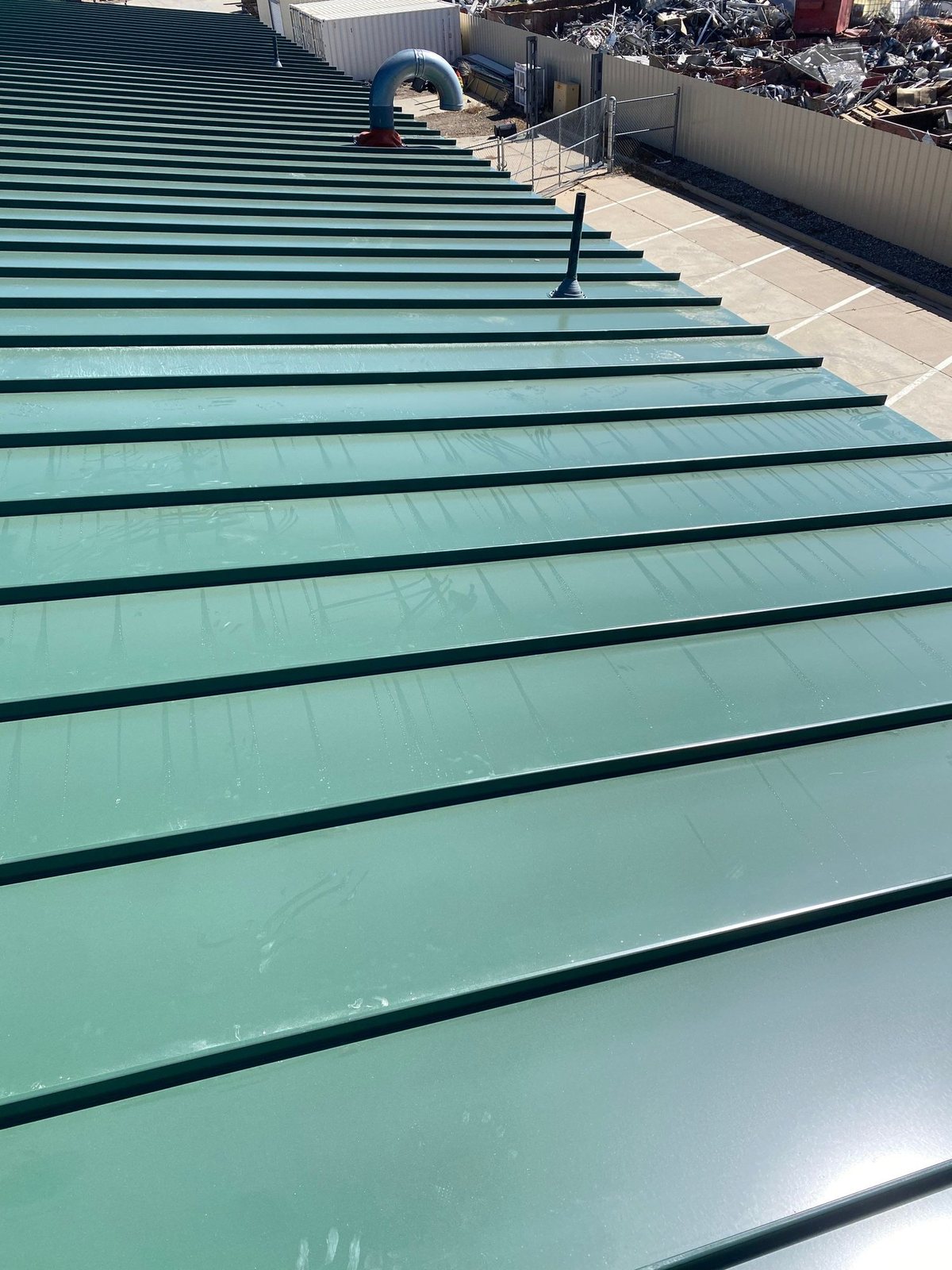
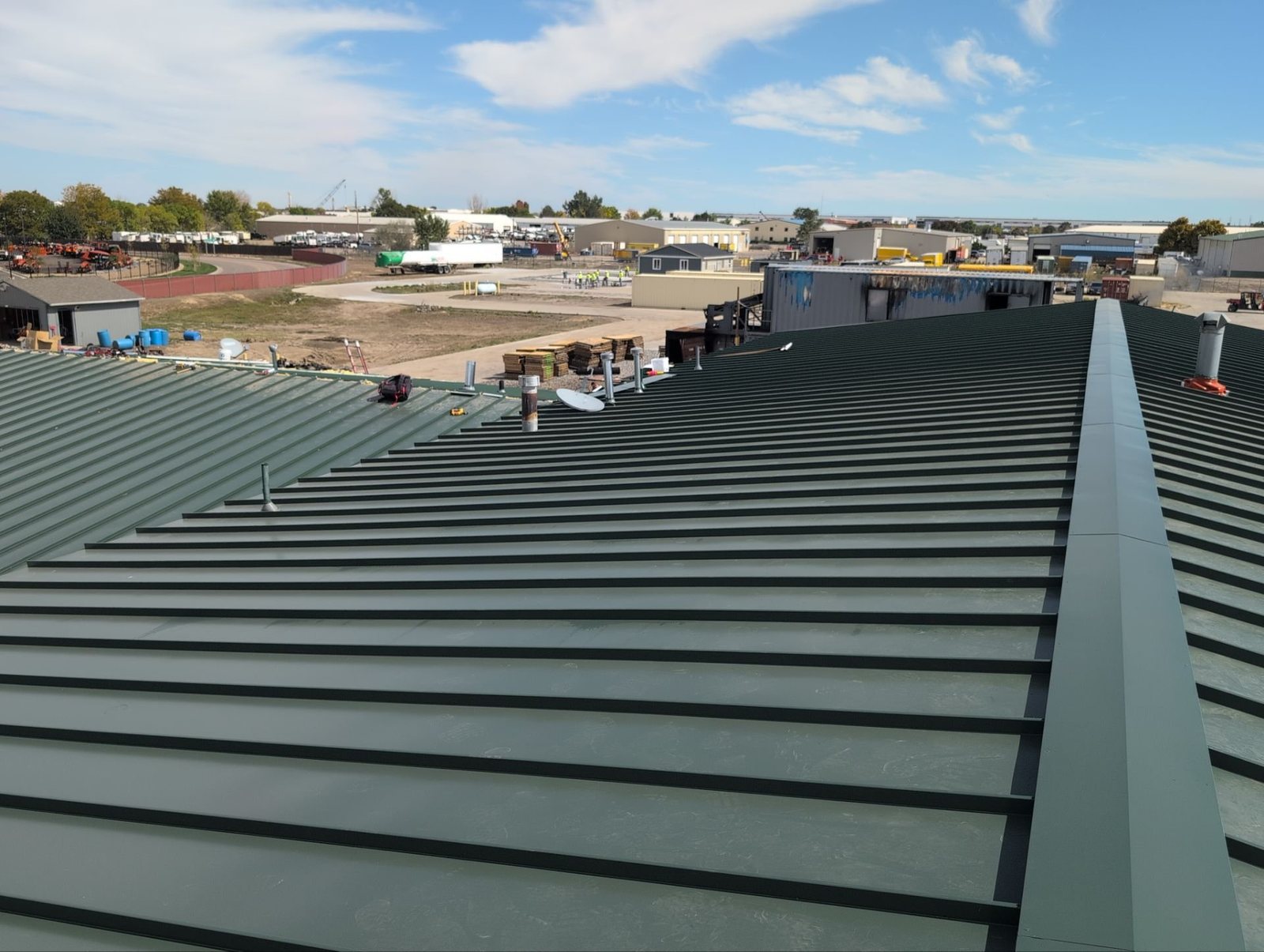
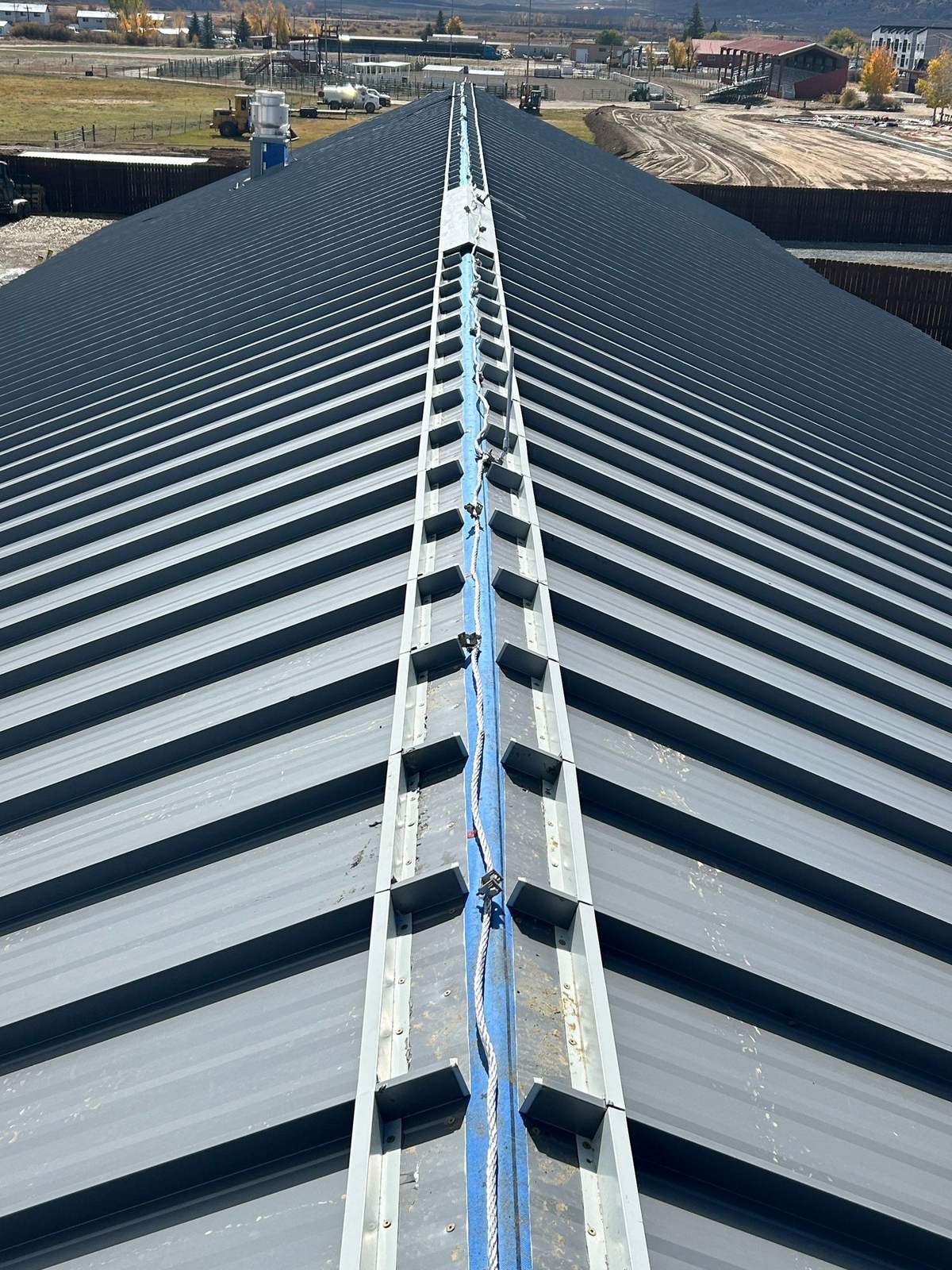
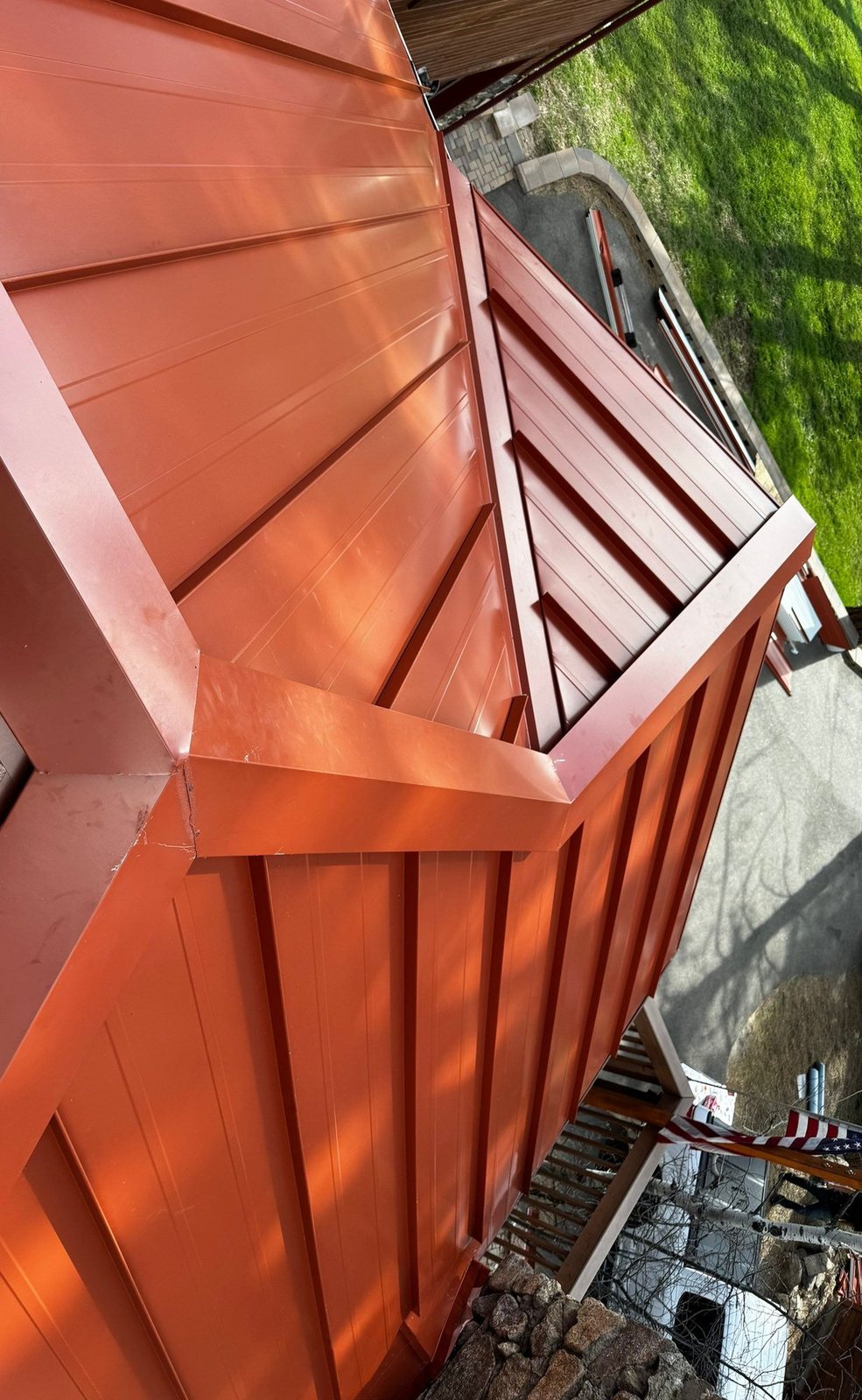
Large hail can dent a metal roof, and on standing seam those dents are easy to see. A hail damage inspection documents what the storm did, including any damage to panels, seams, trim and flashing.
If hail resistance is your top priority, we will walk you through how standing seam compares with stone-coated steel and Class 4 impact-resistant shingles for your home. After a storm, a hail damage inspection documents what actually happened.
For a fuller comparison, read metal roof vs. shingle roof: which is better for Colorado.
We also install exposed-fastener metal panels, such as PBR and R-panel profiles, on shops, barns, outbuildings and some commercial and agricultural buildings. This is a different system from standing seam: the panels are fastened with screws through the face of the panel, and the screws use sealing washers.
Exposed-fastener panels are a practical choice for large, simple roofs and metal buildings. Because the fasteners are exposed to the weather, they are worth checking as part of regular roof maintenance. We help you decide which panel fits your building and how you use it.
We pull the reroof permit unless your contract says otherwise.
Some jurisdictions require more inspections for metal roofs than for asphalt shingles. For example, Douglas County lists a mid-roof inspection for steel roof systems (douglasco.gov), and Denver lists a mid-roof inspection for metal roofs (denvergov.org). We confirm the requirements for your address and plan the job around them.
Large hail can dent metal panels, and the dents are easy to see. We inspect and document hail damage after storms and explain what we find.
Often, especially above doors, walkways, decks and lower roofs. We look at where snow will slide and recommend where snow retention belongs.
No. Standing seam uses smooth vertical metal panels with raised seams, while stone-coated steel has a textured stone-chip surface shaped like shingles, shake or tile.
Nothing. We inspect, document what we find and explain your options. There is no obligation.
We will inspect the roof, document what we find and explain your options in plain language. Inspections are free. Call (303) 808-0687 or send us a note through our contact page.