Commercial TPO Roofing in Colorado
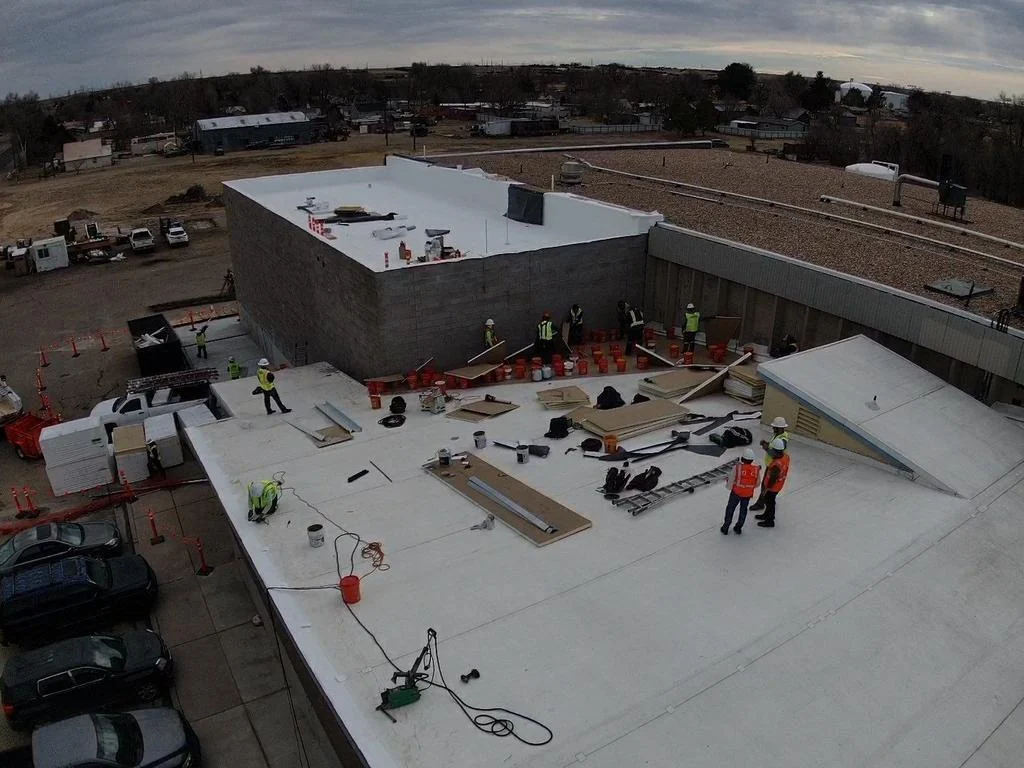
TPO is one of the most common low-slope commercial roofing systems in Colorado, but the membrane is only one part of the roof. Thickness, insulation, cover board, drainage, attachment and flashing details determine how the full assembly performs.
Blue Peaks Roofing inspects the system first, documents what is actually happening, and then gives you a clear path to repair, restore or replace it.
• Documented inspections
• 10-year workmanship warranty
What TPO roofing is — and what is underneath it
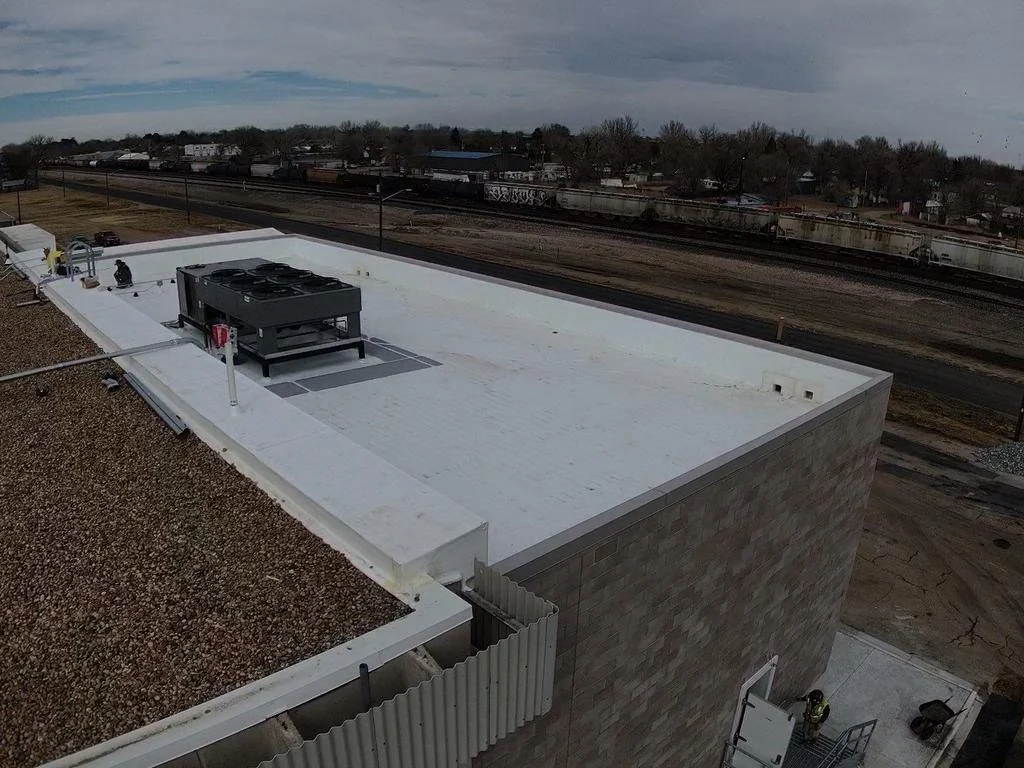
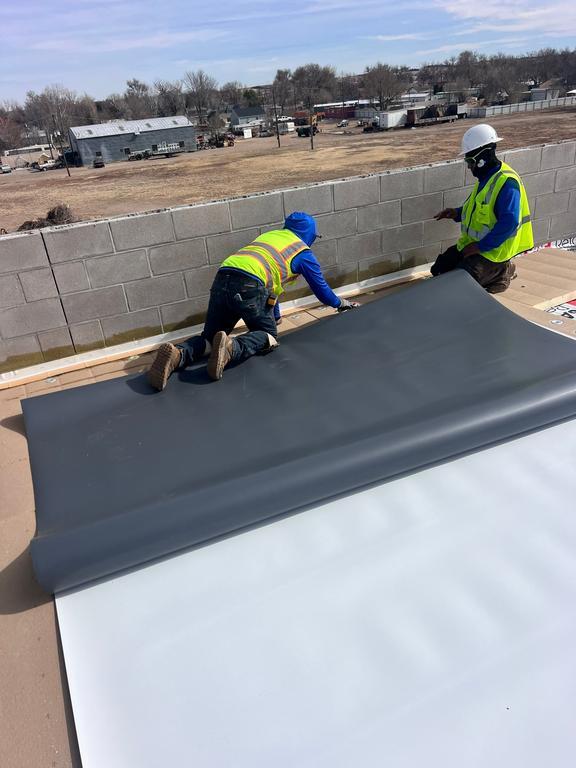
TPO stands for thermoplastic polyolefin. It is a reinforced single-ply roof membrane whose overlapping seams are fused together with hot air to create a continuous waterproof layer.
The membrane gets most of the attention because it is the part you can see. In practice, a commercial TPO roof performs as an assembly. The deck, vapor control, insulation, cover board, membrane, fastening pattern, drainage and perimeter details all have to work together.
Blue Peaks approach:
before recommending a replacement, we inspect the roof condition and determine whether the problem is isolated, moisture is trapped below the membrane, drainage needs correction, or the roof is failing as a complete system.
A typical TPO roof assembly
Steel, concrete or wood depending on the building.
Used where building use and assembly design require it.
Often polyiso, with tapered insulation where slope is needed.
Adds a firmer substrate and can improve impact resistance.
The reinforced weathering surface of the assembly.
Curbs, walls, pipes, edges, drains, scuppers and transitions.
The TPO choices that change roof performance
A TPO proposal should tell you more than the membrane brand. These are some of the decisions that affect durability, wind performance, hail exposure, installation logistics and long-term cost.
45, 60 & 80 mil
Common TPO thicknesses include 45, 60 and 80 mil. A thicker sheet generally provides more material above the reinforcing scrim and is often considered where hail exposure, service traffic or long ownership are priorities.
Reinforced or fleece-back
Standard reinforced TPO is common across commercial roofs. Fleece-back systems add a backing layer and can be useful in adhered assemblies, recover applications and roofs where added cushioning is beneficial.
Mechanically attached
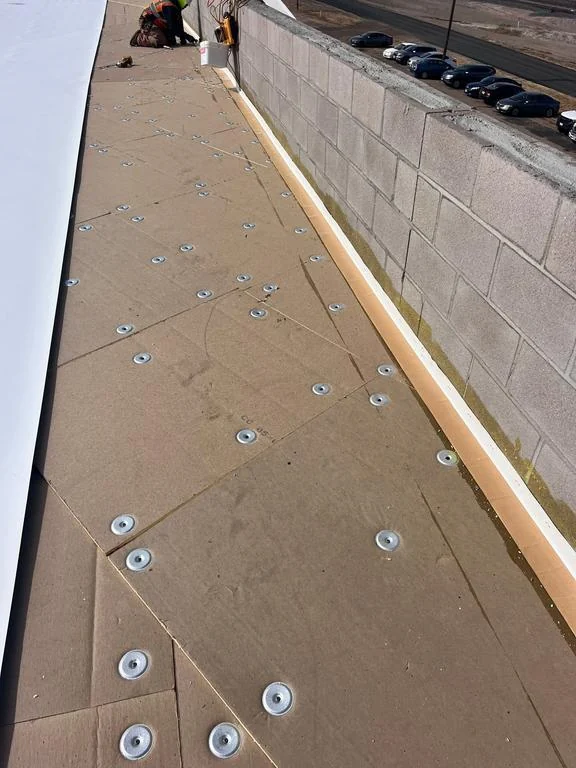
Fasteners and plates secure the system to the deck. The fastening layout, perimeter enhancement and corner zones are designed around wind-uplift requirements rather than treated as a one-size-fits-all pattern.
Fully adhered
The membrane is bonded across the substrate. This can reduce membrane flutter and create a clean finished surface, but substrate preparation and installation conditions matter.
Induction welded
Special coated plates secure the insulation and are bonded to the membrane with an induction-welding tool, distributing attachment points across the roof field without conventional seam-line fastening.
Insulation & cover board
Polyiso, tapered insulation and cover-board selection affect energy performance, drainage, compressive strength and how the roof assembly handles impact and rooftop traffic.
How a TPO roof should be considered for Colorado weather
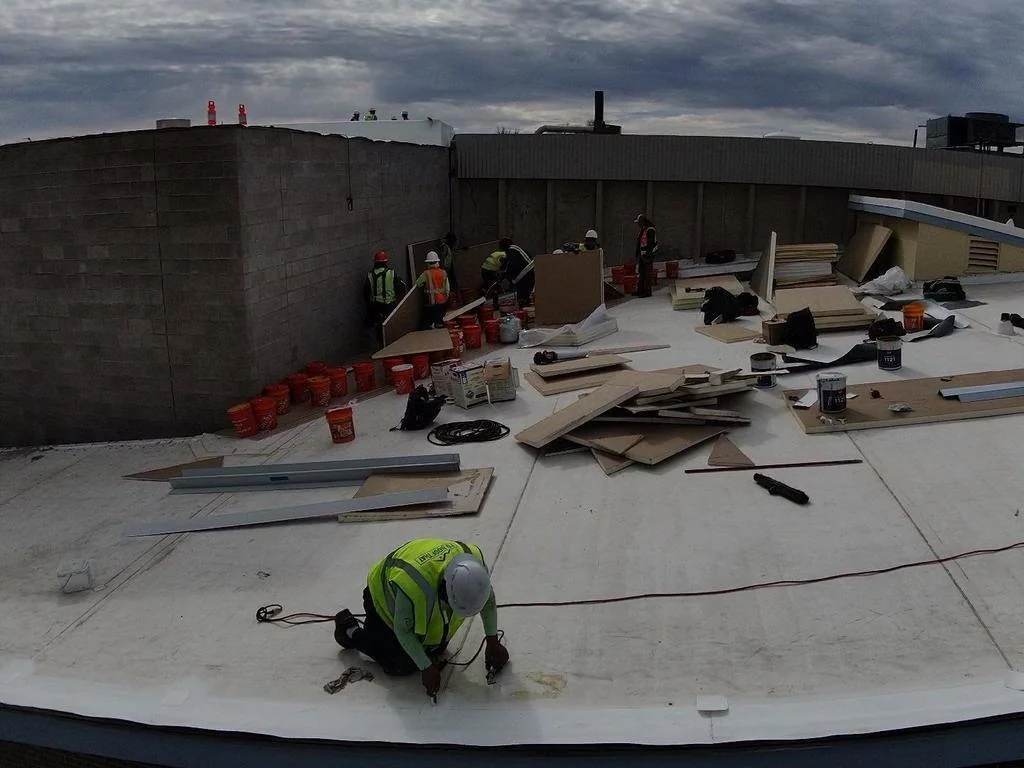
Colorado commercial roofs deal with hail, strong sun, rapid temperature changes, snow, rooftop equipment and wind. The right TPO specification accounts for those exposures before installation starts.
Hail & impact
Membrane thickness matters, but the substrate below it matters too. A suitable cover board can provide a firmer surface beneath the TPO and improve the roof assembly’s resistance to impact and service traffic.
High-altitude UV
White TPO is highly reflective compared with darker roof surfaces. Product selection, membrane condition and cleanliness all affect real-world solar performance over time.
Freeze-thaw & movement
Temperature swings create movement throughout the roof. We pay particular attention to seams, terminations, wall transitions, penetrations and other details where stress concentrates.
Drainage & ponding
Water that remains well after a storm is a sign worth investigating. We evaluate low areas, drains, scuppers, crickets and tapered-insulation options rather than treating recurring ponding as only a membrane problem.
Wind uplift
Perimeters and corners can experience higher uplift pressures than the center of the roof. Attachment and edge details should follow the approved system design, local code and manufacturer requirements.
Rooftop equipment
HVAC curbs, service paths, pipes and equipment supports create penetrations and foot traffic. Those details deserve the same attention as the open membrane field.
Does your TPO roof need repair, restoration or replacement?
A roof leak does not automatically mean you need a new roof. The right decision depends on where the failure is, whether the insulation is dry, the remaining condition of the membrane, drainage and the economics of the building.
Repair
Often appropriate for localized problems such as an isolated puncture, open seam, failed flashing or damaged penetration detail when the surrounding roof remains serviceable.
Restore
Some aging roofs can be candidates for targeted repairs or a compatible restoration system when the existing assembly is suitable and trapped moisture is not widespread.
Replace
Replacement becomes more likely when membrane failure is widespread, insulation is broadly wet, drainage needs major redesign or the existing assembly cannot support a compliant recover.
TPO vs. EPDM, PVC and modified bitumen
TPO is a strong fit for many Colorado commercial buildings, but it is not automatically the right membrane for every roof.
Consultant first. Contractor second.
We replace confusion with clarity. Instead of starting with “which membrane can we sell,” we start with the building, the roof condition and the evidence.
Forensic assessment
We inspect the roof as a system and use core cuts or moisture evaluation when the condition below the membrane needs to be verified.
Documented findings
Photos, measurements, problem areas and project considerations are documented so owners and stakeholders can understand what we found.
Clear options
Repair, restoration and replacement are considered based on roof condition, building use, long-term plans and budget.
Complete specification
We account for membrane, insulation, cover board, attachment, drainage, flashing, edges and penetrations instead of treating TPO as a sheet-only purchase.
Operational planning
Commercial projects are planned around tenant access, loading areas, rooftop equipment and day-to-day business operations.
Warranty & follow-through
Blue Peaks backs commercial work with a written 10-year workmanship warranty, with manufacturer coverage available based on the selected system.
BLUE PEAKS ROOFING · RESTORATION WITH A PURPOSE
Commercial TPO roofing FAQs
Is TPO a good commercial roof for Colorado?
It can be. TPO is widely used on Colorado commercial roofs because it combines heat-welded seams, a reflective surface and multiple attachment and thickness options.
Should I choose 60-mil or 80-mil TPO?
There is no universal answer. 60-mil is a common commercial specification, while 80-mil may be considered when additional weathering material, rooftop traffic or longer-term ownership priorities justify it.
Can hail-damaged TPO be repaired?
Localized punctures or isolated damage can sometimes be repaired. Widespread membrane damage, wet insulation or broader system failure may point toward a larger repair scope or replacement.
Need an answer on your TPO roof?
We will inspect the roof, document what we find and explain the practical options. No pressure — just a clear path forward for your property.