Commercial roofing

Spray Foam Roofing and Roof Coatings

Spray polyurethane foam with a silicone topcoat can renew a tired flat roof, often without a full tear-off. Blue Peaks Roofing scopes and manages spray foam and silicone coating systems for commercial buildings across the Front Range.

We work with experienced application partners on the spraying, and we manage the project from the first assessment to the final walkthrough.

Schedule a Free Roof Assessment
Call (303) 808-0687
• Free roof assessments• Commercial and HOA roofing• BBB A+ rated, accredited since 2022
On this page:
Project photos
How it works
When it fits
Colorado conditions
Process
Maintenance
Other systems
FAQ
From recent projects

Spray foam and silicone coatings on the roof

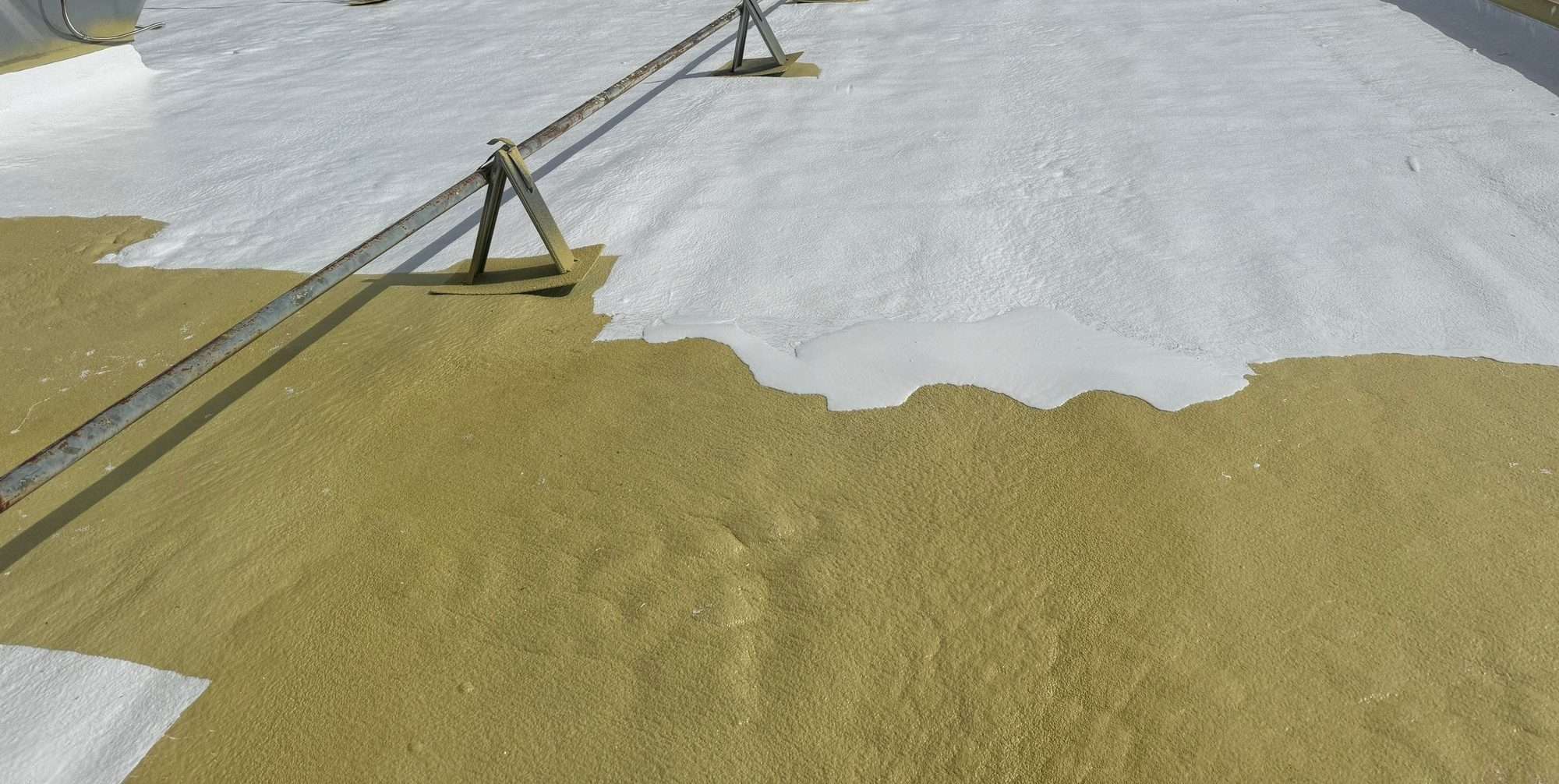
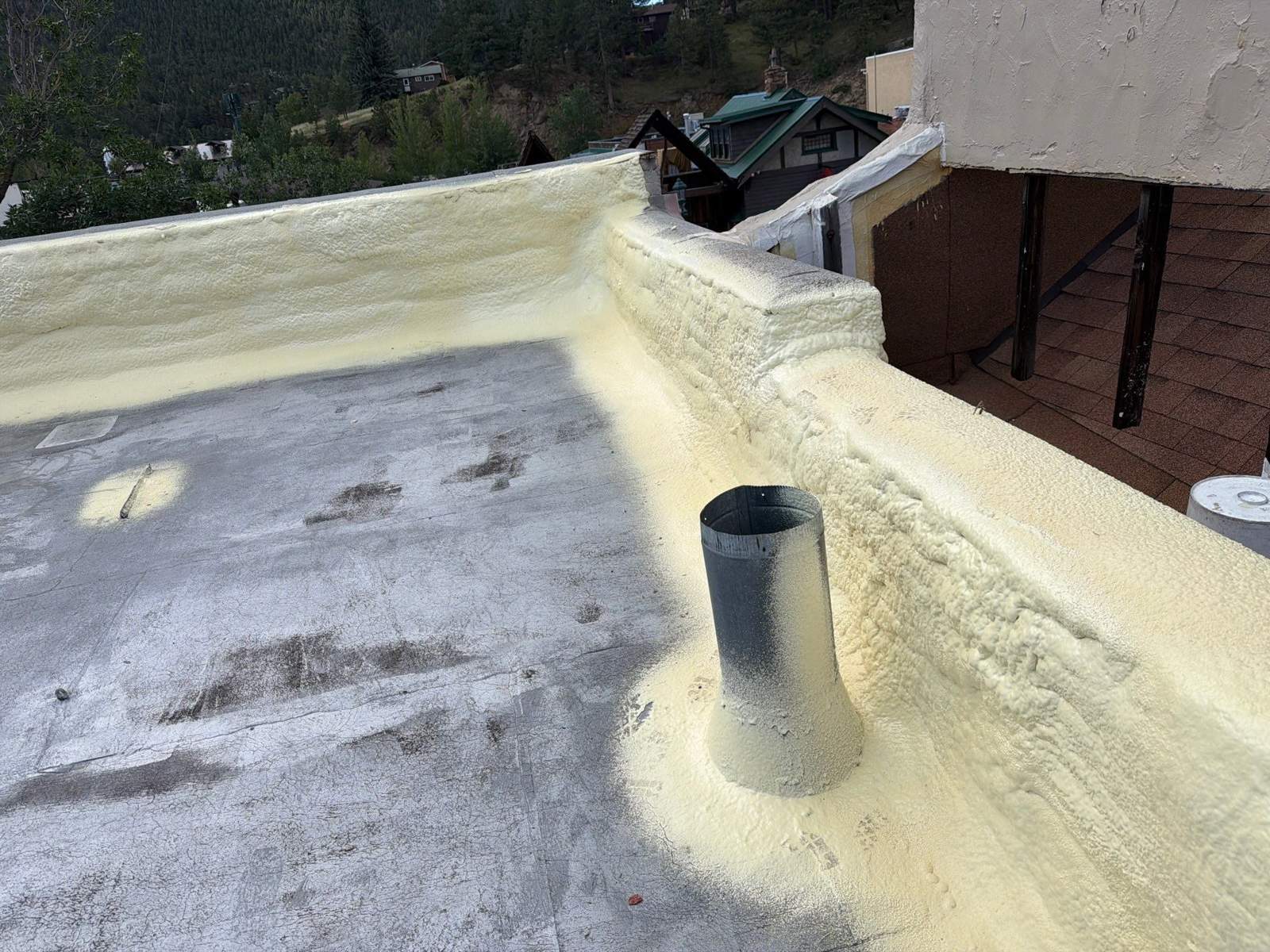
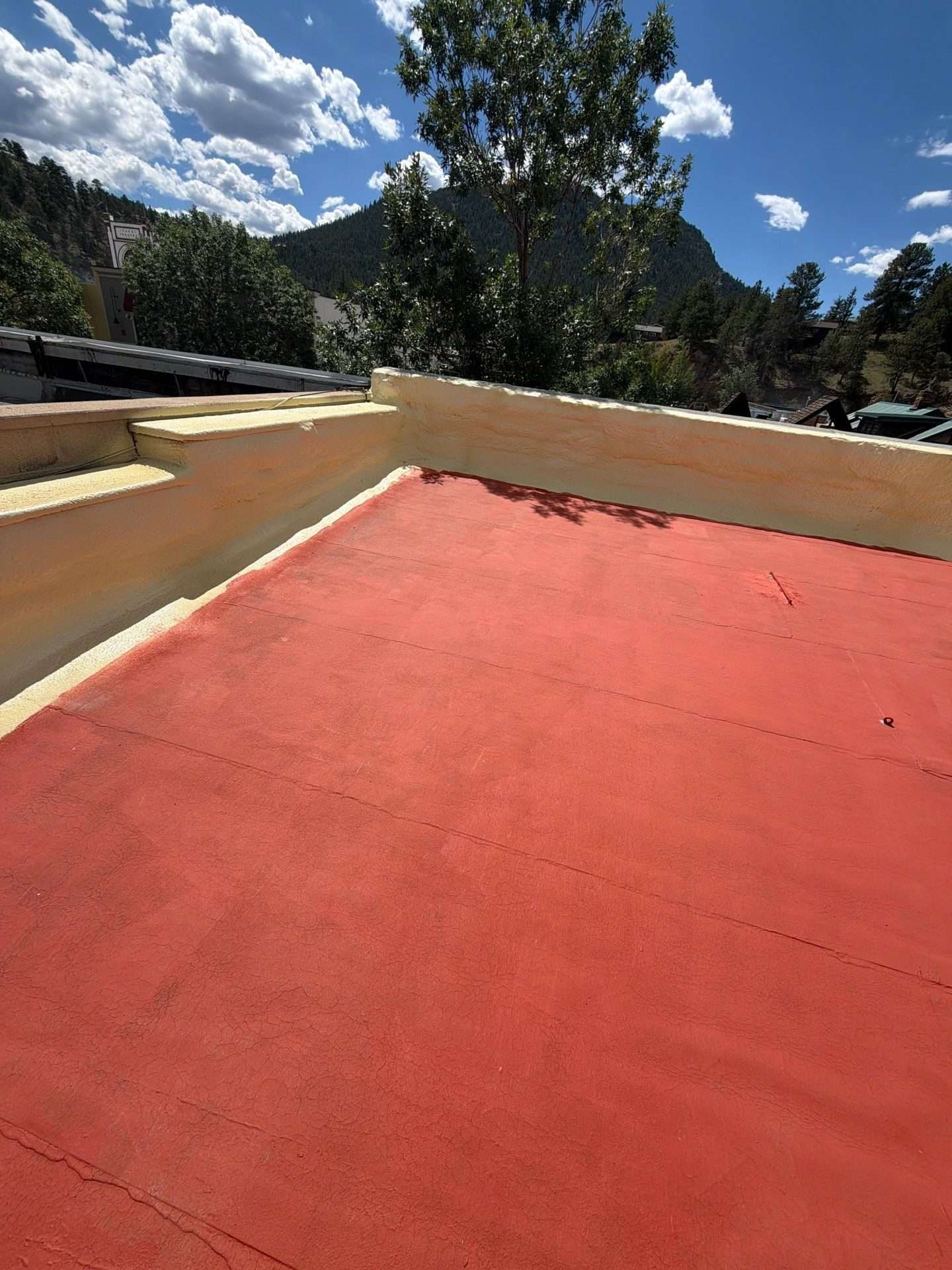
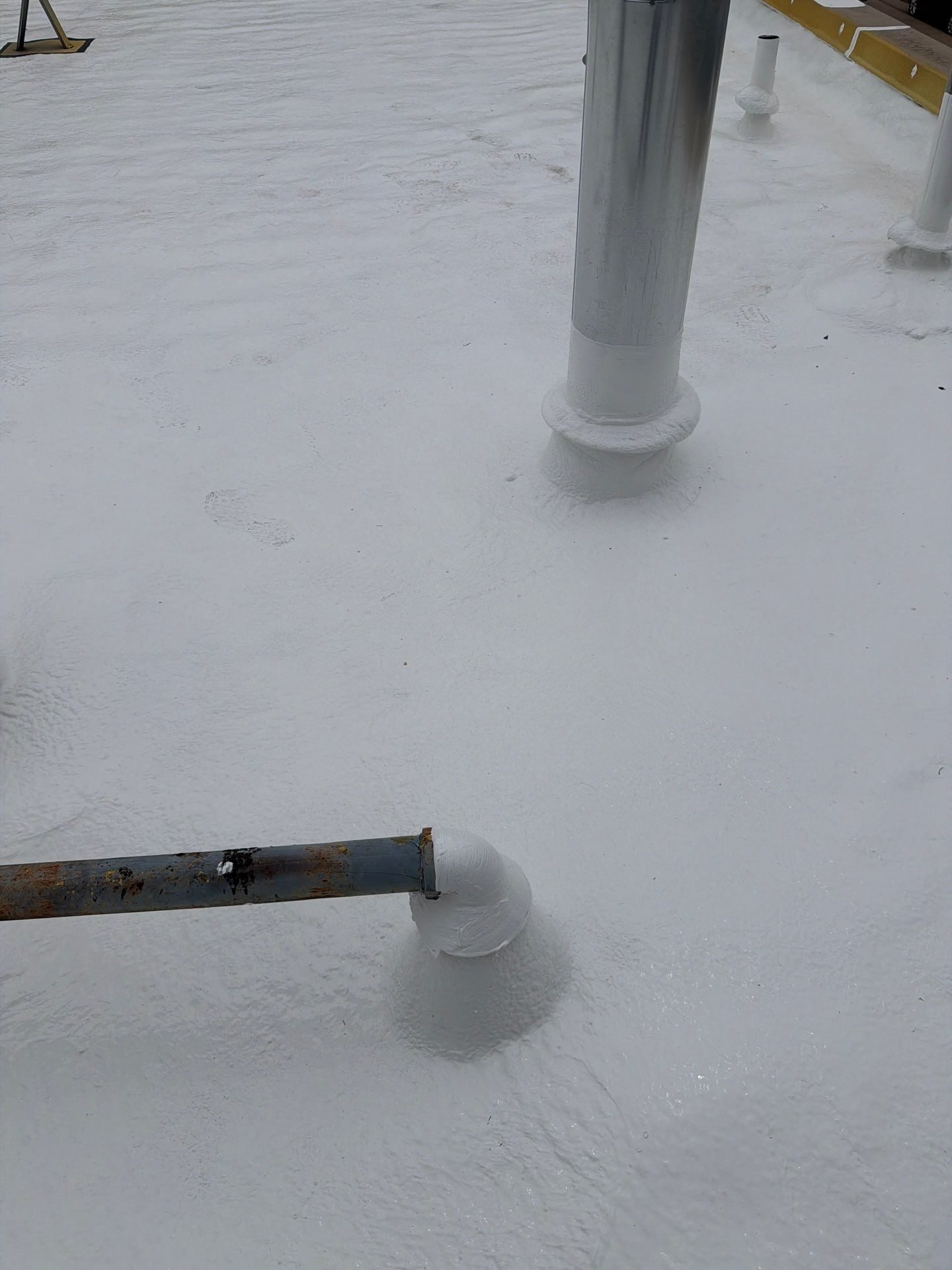
These roofs got spray polyurethane foam with a silicone topcoat. One roof with an asphalt-based surface got a bleed-block primer first.

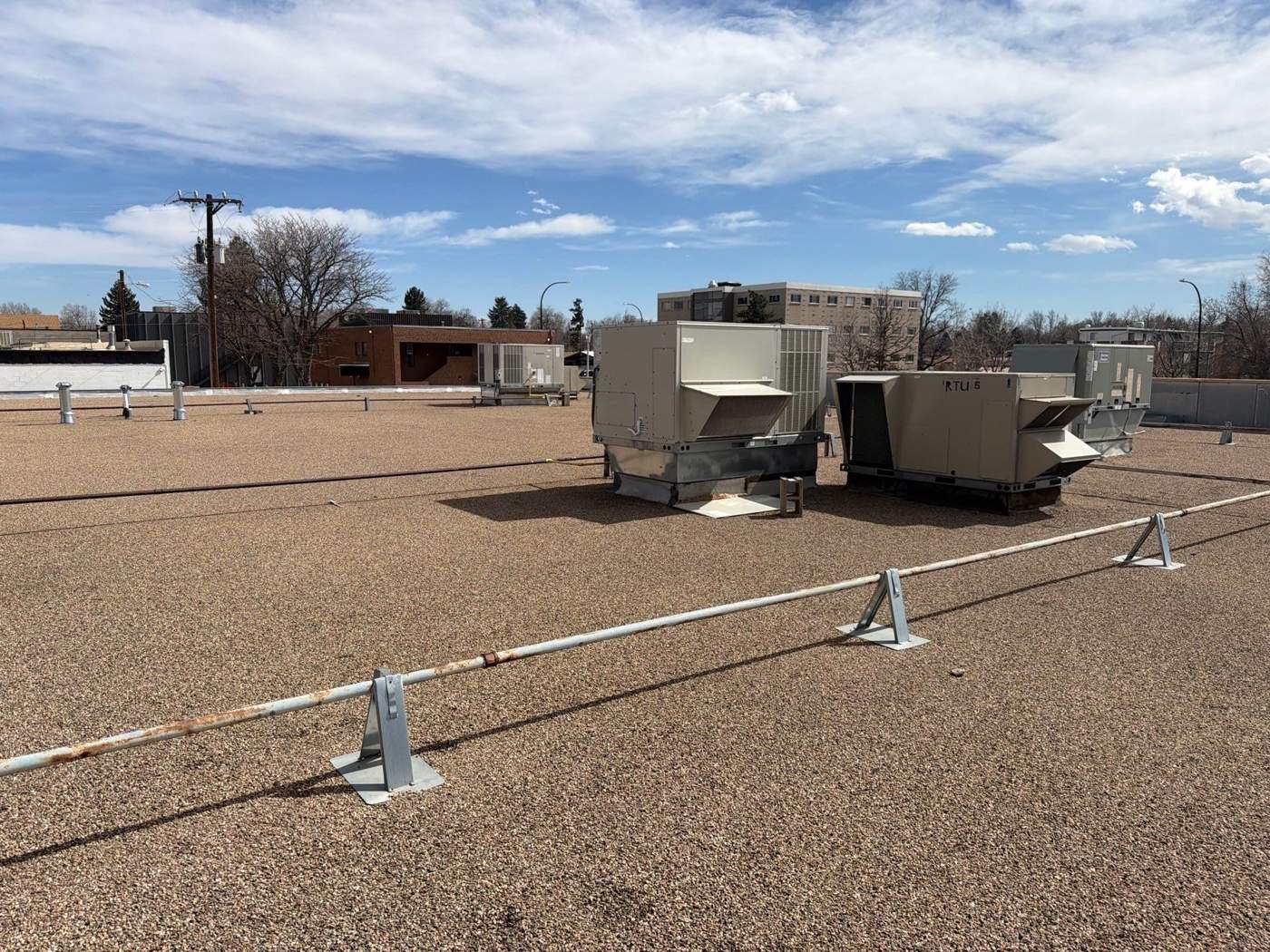
Commercial flat roof with a worn gravel surface and rooftop units before a spray foam roof system
Spray polyurethane foam on a commercial roof with the white silicone topcoat going on over it
Spray foam carried up the parapet wall and around a roof penetration before the topcoat
Red bleed-block primer applied to a low-slope roof before the silicone roof coating
Pipe penetrations sealed with spray foam and silicone coating on a commercial roof
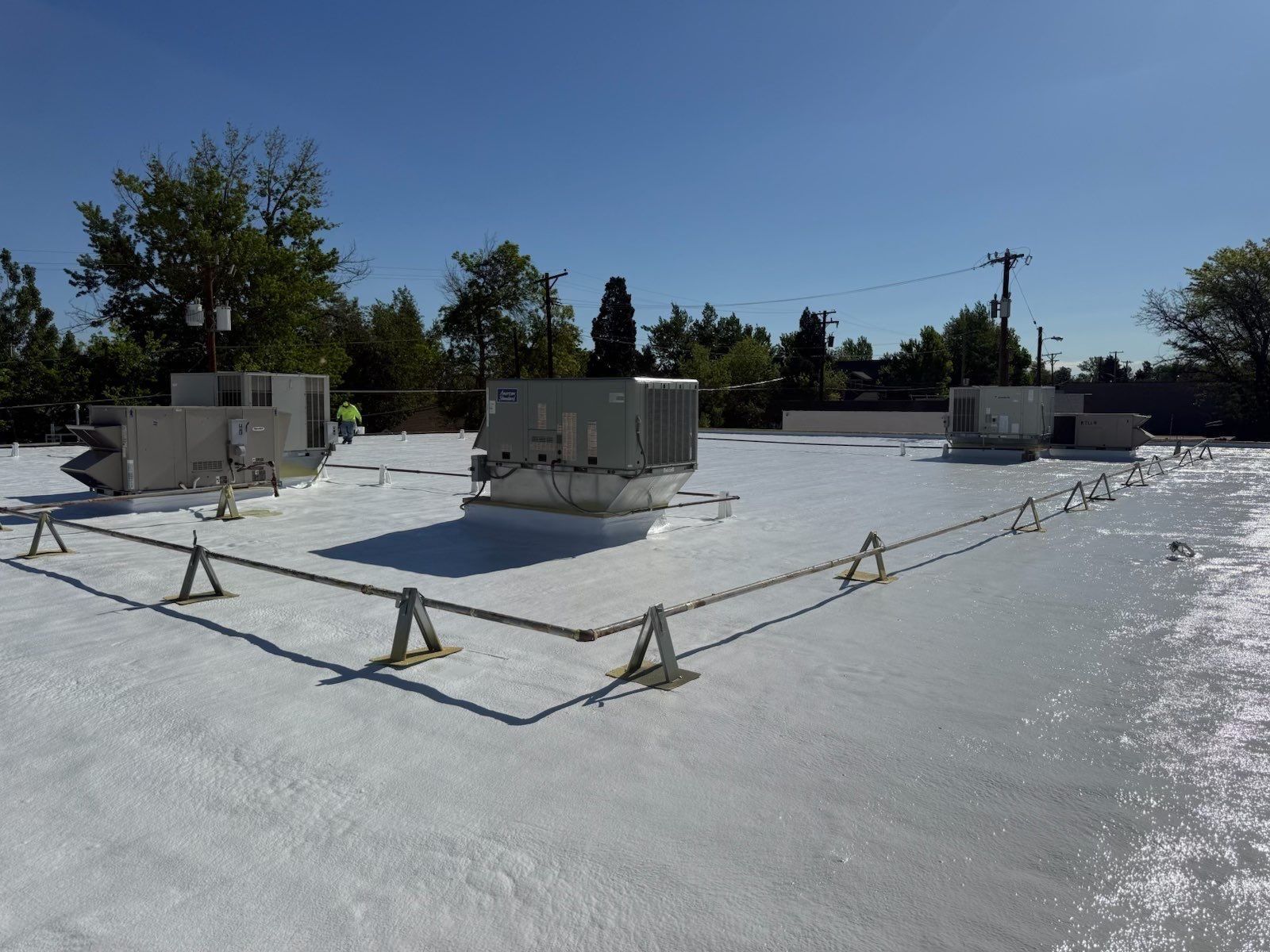
Finished white silicone coating over spray foam on a commercial roof with rooftop units
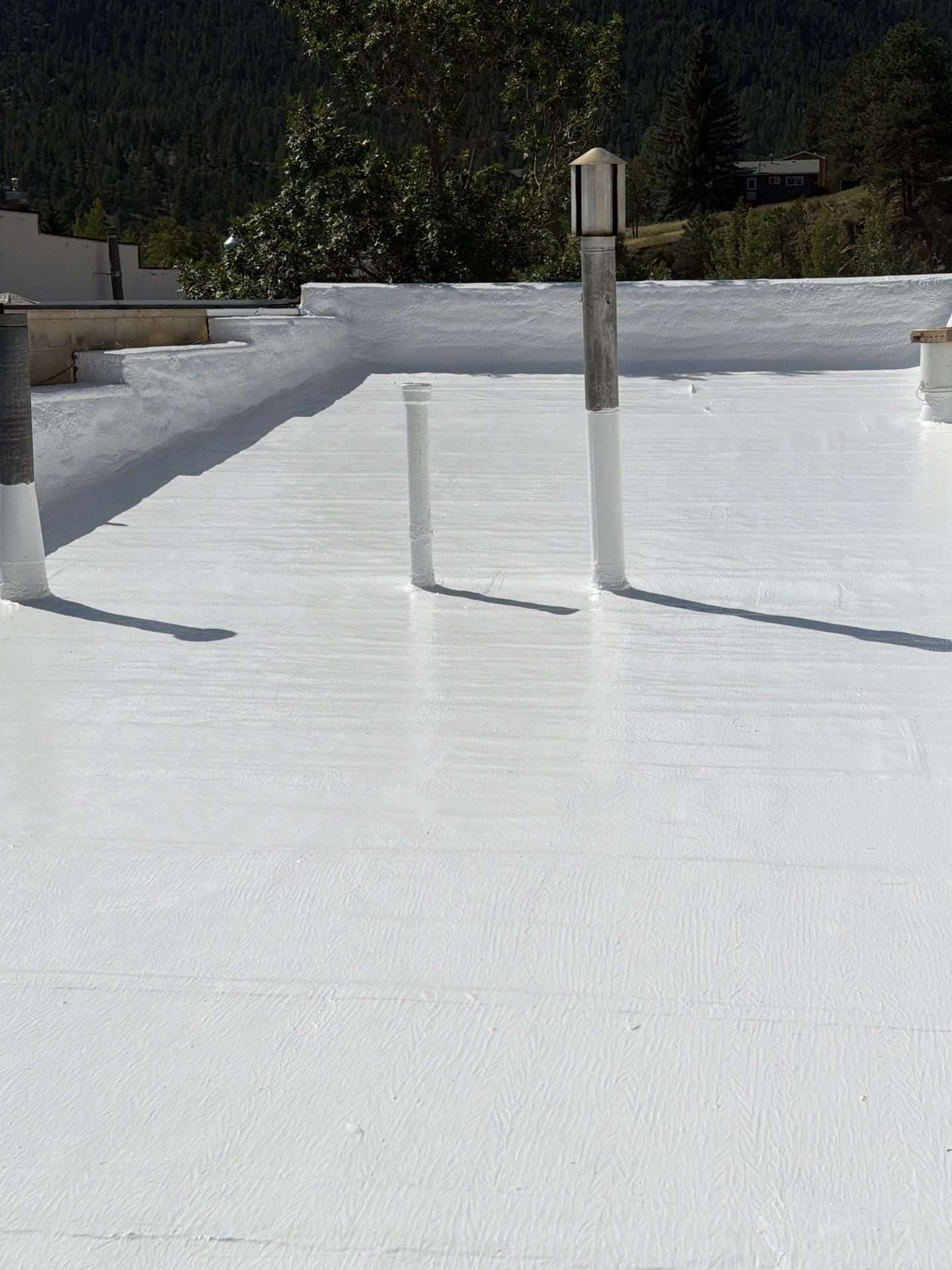
Finished silicone roof coating around vent pipes and the parapet on a low-slope roof
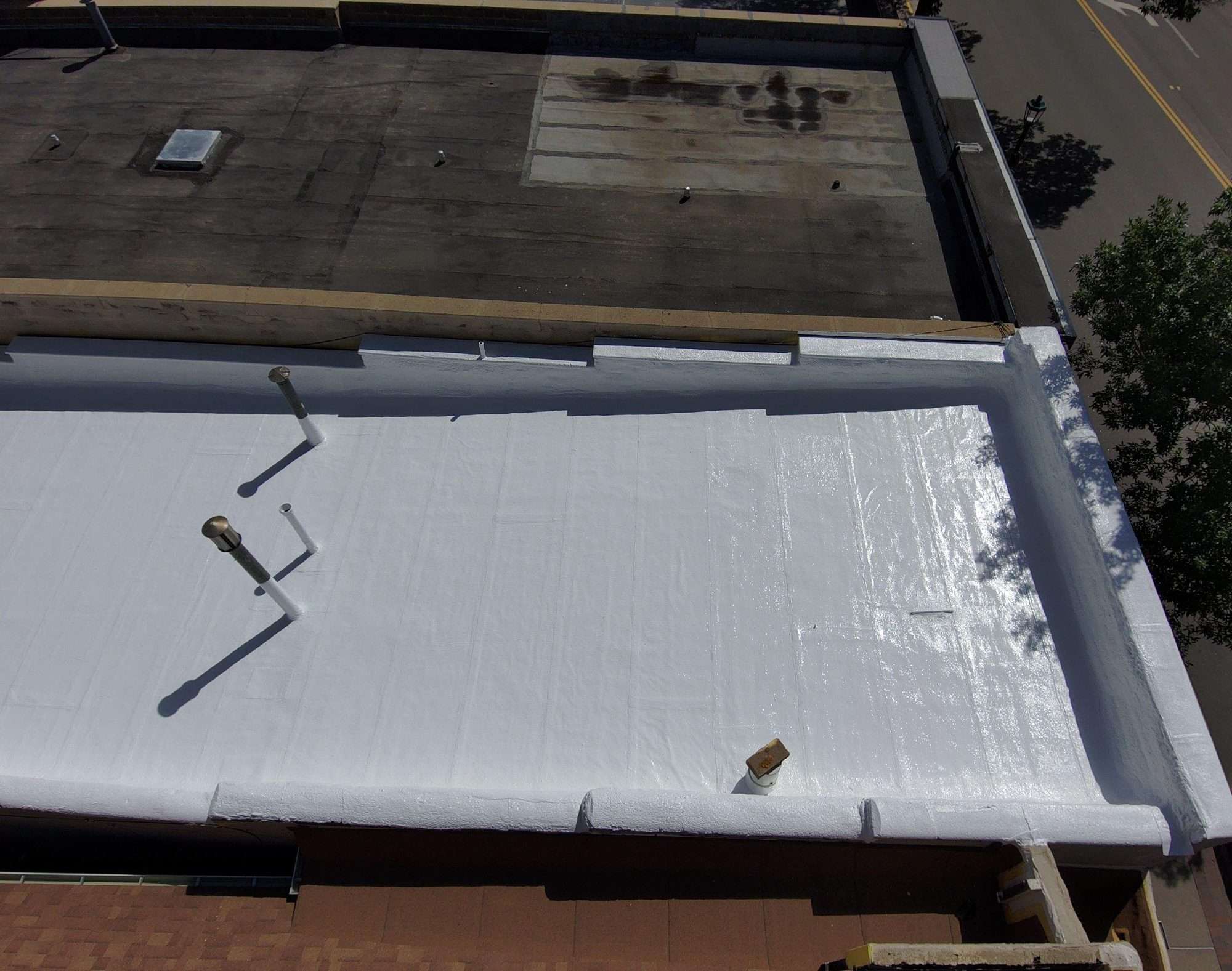
Overhead view of a finished white silicone roof coating with coated parapet walls

From a worn gravel roof to foam, primer and a finished silicone surface, including details at parapets, pipes and vents.

The system

How spray foam and silicone coatings work

Spray polyurethane foam

Foam goes on as a liquid and expands into a seamless, insulating layer that bonds to the roof. It can be built up in low spots to help water drain.

Silicone topcoat

Foam has to be protected from sunlight. A silicone coating seals the foam and reflects sun.

Primers

Some existing roofs need a primer first. A bleed-block primer keeps oils in asphalt-based roofs from staining through the topcoat.

Coating only

When the existing roof is sound and dry, a silicone coating can sometimes go on without adding foam.

The right building

When foam and coatings make sense, and when they do not

Good fit

  • Re-cover over an existing roof that is dry and well attached, when code allows another layer
  • Roofs with ponding water that foam can help slope to drain
  • Buildings where more roof insulation would help energy costs
  • Roofs crowded with penetrations, where seamless foam avoids lots of seams
  • Owners who want to avoid the disruption of a full tear-off

Poor fit

  • Wet insulation or a damaged deck under the existing roof, which has to be removed first
  • Roofs that already have the maximum number of layers code allows
  • Heavy foot traffic areas without walkway protection
  • Tight sites where overspray risk to cars or neighbors cannot be managed
  • Owners who want a single-ply membrane such as TPO or EPDM
Built for the Front Range

UV, hail and freeze-thaw

UV

High-altitude sun breaks down unprotected foam fast. The silicone topcoat is what protects it, so keeping the coating in good shape matters.

Hail

Hail can dent or puncture foam and coatings. Damaged spots can usually be cleaned, patched and recoated, so inspect after major storms.

Freeze-thaw

A seamless surface leaves fewer seams for water to get into. Foam and coatings need dry surfaces and the right temperatures to go on, so weather affects scheduling.

How we manage it

Our spray foam and coating process

  1. Assessment. We inspect the existing roof, check for trapped moisture and damage, and confirm whether foam, a coating or another system is the right fit.
  2. Scope. You get a written scope covering prep, foam thickness where used, primer, topcoat and details at drains, parapets and penetrations.
  3. Prep. Loose gravel, debris and wet or failed material are removed, and the surface is cleaned.
  4. Application. Our application partners spray the foam, and the primer and silicone topcoat follow. We manage the schedule, the site and quality checks.
  5. Closeout. We walk the finished roof with you and go over maintenance.
Protect the investment

Maintenance and recoating

  • Inspect the roof at least once a year and after major hail storms
  • Keep drains, scuppers and gutters clear
  • Repair cuts, punctures and hail damage promptly so water cannot reach the foam
  • Watch for thinning or worn coating, especially in high-traffic areas
  • Plan to clean and recoat over time; a recoat can renew the surface without tearing off the roof

Read more about how roof maintenance reduces long-term capital expenditure.

Compare systems

Other commercial roofing options

TPO roofing

A heat-welded single-ply membrane common on Colorado commercial roofs.

TPO roofing

EPDM roofing

A durable rubber membrane with a long track record on low-slope roofs.

EPDM roofing

Modified bitumen

A multi-ply asphalt-based system that handles foot traffic well.

Modified bitumen roofing

See all of our commercial roofing services.

Common questions

Spray foam and roof coating FAQ

Can spray foam go over my existing roof?

Often, if the existing roof is dry, well attached and code allows another layer. Wet or failed material has to come off first, which is why we start with an assessment.

Can a silicone coating go on a roof with ponding water?

Silicone is often chosen for low-slope roofs where water collects, but drainage still matters. Foam can be built up in low spots to help water drain, and we look at drains and slope during the assessment.

Who sprays the foam?

We scope and manage the project, and experienced application partners handle the spraying.

How long does a silicone coating last?

It depends on the coating thickness, sun exposure, foot traffic and hail. Regular inspections and recoating when the coating wears thin keep the system working.

Do silicone coating systems come with a warranty?

Blue Peaks Roofing is a Gaco-certified silicone roof coating installer, so qualifying projects can carry a Gaco manufacturer warranty of 10, 15, or 20 years. Warranty length, required coating thickness, and eligibility are set by Gaco and depend on your roof's condition, so we start with a roof inspection and confirm which options fit your building.

Is the assessment free?

Yes. We inspect the roof and give you a clear recommendation, whether that is foam, a coating or a different system.

Start with a clear assessment

Find out if foam or a coating fits your roof

We will assess the roof, check for moisture and damage, and explain the practical options. Assessments are free. Call (303) 808-0687 or send us a note through our contact page.

Contact Blue Peaks
Call (303) 808-0687