
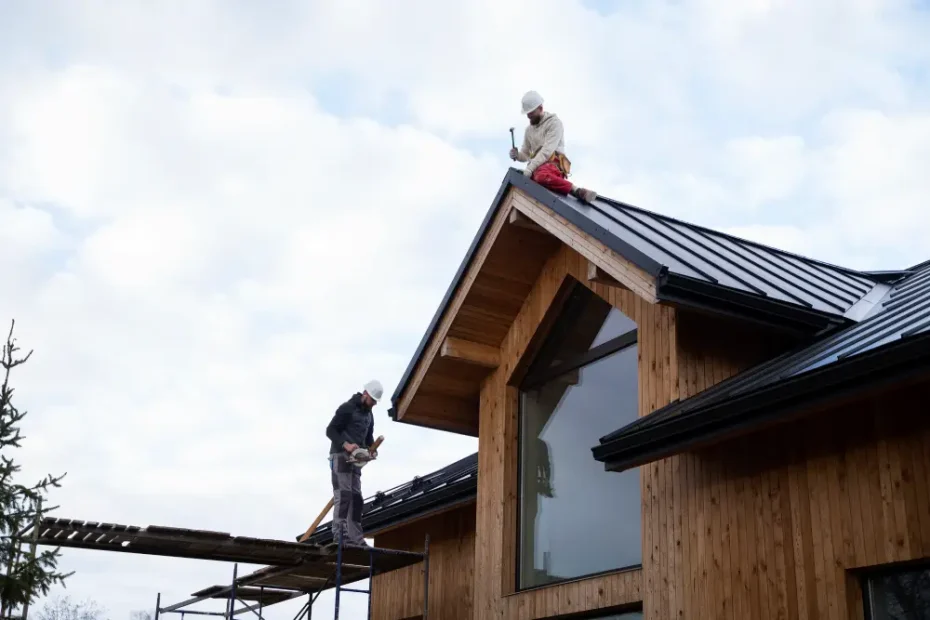
Understanding the true cost of a roof replacement can feel overwhelming, but breaking it down reveals clear factors at play. From materials to labor, each element shapes the final price, helping you budget wisely and avoid surprises.
In this comprehensive guide, we dive deep into the key influences on roof replacement costs, drawing from years of hands-on experience in the roofing industry. As seasoned professionals who’ve completed thousands of projects, we’ve seen firsthand how these variables interact to determine expenses. Whether you’re planning a full overhaul or just exploring options, this post equips you with the knowledge to make informed decisions.
For expert insights and reliable service, visit the Blue Peaks Roofing premier roofing solutions to explore top-tier options tailored to your needs.
Roof Size and Square Footage: The Foundation of Cost Calculation
The size of your roof stands as the primary determinant of replacement cost. Roofing materials are priced by the “square,” where one square equals 100 square feet. A typical home roof measures around 1,700 to 2,000 square feet, or 17 to 20 squares. For asphalt shingles, the most common choice, costs range from $4 to $11 per square foot installed, translating to $5,800 to $25,000 for an average roof.
Larger roofs demand more materials, labor, and time. Consider a 1,000-square-foot roof at $4.35 per square foot starts at $4,350, while a 3,000-square-foot one climbs to $13,050 or higher. We’ve handled projects where oversized roofs, like those on expansive homes, pushed costs into the $40,000 range due to sheer volume. Accurate measurement, including pitches and overhangs, is crucial—underestimating by even 10% inflates expenses unexpectedly.
Why does size matter so much? It directly scales everything: shingles, underlayment, flashing, and crew hours. Simple gable roofs cost less per square than complex designs, but size amplifies all variables. In our experience, homeowners often overlook attic space or dormers, adding 20-30% more area. Always request a detailed measurement from pros using drones or ladders for precision.
Beyond basics, roof height factors in. Two- or three-story homes require scaffolding or lifts, hiking labor by 15-25%. We’ve seen steep pitches on large roofs double safety equipment needs, pushing costs up significantly. Pro tip: Get multiple quotes based on exact square footage to compare apples-to-apples.
Material Choices: Balancing Cost, Durability, and Aesthetics
Material selection profoundly impacts roof replacement pricing. Asphalt shingles, the budget-friendly staple, cost $5,994 to $9,791 for a standard roof. They’re quick to install and mimic higher-end looks but last 20-30 years. Metal roofing jumps to $16,000-$34,000 for aluminum, offering 50+ years of durability and energy efficiency.
Tile options vary wildly: concrete tile at $15,000-$40,000, clay at $22,000-$50,000, slate at $19,000-$52,000, and copper at $42,000-$80,000. Premium materials like slate resist fire and weather but demand specialized installers, adding labor premiums. In past projects, asphalt saved clients 40% upfront versus metal, but metal reduced lifetime costs through longevity.
Don’t forget components: underlayment, ice and water shield, drip edge, starter strips, vents, flashing, ridge caps, and pipe boots. Skipping these shortcuts longevity, leading to leaks. We’ve replaced roofs where omitted underlayment caused premature failure, costing thousands in repairs. Quality matters—opt for impact-resistant shingles in hail-prone areas, though they add 10-20%.
Material trends show asphalt dominating 80% of residential jobs for affordability, while metal surges for sustainability. Weigh initial outlay against lifespan: a $10,000 asphalt roof every 25 years versus $25,000 metal lasting 60 years evens out long-term. Consult experts to match materials to your climate and style.
Roof Pitch, Slope, and Complexity: Labor-Intensive Challenges
Steep slopes and complex designs elevate costs due to safety and time. Low-pitch roofs (under 4:12) are straightforward, but steep ones (8:12+) need harnesses, scaffolding, and skilled crews, increasing labor 20-50%. Multi-plane roofs with peaks, valleys, gables, dormers, skylights, chimneys, and turrets multiply challenges.
Each penetration—vents, chimneys, skylights—requires custom flashing, adding hours. A roof with 10+ penetrations can cost 30% more than a simple one. We’ve navigated intricate Victorian-style roofs taking twice the time of ranch homes, with labor billed accordingly. Complexity isn’t just aesthetic; it affects material waste and waste disposal.
Accessibility plays in: overhanging trees, tight lots, or multi-story heights demand extra equipment. Remote sites or those with obstacles like power lines slow crews, inflating daily rates. In one case, a sloped lot required custom staging, adding $2,000. Roof height compounds this—ground-to-eave distance dictates lift rentals at $500-$1,000 per day.
Design intricacies like hips, valleys, and offsets demand experienced roofers charging premium rates. Simple roofs finish in days; complex ones stretch weeks, accruing weather delays. Factor in pitch multipliers: measurements account for slope, so a 2,000 sq ft flat roof differs from sloped equivalent needing 2,500 sq ft materials.
Labor Costs and Contractor Expertise: Hidden Price Drivers
Labor comprises 50-60% of total costs, varying by crew size, experience, and job scope. Entry-level teams charge less but risk errors; veterans with certifications command 20-30% more yet finish faster and warrantied. Operating costs—insurance, vehicles, training, payroll—factor into bids, with reputable firms transparent about inclusions.
Crew factors: more workers speed completion but raise payroll. Penetrations, cleanup, and demo extend hours. We’ve seen labor double on intricate jobs versus basic re-roofs. Compare bids: $8,000 average hides variances—rush jobs or peak seasons add 15%.
Company overhead influences fairly: liability insurance, workers’ comp, licenses ensure protection. Cutting corners on uninsured crews risks liens or shoddy work. Demand itemized bids covering demo, install, cleanup, and warranties. Experienced pros spot issues like rot early, saving money long-term.
Removal of Old Roof and Deck Repairs: Unexpected Add-Ons
Tear-off adds $1-$2 per sq ft if layers exist. Older roofs (pre-1980s) often hide decking damage, asbestos, or code violations needing $1,000-$3,000 fixes. Ventilation upgrades, rafter spans, or insulation compliance inflate budgets. We’ve torn off 2-3 layers, revealing soft plywood requiring full replacement at 20% extra cost.
Disposal fees for debris haul-away add $500-$1,500. Complete removal versus overlay depends on layers—codes limit to two, mandating tear-off. Inspect underlayment; degraded material demands full replacement. Proactive assessment prevents mid-job surprises doubling expenses.
Permits, Codes, and Warranties: Regulatory Realities
Permits cost $200-$1,000, ensuring compliance. Codes may require ice shields (adding $1,000-$3,000), ventilation, or materials. Older homes risk HVAC obstructions or lead issues. Warranties—material (25-50 years), labor (5-10)—cost more for extended coverage but protect investments.
Non-compliance invites fines or insurance denials. Pros handle filings; DIY risks voids. We’ve navigated upgrades saving claims post-install. Factor 5-10% for these essentials.
Explore detailed roof replacement cost factors guide for in-depth analysis on influencing elements.
Additional Influences: Ventilation, Insulation, and Market Fluctuations
Ventilation systems—ridge, soffit vents—add $500-$2,000 but prevent moisture issues. Insulation upgrades during replacement save energy, costing $1,500-$4,000. Market shifts: material prices fluctuate 10-20% yearly; supply chains impact metal or tile.
Timing matters—off-season discounts versus storm-season premiums. Energy-efficient choices qualify rebates, offsetting 5-10%. Comprehensive bids include these for holistic value.
For specialized services like repairs complementing replacements, check Blue Peaks Roofing expert roof repair solutions.
Strategies to Manage and Minimize Roof Replacement Costs
Budget smartly: prioritize durable materials, get 3-5 quotes, schedule off-peak. Maintain regularly to extend life, avoiding emergency premiums. Finance options spread payments interest-free. We’ve helped clients save 15% via bundled services or efficiencies.
ROI focus: premium roofs boost home value 7-15%. Detailed planning yields best outcomes.
Frequently Asked Questions
How much does a typical roof replacement cost?
A standard asphalt shingle roof replacement for an average home (1,700-2,000 sq ft) ranges from $5,800 to $25,000, averaging $8,000-$11,700. Factors like size, materials, and complexity drive this wide range. For instance, basic asphalt falls at the lower end, while premium tile or metal pushes toward $40,000+. Labor, removal, and permits add 20-30%. Quotes vary by specifics—always get site-specific estimates. In our projects, detailed assessments reveal hidden costs like deck repairs, ensuring accurate budgeting. Energy-efficient options may qualify for rebates, reducing net expense. Compare material lifespans: cheaper upfront saves short-term but costs more over decades. Professional measurement prevents overruns.
What is the cheapest roofing material for replacement?
Asphalt shingles are the most affordable, costing $5,994-$9,791 installed for standard roofs, or $4-$11 per sq ft. They’re versatile, available in countless styles, and quick to install, minimizing labor. However, they last 20-30 years versus metal’s 50+. We’ve installed thousands, noting their weather resistance when upgraded to impact-rated. Components like underlayment boost performance without premium prices. Avoid ultra-cheap imports prone to granule loss. Balance with warranties—strong ones protect investments. For budgets under $10,000, asphalt delivers reliability without sacrificing curb appeal. Consider climate: architectural shingles handle wind better. Long-term, pair with ventilation for max lifespan.
Does roof pitch affect replacement cost?
Yes, steeper pitches (over 6:12) increase costs 20-50% due to safety gear, longer install times, and skilled labor needs. Low-slope roofs are faster and cheaper; steep ones require harnesses and scaffolding. Complexity multiplies this—valleys and hips add challenges. In experience, an 8:12 pitch on a large roof doubled labor versus flat. Measurements factor slope multipliers, inflating material needs. Pros use pitch in bids accurately. Safety compliance prevents accidents, justifying premiums. Walkable pitches save; extreme ones demand specialists. Assess your roof’s angle early for realistic quotes.
How does roof size impact replacement expenses?
Directly proportional—larger roofs need more materials and labor. Per square (100 sq ft), costs scale linearly. A 30-square average home hits $8,000-$12,000; doubles to $16,000+ for bigger. Overhangs, pitches add 20%. Accurate aerial measurements essential. We’ve seen miscalculations add $2,000+. Economies of scale help slightly on mega-jobs, but complexity often offsets. Factor waste on large spans. Budget 40% materials, 50% labor, 10% extras.
Are permits required for roof replacement?
Typically yes, costing $200-$1,000, ensuring code compliance like ventilation or ice shields. Older homes may need decking or structural upgrades, adding $1,000-$3,000. Pros handle filings to avoid fines or insurance issues. We’ve ensured compliance preventing post-install headaches. Local codes vary—ice dam protection common in snowy areas. Permits verify quality, protecting resale value. Skip at peril; voids warranties.
What role does old roof condition play in costs?
Poor condition demands full tear-off ($1-$2/sq ft), deck repairs, or hazardous material removal, adding 20-40%. Multiple layers mandate demo; rot requires plywood replacement. Pre-1980s roofs risk asbestos/code fails. Inspections reveal issues early—we’ve saved clients by spotting decay pre-bid. Clean slates cost less; compromised ones inflate via disposal/labor.
How do warranties influence roof replacement pricing?
Extended warranties (lifetime materials, 10-year labor) add 5-10% but safeguard against defects. Basic ones cover less. Pros bundle them; cheap bids often skimp. In claims, strong warranties recouped costs for us. Factor into bids—cheaper roofs with poor coverage cost more long-term. Transferable ones boost home value.
Does the number of roof penetrations matter?
Absolutely—each vent, skylight, chimney requires flashing, adding time/manpower. 10+ penetrations hike 20-30%. Larger ones like chimneys slow most. Simple roofs cheaper; feature-rich costlier. Accurate counts in bids prevent surprises. We’ve flashed complex arrays efficiently with specialists.
Can I overlay a new roof without removal?
Sometimes, if under two layers and deck sound, saving $1,000-$3,000. Codes often prohibit; voids warranties. We’ve overlaid viable roofs successfully, but tear-off preferred for inspections. Weigh risks—hidden damage emerges later. Pros advise based on assessment.
How to get accurate roof replacement quotes?
Request 3-5 itemized bids from licensed, insured pros. Include measurements, materials, scope. Site visits essential—drones aid precision. Compare per-square costs. Check reviews, warranties. Off-season saves 10-15%. We’ve refined quoting to eliminate shocks via transparency. Avoid lowballs signaling cut corners.
Conclusion
Mastering roof replacement cost factors empowers smart choices. Prioritize size, materials, complexity, and pros for optimal value. Contact trusted experts today for your project.